Proteomics: MRM Assays for HER2 in FFPE Tissues
November 9, 2020
Maxim Isabelle, Michael Schirm, Gwenaël Pottiez, Rudolf Guilbaud and Lorella Di Donato
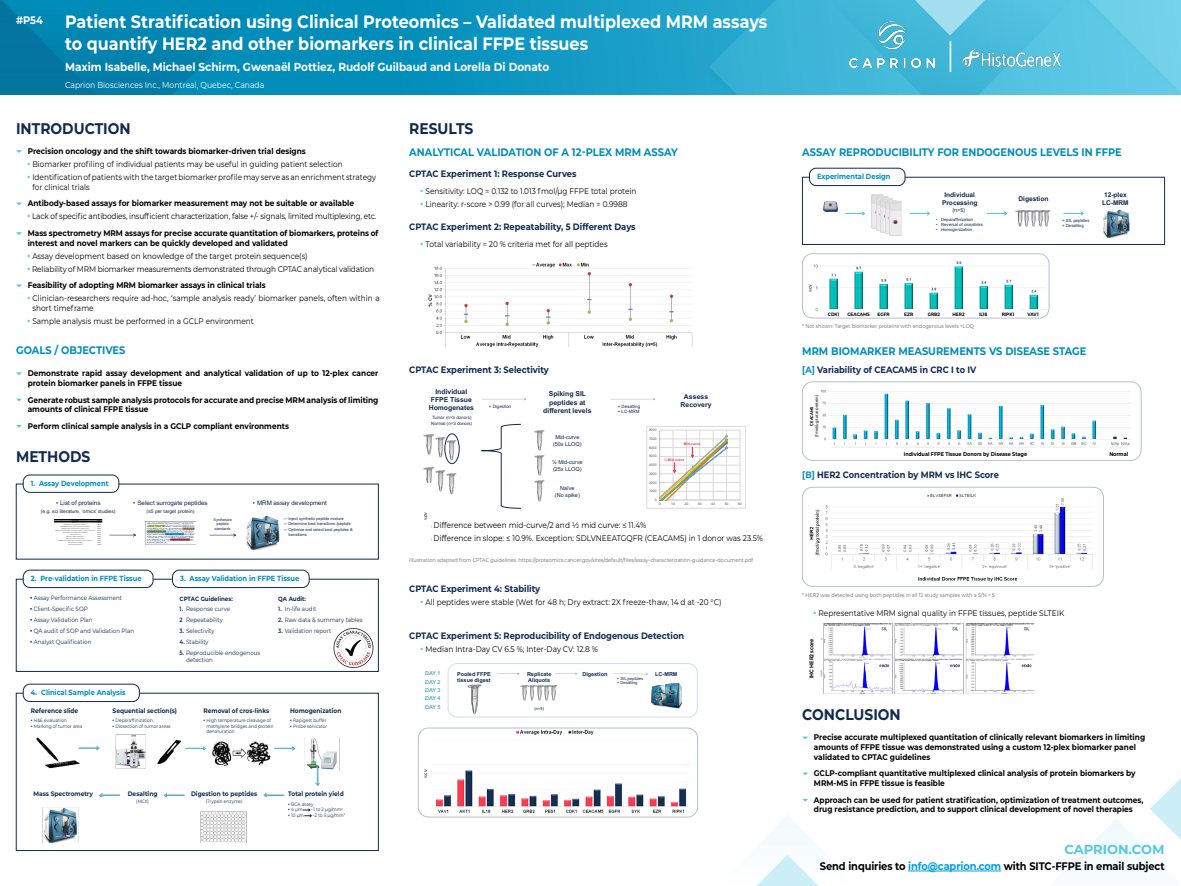
CellCarta’s poster highlights the development and validation of multiplexed MRM assays for precise quantitation of clinically relevant biomarkers in FFPE tissue.
The study demonstrates the feasibility of using these assays for clinical proteomics, supporting patient stratification, treatment optimization, and drug resistance prediction. The 12-plex biomarker panel includes key proteins such as HER2, EGFR, and CEACAM5, validated to CPTAC guidelines.
The approach is suitable for GCLP-compliant quantitative clinical analysis, providing robust and reliable biomarker measurements to aid in the clinical development of novel therapies.
Patient Stratification using Clinical Proteomics – Validated multiplexed MRM assays to quantify HER2 and other biomarkers in clinical FFPE tissues,
As presented in SITC 2020
Proteomics: MRM Assays for HER2 in FFPE Tissues
November 9, 2020
Maxim Isabelle, Michael Schirm, Gwenaël Pottiez, Rudolf Guilbaud and Lorella Di Donato
CellCarta’s poster highlights the development and validation of multiplexed MRM assays for precise quantitation of clinically relevant biomarkers in FFPE tissue.
The study demonstrates the feasibility of using these assays for clinical proteomics, supporting patient stratification, treatment optimization, and drug resistance prediction. The 12-plex biomarker panel includes key proteins such as HER2, EGFR, and CEACAM5, validated to CPTAC guidelines.
The approach is suitable for GCLP-compliant quantitative clinical analysis, providing robust and reliable biomarker measurements to aid in the clinical development of novel therapies.
Patient Stratification using Clinical Proteomics – Validated multiplexed MRM assays to quantify HER2 and other biomarkers in clinical FFPE tissues,
As presented in SITC 2020
Monitoring MDSC – A Hurdle to Immune Checkpoints Inhibitors
November 9, 2020
Damien Montamat-Sicotte, Laetitia Cortes, Virginia Litwin, Henry Hepburne-Scott, Phoebe Bonner
Monitoring MDSC – A Hurdle to Immune Checkpoints Inhibitors
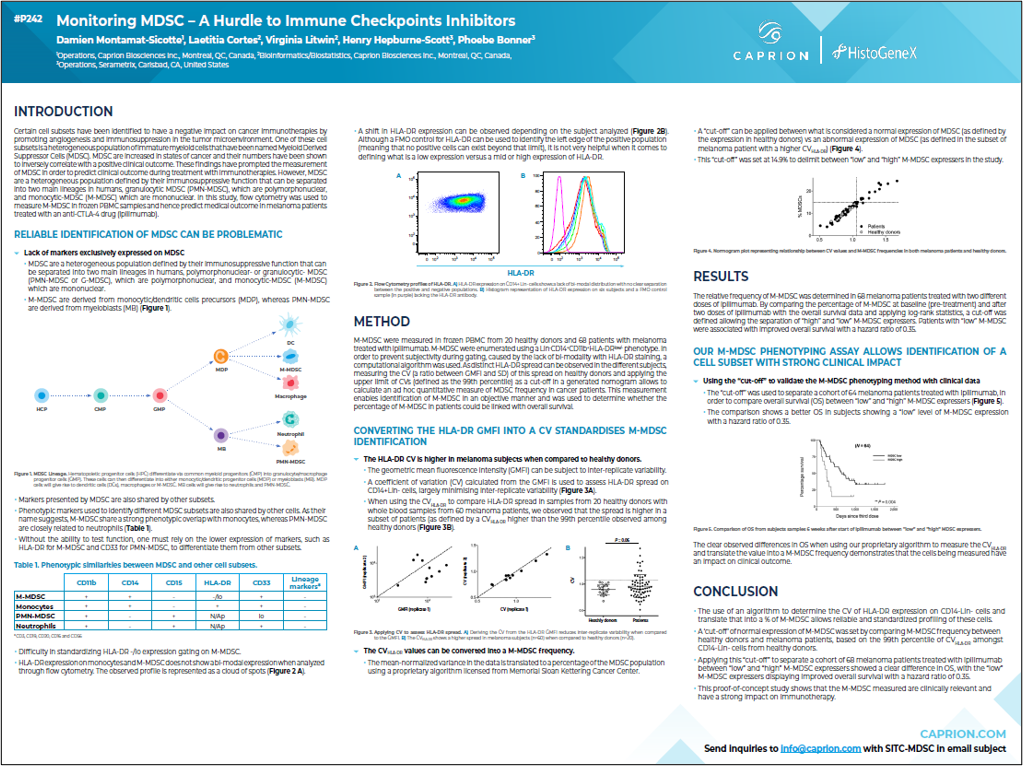
CellCarta’s poster discusses the challenges of monitoring myeloid-derived suppressor cells (MDSCs), which can hinder the effectiveness of immune checkpoint inhibitors.
The study introduces a standardized method for identifying MDSCs using HLA-DR expression levels to distinguish between low and high MDSC populations. This approach was validated in a clinical study with melanoma patients undergoing pembrolizumab treatment, showing a correlation between high MDSC levels and reduced survival rates.
The MDSC phenotyping assay developed by CellCarta offers a reliable tool for assessing MDSC impact on immunotherapy and improving treatment strategies.
As presented in SITC 2020
Monitoring MDSC – A Hurdle to Immune Checkpoints Inhibitors
November 9, 2020
Damien Montamat-Sicotte, Laetitia Cortes, Virginia Litwin, Henry Hepburne-Scott, Phoebe Bonner
Monitoring MDSC – A Hurdle to Immune Checkpoints Inhibitors
CellCarta’s poster discusses the challenges of monitoring myeloid-derived suppressor cells (MDSCs), which can hinder the effectiveness of immune checkpoint inhibitors.
The study introduces a standardized method for identifying MDSCs using HLA-DR expression levels to distinguish between low and high MDSC populations. This approach was validated in a clinical study with melanoma patients undergoing pembrolizumab treatment, showing a correlation between high MDSC levels and reduced survival rates.
The MDSC phenotyping assay developed by CellCarta offers a reliable tool for assessing MDSC impact on immunotherapy and improving treatment strategies.
As presented in SITC 2020
Validated Flow Cytometry for Monitoring Multiple Myeloma
November 9, 2020
Bevan Gang, Vicky Sgouroudis, Virginia Litwin, and Anita Boyapati
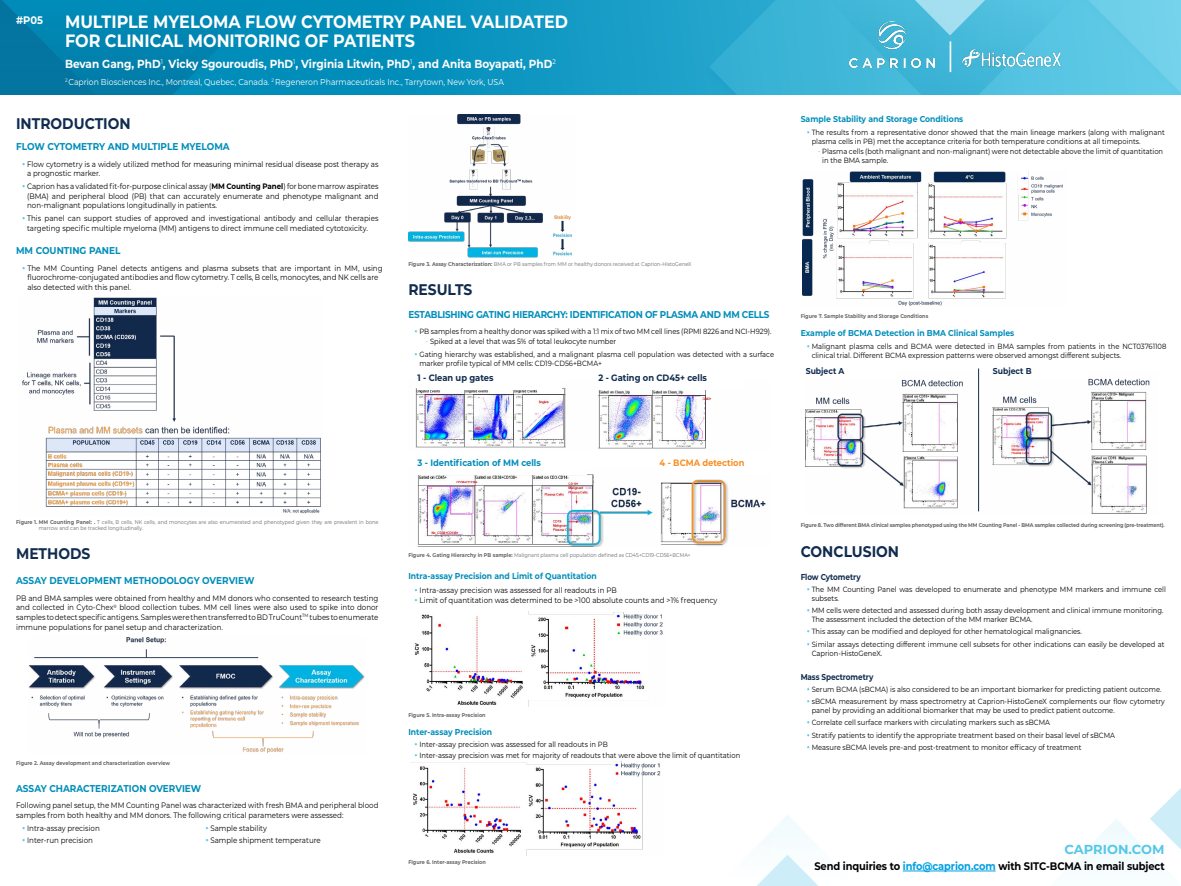
CellCarta’s poster presents a validated flow cytometry panel for the clinical monitoring of multiple myeloma (MM) patients. The MM Counting Panel detects and phenotypes malignant and non-malignant plasma cells, T cells, B cells, monocytes, and NK cells using fluorochrome-conjugated antibodies.
Key Features of the MM Counting Panel:
- Detection and Enumeration: Accurately enumerates immune populations in bone marrow aspirates (BMA) and peripheral blood (PB).
- Phenotyping: Identifies specific MM markers, including BCMA, using a surface marker profile (CD19-CD56+BCMA+).
- Intra- and Inter-assay Precision: Demonstrated high precision with PB samples from both healthy and MM donors, ensuring reliability of results.
- Sample Stability: Maintained stability and met acceptance criteria for key markers across different temperature conditions and time points.
- Clinical Validation: Validated with clinical samples from the NCT03761108 trial, showing different BCMA expression patterns among subjects.
- sBCMA measurement by mass spectrometry can be used as a complementary method for biomarker monitoring.
Assay Development and Characterization:
- Sample Collection and Preparation: PB and BMA samples were obtained from healthy and MM donors, processed in Cyto-Chex® blood collection tubes, and analyzed using BD TruCount™ tubes.
- Gating Hierarchy: Established for the identification of malignant plasma cells, with a specific focus on CD45+CD19-CD56+BCMA+ populations.
Conclusion: The MM Counting Panel, validated for clinical use, allows for robust and reliable monitoring of multiple myeloma patients. This comprehensive approach combines flow cytometry and mass spectrometry to enhance the detection of key biomarkers, supporting the development of novel therapies and optimizing treatment outcomes.
Multiple Myeloma Flow Cytometry Panel Validated for Clinical Monitoring of Patients
As presented in SITC 2020
Validated Flow Cytometry for Monitoring Multiple Myeloma
November 9, 2020
Bevan Gang, Vicky Sgouroudis, Virginia Litwin, and Anita Boyapati
CellCarta’s poster presents a validated flow cytometry panel for the clinical monitoring of multiple myeloma (MM) patients. The MM Counting Panel detects and phenotypes malignant and non-malignant plasma cells, T cells, B cells, monocytes, and NK cells using fluorochrome-conjugated antibodies.
Key Features of the MM Counting Panel:
- Detection and Enumeration: Accurately enumerates immune populations in bone marrow aspirates (BMA) and peripheral blood (PB).
- Phenotyping: Identifies specific MM markers, including BCMA, using a surface marker profile (CD19-CD56+BCMA+).
- Intra- and Inter-assay Precision: Demonstrated high precision with PB samples from both healthy and MM donors, ensuring reliability of results.
- Sample Stability: Maintained stability and met acceptance criteria for key markers across different temperature conditions and time points.
- Clinical Validation: Validated with clinical samples from the NCT03761108 trial, showing different BCMA expression patterns among subjects.
- sBCMA measurement by mass spectrometry can be used as a complementary method for biomarker monitoring.
Assay Development and Characterization:
- Sample Collection and Preparation: PB and BMA samples were obtained from healthy and MM donors, processed in Cyto-Chex® blood collection tubes, and analyzed using BD TruCount™ tubes.
- Gating Hierarchy: Established for the identification of malignant plasma cells, with a specific focus on CD45+CD19-CD56+BCMA+ populations.
Conclusion: The MM Counting Panel, validated for clinical use, allows for robust and reliable monitoring of multiple myeloma patients. This comprehensive approach combines flow cytometry and mass spectrometry to enhance the detection of key biomarkers, supporting the development of novel therapies and optimizing treatment outcomes.
Multiple Myeloma Flow Cytometry Panel Validated for Clinical Monitoring of Patients
As presented in SITC 2020
MDSC: Inhibiting Immune Therapy
July 29, 2020
Damien Montamat-Sicotte, Laetitia Cortes, Virginia Litwin, Henry Hepburne-Scott, Phoebe Bonner
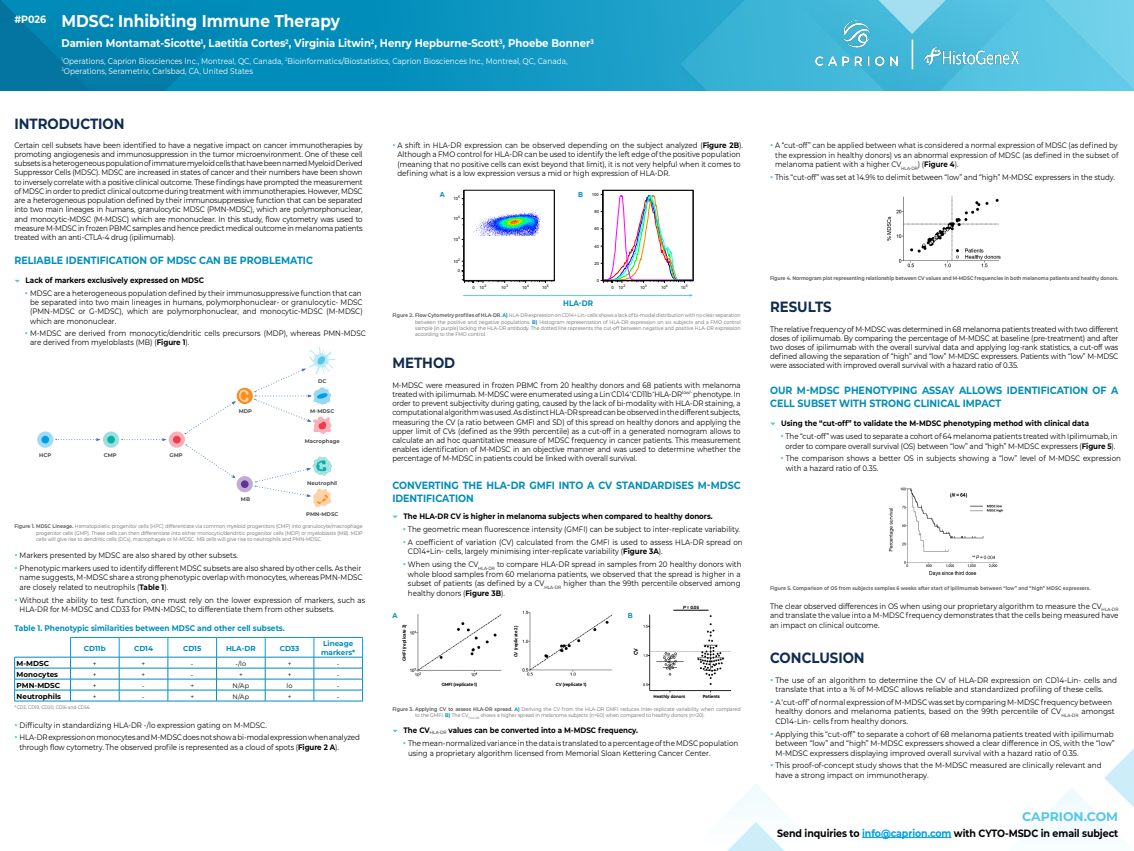
MDSC: Inhibiting Immune Therapy, CYTO 2020
MDSC: Inhibiting Immune Therapy
July 29, 2020
Damien Montamat-Sicotte, Laetitia Cortes, Virginia Litwin, Henry Hepburne-Scott, Phoebe Bonner
MDSC: Inhibiting Immune Therapy, CYTO 2020
Evaluation and implementation of an automated fluidic instability clean-up tool
July 29, 2020
Nicolas Boily, Olivier Gingras, Sandrina Da Fonseca, Audrey Gagnon, and Virginia Litwin
Evaluation and implementation of an automated fluidic instability clean-up tool, CYTO 2020
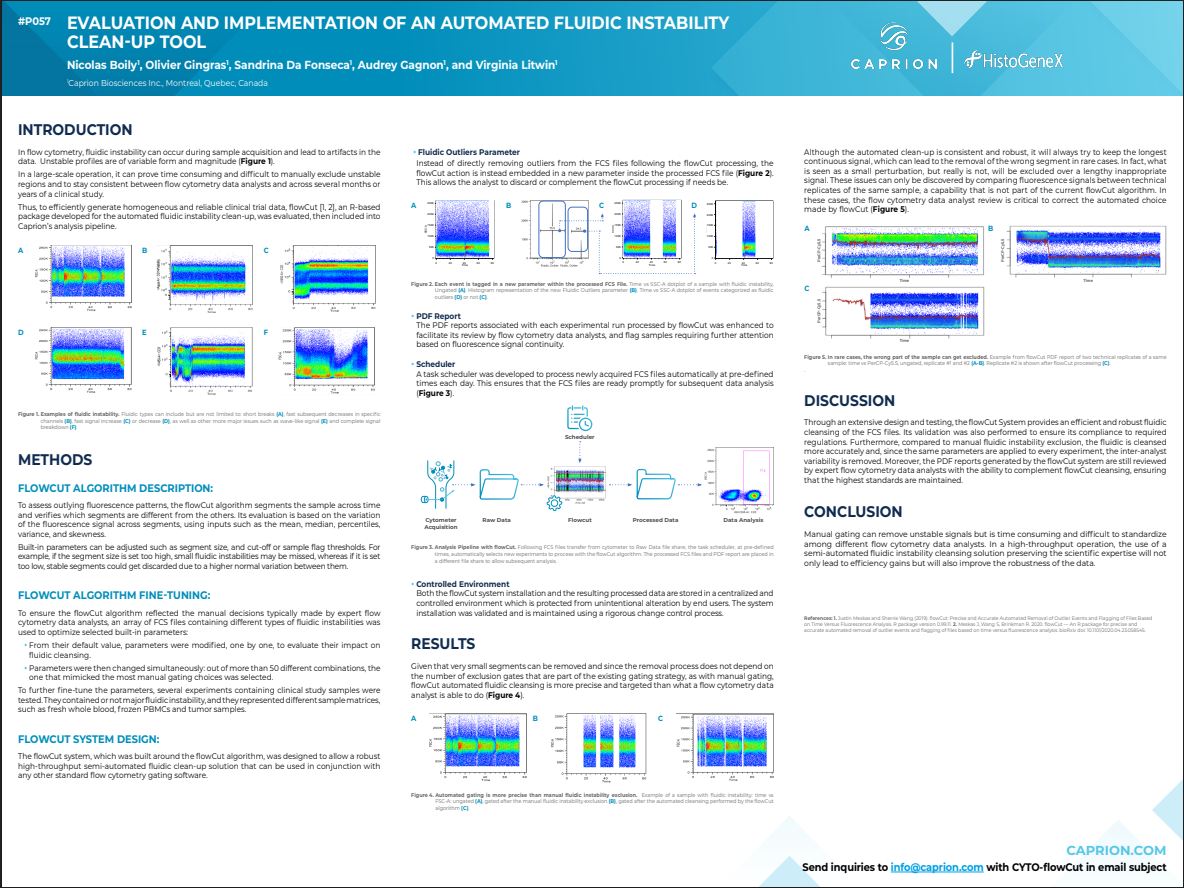
Evaluation and implementation of an automated fluidic instability clean-up tool
July 29, 2020
Nicolas Boily, Olivier Gingras, Sandrina Da Fonseca, Audrey Gagnon, and Virginia Litwin
Evaluation and implementation of an automated fluidic instability clean-up tool, CYTO 2020