Biomarkers & AI in Future ADCs: Dr. Powles’ Insights

March 17, 2025

Antibody-drug conjugates (ADCs) are changing cancer treatment for the better, combining precision-targeting of cancer cells with the potency of chemotherapy.  

Perhaps one of the most exciting recent advances in ADCs was seen in a trial led by renowned oncologist Dr Thomas Powles. The combination treatment of enfortumab vedotin (EV), a nectin-4 ADC, and pembrolizumab (pembro), a PD-1 inhibitor, more than doubled the median survival of metastatic bladder cancer patients, from one year with standard chemotherapy, to two and a half years.   

Thanks to these transformative results, EV-pembro has superseded traditional platinum-based chemotherapy as the first-line treatment, and Dr Powles believes a cure for bladder cancer is now possible—something that would have seemed unimaginable just a few years ago.  

In our latest Let’s Talk webcast, we had the privilege of talking to Dr Powles about the future possibilities of ADCs. While in our previous blog we discussed his thoughts on the future of ADCs in cancer treatment, here we summarize his insights on the pivotal role that biomarkers and AI could play in their development.  

The importance of biomarkers in future ADC development

As with many other new precision medicine therapeutic strategies, a key hurdle in ADC development is understanding why some patients benefit more than others. While EV-pembro is broadly effective in treating bladder cancer, since nectin-4 is expressed in 90% of the cancer cells, there are still some patients that show limited benefit, and understanding why has proven challenging. Identifying biomarkers to stratify subtle differences in patient profiles may be crucial to achieving better outcomes.  

“If we’re going to cure bladder cancer, we may not do so with EV-pembro alone,” said Dr Powles. “While it could serve as a baseline treatment for many, we must understand why some patients don’t respond as well, and how we can improve their response, if we are going to achieve a cure.”  

“That’s where the second generation of biomarkers come in“ he continues. “Using transcriptomics and multiplex analysis, we could see what’s expressed in non-responders and find out whether we should be using other agents or more complex immune therapy for those patients.” 

Dr Powles believes that biomarkers will be key to ADC breakthroughs beyond bladder cancer, too. “Deep down, I think the transformative result we’ve seen with EV-pembro in bladder cancer is not a black swan event,” he said. “I think it’s possible in subsets of other cancers.” 

While other ADCs have shown promise, such as those directed at TROP2 and HER2, patient selection criteria remain imprecise, confounding their real effectiveness.  

For TROP2 ADCs, such as sacituzumab govitecan, despite rapid progress, a more refined biomarker strategy is still needed to identify the patients who will benefit the most from this treatment. Similarly, with the HER2-low breast cancer ADC trastuzumab deruxtecan, there is debate around how HER2 expression levels correlate with response rates. HER2 scoring methods can produce inconsistent results, therefore more precise biomarker assessment could substantially improve treatment outcomes.

The role of AI in future ADC development

To help in advancing ADC development, researchers are looking to leverage AI technologies to improve biomarker assessment. Traditional pathology methods rely on human interpretation, which can lead to inconsistencies in how biomarkers are assessed across different labs and clinical settings.

“Diagnostic pathology using AI can bring a standardization that currently isn’t possible with traditional methods,” said Powles. “So far, we haven’t been overly successful with biomarker development. To move forwards, we need AI technology to reduce variability and improve accuracy in patient selection.”

Currently, researchers are investigating the use of AI in identifying responders and non-responders for TROP2 ADCs. When it comes to their use in lung cancer treatment, Dr Powles states: “If you can find the 30% of patients that have a strong response, that could potentially be transformative. If we’re not currently seeing any improvement over traditional chemotherapy with TROP2 ADCs, then we need to find a smarter way of assessing biomarkers, and that could be through AI.”

Looking ahead

The future of ADCs holds great promise, with refined biomarker assessment and AI potentially playing a pivotal role in the development of more personalized therapies in finely-stratified patient cohorts.  

In the full webcast, Dr Powles shares his thoughts on the current and future treatment landscape of ADCs, including where he believes there is most potential for another breakthrough ADC treatment, and the technologies and strategies that could drive their development.  

Don’t miss out on hearing the firsthand insights of a true ADC expert—watch the webcast on demand today: Webcast – Thomas Powles – Gated | CellCarta.

About the author:

author photo

Céline Vandamme is a Scientific Business Director at CellCarta, specializing in the flow cytometry platform. With a PhD in immunology, and a broad expertise gained through her work at various academic and pharmaceutical institutions, Céline has profuse experience in designing flow cytometry assays to support immune monitoring activities in clinical trials.
Biomarkers & AI in Future ADCs: Dr. Powles’ Insights

March 17, 2025

Antibody-drug conjugates (ADCs) are changing cancer treatment for the better, combining precision-targeting of cancer cells with the potency of chemotherapy.  

Perhaps one of the most exciting recent advances in ADCs was seen in a trial led by renowned oncologist Dr Thomas Powles. The combination treatment of enfortumab vedotin (EV), a nectin-4 ADC, and pembrolizumab (pembro), a PD-1 inhibitor, more than doubled the median survival of metastatic bladder cancer patients, from one year with standard chemotherapy, to two and a half years.   

Thanks to these transformative results, EV-pembro has superseded traditional platinum-based chemotherapy as the first-line treatment, and Dr Powles believes a cure for bladder cancer is now possible—something that would have seemed unimaginable just a few years ago.  

In our latest Let’s Talk webcast, we had the privilege of talking to Dr Powles about the future possibilities of ADCs. While in our previous blog we discussed his thoughts on the future of ADCs in cancer treatment, here we summarize his insights on the pivotal role that biomarkers and AI could play in their development.  

The importance of biomarkers in future ADC development

As with many other new precision medicine therapeutic strategies, a key hurdle in ADC development is understanding why some patients benefit more than others. While EV-pembro is broadly effective in treating bladder cancer, since nectin-4 is expressed in 90% of the cancer cells, there are still some patients that show limited benefit, and understanding why has proven challenging. Identifying biomarkers to stratify subtle differences in patient profiles may be crucial to achieving better outcomes.  

“If we’re going to cure bladder cancer, we may not do so with EV-pembro alone,” said Dr Powles. “While it could serve as a baseline treatment for many, we must understand why some patients don’t respond as well, and how we can improve their response, if we are going to achieve a cure.”  

“That’s where the second generation of biomarkers come in“ he continues. “Using transcriptomics and multiplex analysis, we could see what’s expressed in non-responders and find out whether we should be using other agents or more complex immune therapy for those patients.” 

Dr Powles believes that biomarkers will be key to ADC breakthroughs beyond bladder cancer, too. “Deep down, I think the transformative result we’ve seen with EV-pembro in bladder cancer is not a black swan event,” he said. “I think it’s possible in subsets of other cancers.” 

While other ADCs have shown promise, such as those directed at TROP2 and HER2, patient selection criteria remain imprecise, confounding their real effectiveness.  

For TROP2 ADCs, such as sacituzumab govitecan, despite rapid progress, a more refined biomarker strategy is still needed to identify the patients who will benefit the most from this treatment. Similarly, with the HER2-low breast cancer ADC trastuzumab deruxtecan, there is debate around how HER2 expression levels correlate with response rates. HER2 scoring methods can produce inconsistent results, therefore more precise biomarker assessment could substantially improve treatment outcomes.

The role of AI in future ADC development

To help in advancing ADC development, researchers are looking to leverage AI technologies to improve biomarker assessment. Traditional pathology methods rely on human interpretation, which can lead to inconsistencies in how biomarkers are assessed across different labs and clinical settings.

“Diagnostic pathology using AI can bring a standardization that currently isn’t possible with traditional methods,” said Powles. “So far, we haven’t been overly successful with biomarker development. To move forwards, we need AI technology to reduce variability and improve accuracy in patient selection.”

Currently, researchers are investigating the use of AI in identifying responders and non-responders for TROP2 ADCs. When it comes to their use in lung cancer treatment, Dr Powles states: “If you can find the 30% of patients that have a strong response, that could potentially be transformative. If we’re not currently seeing any improvement over traditional chemotherapy with TROP2 ADCs, then we need to find a smarter way of assessing biomarkers, and that could be through AI.”

Looking ahead

The future of ADCs holds great promise, with refined biomarker assessment and AI potentially playing a pivotal role in the development of more personalized therapies in finely-stratified patient cohorts.  

In the full webcast, Dr Powles shares his thoughts on the current and future treatment landscape of ADCs, including where he believes there is most potential for another breakthrough ADC treatment, and the technologies and strategies that could drive their development.  

Don’t miss out on hearing the firsthand insights of a true ADC expert—watch the webcast on demand today: Webcast – Thomas Powles – Gated | CellCarta.

About the author:

author photo

Céline Vandamme is a Scientific Business Director at CellCarta, specializing in the flow cytometry platform. With a PhD in immunology, and a broad expertise gained through her work at various academic and pharmaceutical institutions, Céline has profuse experience in designing flow cytometry assays to support immune monitoring activities in clinical trials.
How Antibody-Drug Conjugates (ADCs) Are Advancing Precision Cancer Treatment

February 18, 2025

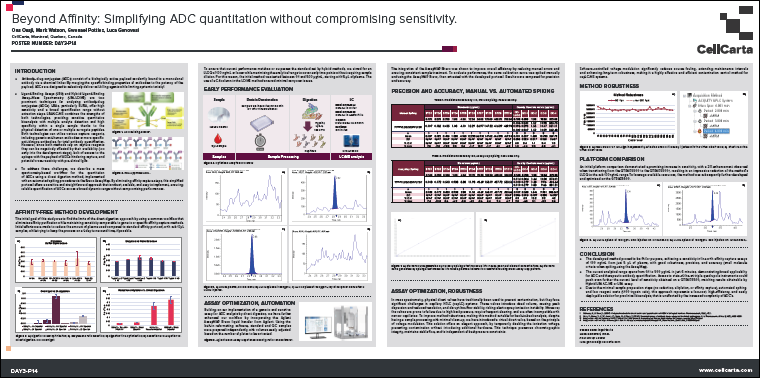
Cancer treatment is undergoing a transformation, with antibody-drug conjugates (ADCs) at the forefront of this progress1. ADCs consist of a monoclonal antibody conjugated to a cytotoxic payload, offering precise targeting and a potent killing effect against cancer cells1. The potential of these targeted therapies was exemplified in the groundbreaking work of Dr Thomas Powles, Director of the Bart’s Cancer Center, in which an ADC combination treatment more than doubled the median survival of bladder cancer patients.

Dr Powles’ work has earned him a spot in Nature’s 10 and TIME’s 100 lists for most influential people in science and health in 2024. He recently joined Christopher Ung, our Chief Scientific Business Officer, on our Let’s Talk webcast to share his first-hand, in-depth insights into ADCs. Here, we break down his research success and share his thoughts on the current and future ADC treatment landscape.

Dr Powles’ bladder cancer breakthrough

Dr Powles describes bladder cancer as a ‘Cinderella cancer’ due to there being little treatment progress over the last 40 years. The traditional approach — platinum-based chemotherapy — offers patients only modest benefits, with a median survival of around one year and a progression-free survival (PFS) of just six months.

However, Dr Powles’ trial of enfortumab vedotin (EV), a nectin-4 ADC, in combination with PD-1 inhibitor pembrolizumab, redefined expectations. The treatment more than doubled the median survival of patients, from one year with standard chemotherapy to 2.5 years, and doubled the PFS.

“We had tried many times to beat platinum-based chemotherapy and always failed. This was the first time we succeeded, but we didn’t just succeed—it was transformative,” said Dr Powles. “I wouldn’t have said this two years ago, but I think we might cure bladder cancer.”

The results of the EV-pembro trial highlight the potential of ADCs to reshape the cancer treatment landscape.

Expanding horizons: the growing role of ADCs in cancer treatment

In bladder cancer, EV-pembro has already replaced the traditional platinum-based chemotherapy as the front-line treatment. Dr Powles views ADCs as a “second-generation, targeted chemotherapy” with the potential to replace traditional approaches in some cancers. In the webcast, he highlighted several areas where ADCs are already in use, and where they hold future promise:

  • Breast cancer: The ADC trastuzumab deruxtecan (TDXd) has been approved to treat HER2-low breast cancers, an area where treatment options were previously limited. Research continues in potentially redefining biomarker selection to improve patient outcomes.
  • Lung cancer: Lung cancer research is currently undergoing rapid developments, with several ongoing trials of ADCs targeting Trop-2 (such as sacituzumab govitecan).
  • Urothelial cancer: In addition to EV-pembro, HER3-EGFR ADCs are showing promise in urothelial cancer, with an overall response rate of 43.5% in a recent trial.2
  • Hematological malignancies: ADCs targeting cluster of differentiation (CD) markers are currently being explored for lymphomas and leukemia.

The future of ADC development

While current ADCs have already transformed cancer treatment in some areas, Dr Powles believes there is still significant room for improvement. With advances in technology and drug design, future ADCs could be more effective and have fewer side effects.

“Even the established ADCs have a long way to go” said Dr Powles “I want to see new payloads, I want to see improved linker molecule technology, and I want to see duality of targeting. I think some of the issues we see today, like off target toxicity, could be resolved with these advancements.” He continues: “I foresee that we’re going to see a second generation of ADCs, and it’s going to be really promising.”

AI and biomarker-driven approaches are set to be key drivers of ADC advancement. Biomarkers are already essential in selecting patients for ADC treatments, but future ADCs may require more precise patient stratification. AI-powered digital pathology tools could improve the accuracy of biomarker detection, refining patient selection to ensure that treatments reach those most likely to benefit.

With these developments on the horizon, ADCs are poised to play an even greater role in cancer treatment — potentially redefining the standard of care across multiple cancer types.

To hear more of Dr Powles first-hand insights into the future of ADCs, watch the full webcast on-demand now: Webcast – Thomas Powles – Gated | CellCarta


About the Author:

author photo

Céline Vandamme is a Scientific Business Director at CellCarta, specializing in the flow cytometry platform. With a PhD in immunology, and a broad expertise gained through her work at various academic and pharmaceutical institutions, Céline has profuse experience in designing flow cytometry assays to support immune monitoring activities in clinical trials.
References

  1. Colombo R, Tarantino P, Rich J, et al. The Journey of Antibody–Drug Conjugates: Lessons Learned from 40 Years of Development. Cancer Discovery. 2024; 14 (11): 2089–2108.
  2. Ye D, Bian X, Yang T, Jiang S, et al. BL-B01D1, an EGFR x HER3 bispecific antibody-drug conjugate (ADC), in patients with locally advanced or metastatic urothelial carcinoma (UC). Ann Oncol. 2024; 35(suppl_2): S1135-S1169.

How Antibody-Drug Conjugates (ADCs) Are Advancing Precision Cancer Treatment

February 18, 2025

Cancer treatment is undergoing a transformation, with antibody-drug conjugates (ADCs) at the forefront of this progress1. ADCs consist of a monoclonal antibody conjugated to a cytotoxic payload, offering precise targeting and a potent killing effect against cancer cells1. The potential of these targeted therapies was exemplified in the groundbreaking work of Dr Thomas Powles, Director of the Bart’s Cancer Center, in which an ADC combination treatment more than doubled the median survival of bladder cancer patients.

Dr Powles’ work has earned him a spot in Nature’s 10 and TIME’s 100 lists for most influential people in science and health in 2024. He recently joined Christopher Ung, our Chief Scientific Business Officer, on our Let’s Talk webcast to share his first-hand, in-depth insights into ADCs. Here, we break down his research success and share his thoughts on the current and future ADC treatment landscape.

Dr Powles’ bladder cancer breakthrough

Dr Powles describes bladder cancer as a ‘Cinderella cancer’ due to there being little treatment progress over the last 40 years. The traditional approach — platinum-based chemotherapy — offers patients only modest benefits, with a median survival of around one year and a progression-free survival (PFS) of just six months.

However, Dr Powles’ trial of enfortumab vedotin (EV), a nectin-4 ADC, in combination with PD-1 inhibitor pembrolizumab, redefined expectations. The treatment more than doubled the median survival of patients, from one year with standard chemotherapy to 2.5 years, and doubled the PFS.

“We had tried many times to beat platinum-based chemotherapy and always failed. This was the first time we succeeded, but we didn’t just succeed—it was transformative,” said Dr Powles. “I wouldn’t have said this two years ago, but I think we might cure bladder cancer.”

The results of the EV-pembro trial highlight the potential of ADCs to reshape the cancer treatment landscape.

Expanding horizons: the growing role of ADCs in cancer treatment

In bladder cancer, EV-pembro has already replaced the traditional platinum-based chemotherapy as the front-line treatment. Dr Powles views ADCs as a “second-generation, targeted chemotherapy” with the potential to replace traditional approaches in some cancers. In the webcast, he highlighted several areas where ADCs are already in use, and where they hold future promise:

  • Breast cancer: The ADC trastuzumab deruxtecan (TDXd) has been approved to treat HER2-low breast cancers, an area where treatment options were previously limited. Research continues in potentially redefining biomarker selection to improve patient outcomes.
  • Lung cancer: Lung cancer research is currently undergoing rapid developments, with several ongoing trials of ADCs targeting Trop-2 (such as sacituzumab govitecan).
  • Urothelial cancer: In addition to EV-pembro, HER3-EGFR ADCs are showing promise in urothelial cancer, with an overall response rate of 43.5% in a recent trial.2
  • Hematological malignancies: ADCs targeting cluster of differentiation (CD) markers are currently being explored for lymphomas and leukemia.

The future of ADC development

While current ADCs have already transformed cancer treatment in some areas, Dr Powles believes there is still significant room for improvement. With advances in technology and drug design, future ADCs could be more effective and have fewer side effects.

“Even the established ADCs have a long way to go” said Dr Powles “I want to see new payloads, I want to see improved linker molecule technology, and I want to see duality of targeting. I think some of the issues we see today, like off target toxicity, could be resolved with these advancements.” He continues: “I foresee that we’re going to see a second generation of ADCs, and it’s going to be really promising.”

AI and biomarker-driven approaches are set to be key drivers of ADC advancement. Biomarkers are already essential in selecting patients for ADC treatments, but future ADCs may require more precise patient stratification. AI-powered digital pathology tools could improve the accuracy of biomarker detection, refining patient selection to ensure that treatments reach those most likely to benefit.

With these developments on the horizon, ADCs are poised to play an even greater role in cancer treatment — potentially redefining the standard of care across multiple cancer types.

To hear more of Dr Powles first-hand insights into the future of ADCs, watch the full webcast on-demand now: Webcast – Thomas Powles – Gated | CellCarta


About the Author:

author photo

Céline Vandamme is a Scientific Business Director at CellCarta, specializing in the flow cytometry platform. With a PhD in immunology, and a broad expertise gained through her work at various academic and pharmaceutical institutions, Céline has profuse experience in designing flow cytometry assays to support immune monitoring activities in clinical trials.

References

  1. Colombo R, Tarantino P, Rich J, et al. The Journey of Antibody–Drug Conjugates: Lessons Learned from 40 Years of Development. Cancer Discovery. 2024; 14 (11): 2089–2108.
  2. Ye D, Bian X, Yang T, Jiang S, et al. BL-B01D1, an EGFR x HER3 bispecific antibody-drug conjugate (ADC), in patients with locally advanced or metastatic urothelial carcinoma (UC). Ann Oncol. 2024; 35(suppl_2): S1135-S1169.

Let's Talk: A Conversation with Dr. Thomas Powles

November 28, 2024

In this webcast, Dr. Thomas Powles, Chair of Barts Cancer Centre (UK), joins Christopher Ung, our Chief Scientific Business Officer, for an in-depth conversation on the latest on Antibody Drug Conjugates (ADCs) and other innovative cancer therapies.

Key topics discussed in this webcast:

  • The challenges of treating metastatic bladder cancer
  • Targeting metastatic bladder cancer with Nectin-4 ADC
  • New ways of thinking about biomarkers for ADCs
  • How spatial biology could improve ADC assessment
  • Bi-specifics and other innovative therapies for metastatic bladder cancer
  • Being a physician and running clinical trials
author photo

Dr. Powles is a renowned expert in urology cancer and drug development, serving as the Chair of the Barts Cancer Centre at St. Bartholomew’s Hospital, Queen Mary University of London. He leads numerous clinical trials across all phases. Notably, his work in bladder and renal cancer has been pivotal in establishing new immunotherapy and antibody drug conjugate treatments as standards of care globally. Dr. Powles has been included in TIME’s list of the 100 most influential people in global health and in the Nature10 list in 2023.

author photo

Christopher Ung is CellCarta’s Chief Scientific Business Officer and has served in the companion diagnostics field since its inception. He is one of the original pioneers of the personalized medicine field. Mr. Ung currently leads the development and execution of CellCarta’s strategic and business initiatives, leveraging the company’s solid tumor and anatomic pathology services.

Let's Talk: A Conversation with Dr. Thomas Powles

November 28, 2024

In this webcast, Dr. Thomas Powles, Chair of Barts Cancer Centre (UK), joins Christopher Ung, our Chief Scientific Business Officer, for an in-depth conversation on the latest on Antibody Drug Conjugates (ADCs) and other innovative cancer therapies.

Key topics discussed in this webcast:

  • The challenges of treating metastatic bladder cancer
  • Targeting metastatic bladder cancer with Nectin-4 ADC
  • New ways of thinking about biomarkers for ADCs
  • How spatial biology could improve ADC assessment
  • Bi-specifics and other innovative therapies for metastatic bladder cancer
  • Being a physician and running clinical trials
author photo

Dr. Powles is a renowned expert in urology cancer and drug development, serving as the Chair of the Barts Cancer Centre at St. Bartholomew’s Hospital, Queen Mary University of London. He leads numerous clinical trials across all phases. Notably, his work in bladder and renal cancer has been pivotal in establishing new immunotherapy and antibody drug conjugate treatments as standards of care globally. Dr. Powles has been included in TIME’s list of the 100 most influential people in global health and in the Nature10 list in 2023.

author photo

Christopher Ung is CellCarta’s Chief Scientific Business Officer and has served in the companion diagnostics field since its inception. He is one of the original pioneers of the personalized medicine field. Mr. Ung currently leads the development and execution of CellCarta’s strategic and business initiatives, leveraging the company’s solid tumor and anatomic pathology services.

Antibody Drug Quantification LC MRM MS

November 4, 2018

Absolute Quantitation of Five Antibody Drug Products in Dosed Monkey Serum, CSF and Brain Lysate for Lead Candidate Identification Using LC-MRM/MS, AAPS 2018.

Absolute Quantitation of Biotherapeutic Drug Product and Endogenous Protein in Human Serum Using a Hybrid Immunoassay-LC/MS Approach

Antibody Drug Quantification LC MRM MS

November 4, 2018

Absolute Quantitation of Five Antibody Drug Products in Dosed Monkey Serum, CSF and Brain Lysate for Lead Candidate Identification Using LC-MRM/MS, AAPS 2018.

Absolute Quantitation of Biotherapeutic Drug Product and Endogenous Protein in Human Serum Using a Hybrid Immunoassay-LC/MS Approach