Predicting Immune Checkpoint Response with Tumor RNA-Seq Dat

April 8, 2024

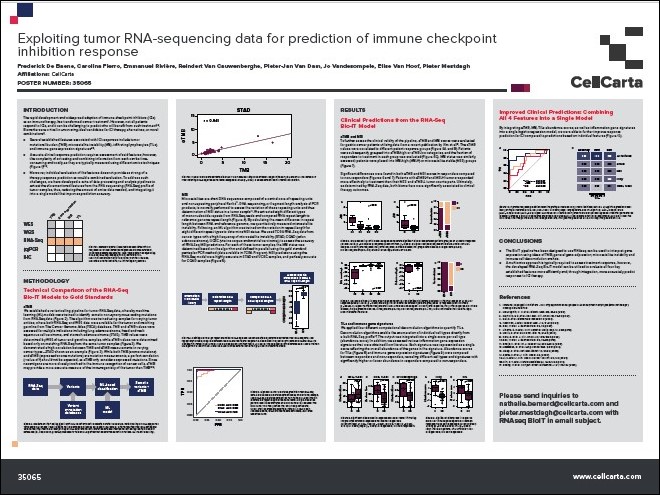
CellCarta’s study utilizes tumor RNA-sequencing data to predict immune checkpoint inhibition (ICI) response in cancer patients. The developed RNA-Seq Bio-IT model integrates features like tumor mutational burden (TMB), microsatellite instability (MSI), tumor infiltrating lymphocytes (TILs), and immune gene expression signatures to enhance the prediction of clinical responses to ICI therapy.

This model reduces the complexity and cost associated with multi-omics approaches and provides a more accurate prediction of therapy outcomes, potentially improving patient selection for ICI treatment.

View the poster:

Exploiting tumor RNA-sequencing data for prediction of immune checkpoint inhibition response

Predicting Immune Checkpoint Response with Tumor RNA-Seq Dat

April 8, 2024

CellCarta’s study utilizes tumor RNA-sequencing data to predict immune checkpoint inhibition (ICI) response in cancer patients. The developed RNA-Seq Bio-IT model integrates features like tumor mutational burden (TMB), microsatellite instability (MSI), tumor infiltrating lymphocytes (TILs), and immune gene expression signatures to enhance the prediction of clinical responses to ICI therapy.

This model reduces the complexity and cost associated with multi-omics approaches and provides a more accurate prediction of therapy outcomes, potentially improving patient selection for ICI treatment.

View the poster:

Exploiting tumor RNA-sequencing data for prediction of immune checkpoint inhibition response

How HLA Typing Improves Immunotherapy Precision

December 6, 2023

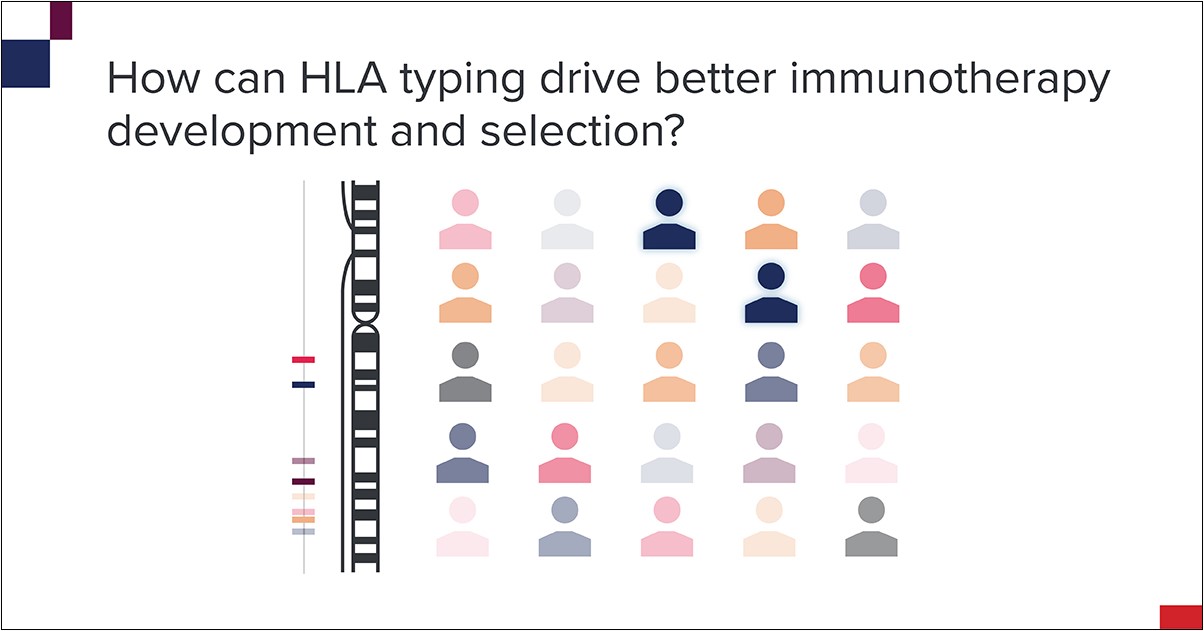
How can HLA typing drive better immunotherapy development and selection

Immunotherapies hold enormous potential for cancer treatment, but understanding tumor–immune interactions is needed to successfully develop new therapies and identify suitable patients.

Human leucocyte antigen (HLA) typing gives deeper insights into the relationship between the immune system and cancer cells, helping scientists improve immunotherapy administration precision and develop new immunotherapeutic approaches. But what is it?

A deeper dive into HLA typing

HLAs are a combination of different single nucleotide polymorphisms (SNPs) across multiple exons. The HLA system helps the immune system distinguish between self and non-self cells by presenting antigens derived from pathogens, cancer cells, or other foreign entities to immune cells, triggering a response. HLAs are therefore pivotal in cancer immunotherapy — cancer-specific antigens are presented on HLA molecules, which T cells recognize, attack, and kill.

HLA allele and antigen composition varies significantly between individuals, however, so determining their HLA profile — HLA typing — is essential to understand disease onset, progression, and treatment.

How is HLA typing performed?

Most researchers use Sanger sequencing for HLA typing, which detects SNPs. But since both copies of the genes are sequenced together in one reaction, researchers struggle to identify whether the SNPs come from the same (cis) or the opposite (trans) chromosome, making establishing the correct HLA type difficult. Next-generation sequencing (NGS) overcomes cis/trans polymorphism ambiguities by independently identifying and amplifying individual DNA fragments for more accurate typing.

HLA typing in action

Three recent publications highlight the impact of HLA profiling in immunotherapy development:

1.    Immunotherapy in oncology

HLA type affects an individual’s susceptibility to infections or autoimmune diseases, or their oncological immunotherapy response. A 2019 publication discussed how understanding a patient’s HLA profile is vital to effectively tailor immunotherapeutic treatments. Particularly, researchers should match the HLA types of cancer patients with potential donor HLA types to improve the success of treatments like adoptive cell therapy or stem cell therapy.

HLA typing is essential in CAR T-cell therapy, where it helps in the engineering of T cells to target tumor antigens, expanding immunotherapy applications beyond standard treatments.

2.    Precision medicine

HLA genotyping can help researchers to predict the survival of HLA alleles among cancers, based on an underlying cytolytic activity (CYT) mechanism. A recent study showed that a strong HLA allele, in combination with a high tumor mutation burden, could stimulate intensive immune CYT and lead to extended HLA survival. As HLA profiles differ between patients, typing can therefore support oncologists in selecting the most appropriate immunotherapy for an individual.

3.    Viral associated cancer

The 2019 article also highlighted that carcinogenic viruses activate genes that allow cancer cells to escape immune surveillance and proliferate uncontrolled. A patient’s HLA profile plays a significant role in these immune escape mechanisms, leading to the initiation of such cancers and influencing immunotherapy response. Understanding HLA profiles can therefore help effective cancer vaccine design, improving patient outcomes.

Immunotherapy is a promising approach to treat cancers — and HLA typing is key to unlocking its potential. With HLA typing, researchers can better tailor therapies, select the right treatment, and design more effective cancer vaccines.

NGS is critical to getting clearer results from your HLA typing.

Future of HLA Typing: Artificial Intelligence and Predictive Algorithms

As HLA typing evolves, the integration of AI and machine learning is becoming key to advancing immunotherapy.

These technologies are being used to develop predictive models that combine HLA typing with tumor mutational burden (TMB), and other biomarkers, to forecast patient responses to immune checkpoint inhibitors.

This multidisciplinary approach is expected to revolutionize the personalization of cancer treatments.

At CellCarta we developed our own data analysis pipeline to evaluate immune checkpoint biomarkers by looking at RNA sequencing data.

Discover CellCarta’s genomics services.


About the author: 

Author photo

Nathalie Bernard (PhD) is the scientific business director for the Genomics Services unit within CellCarta. Her background is in molecular biology, and she has many years of experience in PCR and sequencing, technologies used to discover or identify DNA and RNA biomarkers of clinical utility. At CellCarta, Nathalie is using her expertise to guide our customers in finding the best solution to their genomic questions.

How HLA Typing Improves Immunotherapy Precision

December 6, 2023

How can HLA typing drive better immunotherapy development and selection

Immunotherapies hold enormous potential for cancer treatment, but understanding tumor–immune interactions is needed to successfully develop new therapies and identify suitable patients.

Human leucocyte antigen (HLA) typing gives deeper insights into the relationship between the immune system and cancer cells, helping scientists improve immunotherapy administration precision and develop new immunotherapeutic approaches. But what is it?

A deeper dive into HLA typing

HLAs are a combination of different single nucleotide polymorphisms (SNPs) across multiple exons. The HLA system helps the immune system distinguish between self and non-self cells by presenting antigens derived from pathogens, cancer cells, or other foreign entities to immune cells, triggering a response. HLAs are therefore pivotal in cancer immunotherapy — cancer-specific antigens are presented on HLA molecules, which T cells recognize, attack, and kill.

HLA allele and antigen composition varies significantly between individuals, however, so determining their HLA profile — HLA typing — is essential to understand disease onset, progression, and treatment.

How is HLA typing performed?

Most researchers use Sanger sequencing for HLA typing, which detects SNPs. But since both copies of the genes are sequenced together in one reaction, researchers struggle to identify whether the SNPs come from the same (cis) or the opposite (trans) chromosome, making establishing the correct HLA type difficult. Next-generation sequencing (NGS) overcomes cis/trans polymorphism ambiguities by independently identifying and amplifying individual DNA fragments for more accurate typing.

HLA typing in action

Three recent publications highlight the impact of HLA profiling in immunotherapy development:

1.    Immunotherapy in oncology

HLA type affects an individual’s susceptibility to infections or autoimmune diseases, or their oncological immunotherapy response. A 2019 publication discussed how understanding a patient’s HLA profile is vital to effectively tailor immunotherapeutic treatments. Particularly, researchers should match the HLA types of cancer patients with potential donor HLA types to improve the success of treatments like adoptive cell therapy or stem cell therapy.

HLA typing is essential in CAR T-cell therapy, where it helps in the engineering of T cells to target tumor antigens, expanding immunotherapy applications beyond standard treatments.

2.    Precision medicine

HLA genotyping can help researchers to predict the survival of HLA alleles among cancers, based on an underlying cytolytic activity (CYT) mechanism. A recent study showed that a strong HLA allele, in combination with a high tumor mutation burden, could stimulate intensive immune CYT and lead to extended HLA survival. As HLA profiles differ between patients, typing can therefore support oncologists in selecting the most appropriate immunotherapy for an individual.

3.    Viral associated cancer

The 2019 article also highlighted that carcinogenic viruses activate genes that allow cancer cells to escape immune surveillance and proliferate uncontrolled. A patient’s HLA profile plays a significant role in these immune escape mechanisms, leading to the initiation of such cancers and influencing immunotherapy response. Understanding HLA profiles can therefore help effective cancer vaccine design, improving patient outcomes.

Immunotherapy is a promising approach to treat cancers — and HLA typing is key to unlocking its potential. With HLA typing, researchers can better tailor therapies, select the right treatment, and design more effective cancer vaccines.

NGS is critical to getting clearer results from your HLA typing.

Future of HLA Typing: Artificial Intelligence and Predictive Algorithms

As HLA typing evolves, the integration of AI and machine learning is becoming key to advancing immunotherapy.

These technologies are being used to develop predictive models that combine HLA typing with tumor mutational burden (TMB), and other biomarkers, to forecast patient responses to immune checkpoint inhibitors.

This multidisciplinary approach is expected to revolutionize the personalization of cancer treatments.

At CellCarta we developed our own data analysis pipeline to evaluate immune checkpoint biomarkers by looking at RNA sequencing data.

Discover CellCarta’s genomics services.


About the author: 

Author photo

Nathalie Bernard (PhD) is the scientific business director for the Genomics Services unit within CellCarta. Her background is in molecular biology, and she has many years of experience in PCR and sequencing, technologies used to discover or identify DNA and RNA biomarkers of clinical utility. At CellCarta, Nathalie is using her expertise to guide our customers in finding the best solution to their genomic questions.

Accurately Predict Immune Checkpoint Inhibition Response Using Only RNA-Seq Data

June 27, 2023

  • Discover how we have improved response predictions for immune checkpoint inhibitor (ICI) therapies.
  • Explore our unique computational pipeline that defines multiple characteristics (eTMB, MSI, and more) directly from the RNA-sequencing profile of a tumor.

Accurately Predict Immune Checkpoint Inhibition Response Using Only RNA-Seq Data

June 27, 2023

  • Discover how we have improved response predictions for immune checkpoint inhibitor (ICI) therapies.
  • Explore our unique computational pipeline that defines multiple characteristics (eTMB, MSI, and more) directly from the RNA-sequencing profile of a tumor.

Predicting Immune Checkpoint Inhibitor Response via RNA-Seq CellCarta

June 6, 2023

Various biomarkers, such as PD-L1 expression, tumor mutation burden (TMB), cytotoxic T-cell infiltration, Microsatellite Instability (MSI), and immune gene signatures, have been proposed to predict immune checkpoint inhibitor response.

However, individual biomarkers have limited accuracy. To overcome this, a computational pipeline has been developed to quantify biomarkers including expressed mutation burden (eTMB), MSI status, infiltrating immune cells, and immune gene expression signatures from tumor RNA-sequencing data.

Machine learning and computational deconvolution algorithms enhance performance, validated on large cohorts.

Integration of these biomarkers improves the prediction of checkpoint inhibition therapy response.

Viewers will gain insights into:

  • A unique computational pipeline that defines several characteristics directly from the RNA-sequencing profile of a tumor such as:
    • Expressed mutation burden (eTMB)
    • Fraction of infiltrating immune cells
    • Various immune gene expression signatures
  • How this analysis is compatible with formalin-fixed paraffin-embedded (FFPE) tumor samples and does not require a matched germline DNA sample

Pieter Mestdagh, Computational Biology Manager, CellCarta

Pieter Mestdagh is a Computational Biology Manager at CellCarta, and Professor at Ghent University, Belgium. He holds master’s degrees in industrial engineering (2004) and in bioscience engineering (2006) and obtained a PhD in biomedical sciences (2011).

He is the author of more than 100 scientific articles in international journals and co-inventor on several European patents.

Predicting Immune Checkpoint Inhibitor Response via RNA-Seq CellCarta

June 6, 2023

Various biomarkers, such as PD-L1 expression, tumor mutation burden (TMB), cytotoxic T-cell infiltration, Microsatellite Instability (MSI), and immune gene signatures, have been proposed to predict immune checkpoint inhibitor response.

However, individual biomarkers have limited accuracy. To overcome this, a computational pipeline has been developed to quantify biomarkers including expressed mutation burden (eTMB), MSI status, infiltrating immune cells, and immune gene expression signatures from tumor RNA-sequencing data.

Machine learning and computational deconvolution algorithms enhance performance, validated on large cohorts.

Integration of these biomarkers improves the prediction of checkpoint inhibition therapy response.

Viewers will gain insights into:

  • A unique computational pipeline that defines several characteristics directly from the RNA-sequencing profile of a tumor such as:
    • Expressed mutation burden (eTMB)
    • Fraction of infiltrating immune cells
    • Various immune gene expression signatures
  • How this analysis is compatible with formalin-fixed paraffin-embedded (FFPE) tumor samples and does not require a matched germline DNA sample

Pieter Mestdagh, Computational Biology Manager, CellCarta

Pieter Mestdagh is a Computational Biology Manager at CellCarta, and Professor at Ghent University, Belgium. He holds master’s degrees in industrial engineering (2004) and in bioscience engineering (2006) and obtained a PhD in biomedical sciences (2011).

He is the author of more than 100 scientific articles in international journals and co-inventor on several European patents.

Genomic Profiling with TSO500: Advance Cancer Research Tool by CellCarta

May 15, 2023

Precise and reliable genomic profiling is key for identifying new therapeutic targets, making treatment decisions, and monitoring disease progression. Uncovering critical genetic information about tumor biology, predictive biomarkers, and immune responses can aid in the selection of appropriate patients and optimize study outcomes.

The TruSight Oncology 500 (TSO500) panel is a cutting-edge next-generation sequencing (NGS) tool that enables comprehensive genomic profiling across a broad range of cancer types.

It covers 523 cancer-related genes from DNA and 55 from RNA, allowing for the detection of single nucleotide variants (SNVs), insertions/deletions (indels), copy number variations (CNVs), and gene fusions.1

With to possibility to analyze both tissue and liquid biopsy samples, TSO500 can provide a holistic view of the tumor’s genetic landscape, aiding in the identification of therapeutic targets.

With TSO500, labs have the flexibility to choose between manual or automated workflows. However, automated workflows achieve high-quality results with higher throughput, enhancing lab efficiency and saving labor costs. TSO500 assays improve biomarker discovery and provide insightful details using only a minimal amount of sample, thus saving precious samples.

Additionally, TSO500 offers automation options, enabling labs to process samples with minimal hands-on time, making it a valuable tool in high-throughput environments. This automation feature allows for processing up to 192 samples per run, significantly reducing costs and turnaround time for large-scale studies.

How can the TSO500 panel improve the development of cancer therapies?

The development of immunotherapies requires rigorous assessment of immuno-oncology biomarkers, including TMB and MSI, as well as other genetic markers such as RNA fusions, single nucleotide variant (SNV), insertions/deletions (indels), and copy number variation, all of which can be determined via TSO500 2,3.

MSI status has traditionally been evaluated via PCR and immunohistochemistry techniques. While such methods provide qualitative insight into MSI-stable or MSI-high status, the TSO500 assay evaluates 130 specific homopolymer MSI marker sites, producing a quantitative score for MSI status1. Additionally, determining consistent TMB values at low mutation levels can pose challenges when using smaller panels.

TSO500 overcomes this obstacle by seamlessly integrating genomic content with advanced algorithms, resulting in precise TMB estimates highly concordant with whole-exome studies (WES).

Its dual capability to assess both DNA and RNA in a single assay makes it an incredibly valuable technology when looking into uncover actionable mutations.

Consolidating multiple biomarker assays into one comprehensive NGS assay requires less sample, provides a quicker turnaround time, and significantly increases the chances of finding positive biomarkers1.

Improve TSO500 testing with CellCarta’s support

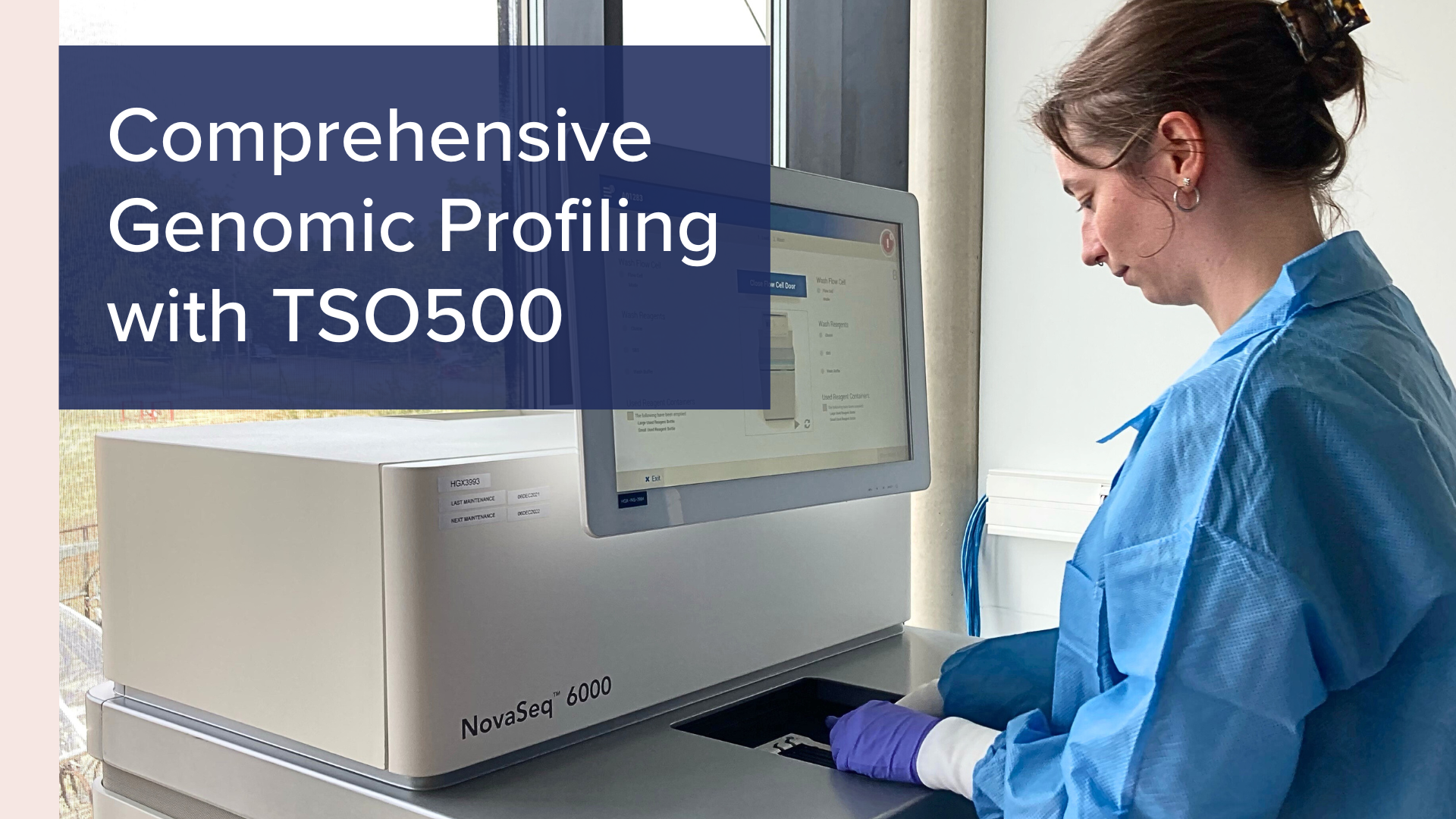
When conducting large-scale genomic studies, it is important to have access to required facilities and a reliable team with expertise in the latest technologies. Our global footprint and logistics expertise ensure that your samples reach our experts and undergo appropriate processing in a timely fashion. Large-scale genomic studies can become quite costly, which is why we offer the NovaSeq platform in conjunction with TSO500 to allow for analysis of 16-192 samples per run, thus providing scalable throughput for dynamic study sizes4.

Regulatory and Compliance Information

The TruSight Oncology Comprehensive panel (TSOComp) is approved by regulatory authorities both in Europe and United States, meaning it was validated under stringent regulatory standards for clinical diagnostics.

This regulatory approval ensures that TSOComp meets the necessary criteria for accuracy, reliability, and clinical utility in these locations.

Its compliance with global regulatory standards is crucial for its integration into clinical workflows, allowing the genomic data generated by TSOComp to inform critical treatment decisions with confidence.

At CellCarta, we offer our broad range of services and biomarker expertise to provide solutions for your study needs and to support our partners in propelling precision medicine. Contact our team to speak to an expert about your clinical trials.

About the author:

author photo

Sara Diels (PhD) is an assay development scientist at the Genomics Services unit within CellCarta. She led the implementation of the TSO500 High-Throughput and ctDNA assay at the Antwerp site. Her background is in molecular biology, and she has experience in the field of disease genetics where different -omics technologies are used to examine multifactorial inheritance. At CellCarta, Sara has expanded her expertise with the development and validation of PCR- and NGS-based assays.
References

  1. TruSight Oncology 500 Assay | For pan-cancer biomarkers in DNA and RNA. https://www.illumina.com/products/by-type/clinical-research-products/trusight-oncology-500.html.
  2. Pestinger, V. et al. Use of an Integrated Pan-Cancer Oncology Enrichment Next-Generation Sequencing Assay to Measure Tumour Mutational Burden and Detect Clinically Actionable Variants. Mol Diagn Ther 24, 339–349 (2020).
  3. Wei, B. et al. Evaluation of the TruSight Oncology 500 Assay for Routine Clinical Testing of Tumor Mutational Burden and Clinical Utility for Predicting Response to Pembrolizumab. Journal of Molecular Diagnostics 24, 600–608 (2022).
  4. NovaSeq 6000 System. https://www.illumina.com/systems/sequencing-platforms/novaseq.html

Genomic Profiling with TSO500: Advance Cancer Research Tool by CellCarta

May 15, 2023

Precise and reliable genomic profiling is key for identifying new therapeutic targets, making treatment decisions, and monitoring disease progression. Uncovering critical genetic information about tumor biology, predictive biomarkers, and immune responses can aid in the selection of appropriate patients and optimize study outcomes.

The TruSight Oncology 500 (TSO500) panel is a cutting-edge next-generation sequencing (NGS) tool that enables comprehensive genomic profiling across a broad range of cancer types.

It covers 523 cancer-related genes from DNA and 55 from RNA, allowing for the detection of single nucleotide variants (SNVs), insertions/deletions (indels), copy number variations (CNVs), and gene fusions.1

With to possibility to analyze both tissue and liquid biopsy samples, TSO500 can provide a holistic view of the tumor’s genetic landscape, aiding in the identification of therapeutic targets.

With TSO500, labs have the flexibility to choose between manual or automated workflows. However, automated workflows achieve high-quality results with higher throughput, enhancing lab efficiency and saving labor costs. TSO500 assays improve biomarker discovery and provide insightful details using only a minimal amount of sample, thus saving precious samples.

Additionally, TSO500 offers automation options, enabling labs to process samples with minimal hands-on time, making it a valuable tool in high-throughput environments. This automation feature allows for processing up to 192 samples per run, significantly reducing costs and turnaround time for large-scale studies.

How can the TSO500 panel improve the development of cancer therapies?

The development of immunotherapies requires rigorous assessment of immuno-oncology biomarkers, including TMB and MSI, as well as other genetic markers such as RNA fusions, single nucleotide variant (SNV), insertions/deletions (indels), and copy number variation, all of which can be determined via TSO500 2,3.

MSI status has traditionally been evaluated via PCR and immunohistochemistry techniques. While such methods provide qualitative insight into MSI-stable or MSI-high status, the TSO500 assay evaluates 130 specific homopolymer MSI marker sites, producing a quantitative score for MSI status1. Additionally, determining consistent TMB values at low mutation levels can pose challenges when using smaller panels.

TSO500 overcomes this obstacle by seamlessly integrating genomic content with advanced algorithms, resulting in precise TMB estimates highly concordant with whole-exome studies (WES).

Its dual capability to assess both DNA and RNA in a single assay makes it an incredibly valuable technology when looking into uncover actionable mutations.

Consolidating multiple biomarker assays into one comprehensive NGS assay requires less sample, provides a quicker turnaround time, and significantly increases the chances of finding positive biomarkers1.

Improve TSO500 testing with CellCarta’s support

When conducting large-scale genomic studies, it is important to have access to required facilities and a reliable team with expertise in the latest technologies. Our global footprint and logistics expertise ensure that your samples reach our experts and undergo appropriate processing in a timely fashion. Large-scale genomic studies can become quite costly, which is why we offer the NovaSeq platform in conjunction with TSO500 to allow for analysis of 16-192 samples per run, thus providing scalable throughput for dynamic study sizes4.

Regulatory and Compliance Information

The TruSight Oncology Comprehensive panel (TSOComp) is approved by regulatory authorities both in Europe and United States, meaning it was validated under stringent regulatory standards for clinical diagnostics.

This regulatory approval ensures that TSOComp meets the necessary criteria for accuracy, reliability, and clinical utility in these locations.

Its compliance with global regulatory standards is crucial for its integration into clinical workflows, allowing the genomic data generated by TSOComp to inform critical treatment decisions with confidence.

At CellCarta, we offer our broad range of services and biomarker expertise to provide solutions for your study needs and to support our partners in propelling precision medicine. Contact our team to speak to an expert about your clinical trials.

About the author:

author photo

Sara Diels (PhD) is an assay development scientist at the Genomics Services unit within CellCarta. She led the implementation of the TSO500 High-Throughput and ctDNA assay at the Antwerp site. Her background is in molecular biology, and she has experience in the field of disease genetics where different -omics technologies are used to examine multifactorial inheritance. At CellCarta, Sara has expanded her expertise with the development and validation of PCR- and NGS-based assays.

References

  1. TruSight Oncology 500 Assay | For pan-cancer biomarkers in DNA and RNA. https://www.illumina.com/products/by-type/clinical-research-products/trusight-oncology-500.html.
  2. Pestinger, V. et al. Use of an Integrated Pan-Cancer Oncology Enrichment Next-Generation Sequencing Assay to Measure Tumour Mutational Burden and Detect Clinically Actionable Variants. Mol Diagn Ther 24, 339–349 (2020).
  3. Wei, B. et al. Evaluation of the TruSight Oncology 500 Assay for Routine Clinical Testing of Tumor Mutational Burden and Clinical Utility for Predicting Response to Pembrolizumab. Journal of Molecular Diagnostics 24, 600–608 (2022).
  4. NovaSeq 6000 System. https://www.illumina.com/systems/sequencing-platforms/novaseq.html