Accurately Predict Immune Checkpoint Inhibition Response Using Only RNA-Seq Data

June 27, 2023

  • Discover how we have improved response predictions for immune checkpoint inhibitor (ICI) therapies.
  • Explore our unique computational pipeline that defines multiple characteristics (eTMB, MSI, and more) directly from the RNA-sequencing profile of a tumor.

Accurately Predict Immune Checkpoint Inhibition Response Using Only RNA-Seq Data

June 27, 2023

  • Discover how we have improved response predictions for immune checkpoint inhibitor (ICI) therapies.
  • Explore our unique computational pipeline that defines multiple characteristics (eTMB, MSI, and more) directly from the RNA-sequencing profile of a tumor.

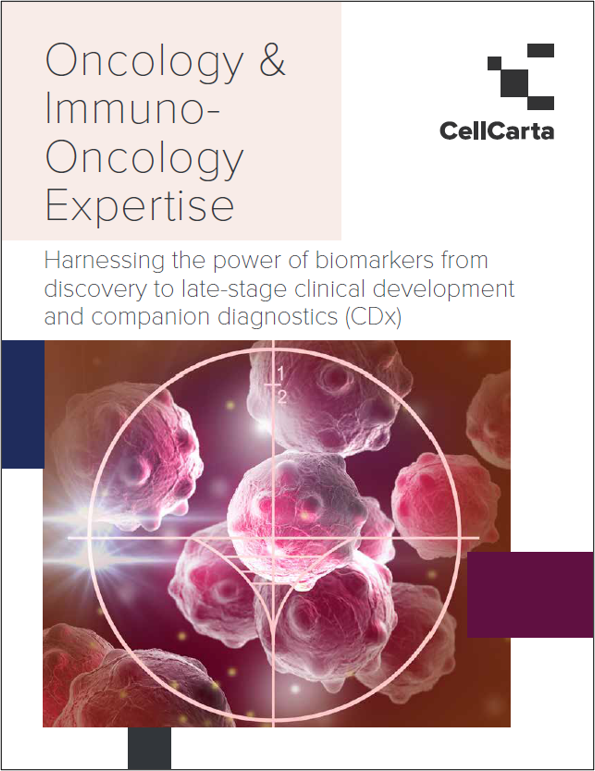
Oncology & Immuno-Oncology Expertise

November 5, 2021

DOWNLOAD OUR BROCHURE

OncologyExpertise-cover

Harnessing the power of biomarkers from discovery to late-stage clinical development and companion diagnostics (CDx)

Oncology & Immuno-Oncology Expertise

November 5, 2021

DOWNLOAD OUR BROCHURE

OncologyExpertise-cover

Harnessing the power of biomarkers from discovery to late-stage clinical development and companion diagnostics (CDx)

Biomarkers and Correlates in Infection and Immunity

June 26, 2020

Fast-tracking the development of treatments and ensuring early selection of a promising one depends on your ability to identify significant correlates during both pre-clinical and clinical phases.

In this webinar, we use case studies to show the importance of a multi-disciplinary systems approach in the identification of these correlates.

Understanding both pathogen and host, and their interactions, is essential to fully assess the effect of infectious diseases. The gold standard for diagnosis of an infection has been to demonstrate the presence of pathogen.

However, disease severity, progression, as well as response to treatment are often more dependent on the status of the host. Therefore, an appropriately detailed assessment of the host response will substantially inform the evaluation of antimicrobial prophylactics and therapeutics.

The immune response is complex and collaborative. A robust immune response requires multiple cell lineages and soluble factors to work in concert.

The immune response, however, can be influenced by multiple host factors including co-morbidities, levels of immune competence, type of immune response and age of the host. These factors are often meaningfully represented in specific at-risk populations and therefore need to be accounted for in development programs.

All of these factors are prevalent in the high-risk groups susceptible to the COVID19 pandemic, and age and immune function have been shown to be factors affecting vaccination generally. Furthermore, the immune correlates of protection necessary for successful vaccine development may not be the same as those required for successful therapy development.

A multi-disciplinary systems approach for the measurement of the host response is thus required to successfully address all these variables.

This presentation will support this argument by drawing examples from our extensive previous experience identifying infectious disease biomarkers in pre-clinical and clinical trial settings for diagnostic, disease progression, or treatment response applications using a variety of platforms.

The case studies will survey the identification of predictive biomarkers of disease progression and response to vaccination, as well as cellular and soluble protein correlates of vaccine response.

Speaker: Eustache Paramithiotis PhD, Vice-President, Research & Development, Caprion Biosciences Inc.

Learn more about CellCarta.

Biomarkers and Correlates in Infection and Immunity

June 26, 2020

Fast-tracking the development of treatments and ensuring early selection of a promising one depends on your ability to identify significant correlates during both pre-clinical and clinical phases.

In this webinar, we use case studies to show the importance of a multi-disciplinary systems approach in the identification of these correlates.

Understanding both pathogen and host, and their interactions, is essential to fully assess the effect of infectious diseases. The gold standard for diagnosis of an infection has been to demonstrate the presence of pathogen.

However, disease severity, progression, as well as response to treatment are often more dependent on the status of the host. Therefore, an appropriately detailed assessment of the host response will substantially inform the evaluation of antimicrobial prophylactics and therapeutics.

The immune response is complex and collaborative. A robust immune response requires multiple cell lineages and soluble factors to work in concert.

The immune response, however, can be influenced by multiple host factors including co-morbidities, levels of immune competence, type of immune response and age of the host. These factors are often meaningfully represented in specific at-risk populations and therefore need to be accounted for in development programs.

All of these factors are prevalent in the high-risk groups susceptible to the COVID19 pandemic, and age and immune function have been shown to be factors affecting vaccination generally. Furthermore, the immune correlates of protection necessary for successful vaccine development may not be the same as those required for successful therapy development.

A multi-disciplinary systems approach for the measurement of the host response is thus required to successfully address all these variables.

This presentation will support this argument by drawing examples from our extensive previous experience identifying infectious disease biomarkers in pre-clinical and clinical trial settings for diagnostic, disease progression, or treatment response applications using a variety of platforms.

The case studies will survey the identification of predictive biomarkers of disease progression and response to vaccination, as well as cellular and soluble protein correlates of vaccine response.

Speaker: Eustache Paramithiotis PhD, Vice-President, Research & Development, Caprion Biosciences Inc.

Learn more about CellCarta.

Antigen Presentation: A Critical Step in Immune Therapy Dev.

June 10, 2020

In this webinar you will learn:

  • Successful antigen presentation is required to initiate an immune response
  • The most physiologically relevant way to measure the full breadth of antigen presentation is by direct observation of presented peptides using mass spectrometry
  • The quality and robustness of the mass spectrometry data generation is therefore a critical element

What is antigen presentation?

Antigen presentation is essential for development of a robust immune response.

Binding of an MHC-peptide complex by a T cell receptor is the initial and critical step for starting a new adaptive immune response or for regulating an ongoing one. Identification of effectively presented antigens is therefore a defining element for any successful immune therapy.

Antigen presentation can occur through MHC class I, class II, or non-classical MHC proteins. Each protein complex has characteristic tissue expression, type of antigen peptide presented, and role in the immune response.

Most lymphocytes including all of those with antigen presenting functions can express both MHC I and MHC II, and involvement of both MHC I- and MHC II-restricted responses is considered essential for a full immune response.

Non-classical MHC such as HLA-E and HLA-G are characterized by either a relatively restricted tissue distribution or antigen presentation repertoire and have specific roles to play in the establishment of robust immunity.

Direct observation of presented peptides by mass spectrometry has become required for novel epitope discovery. This approach is the most physiologically relevant way to detect the modified and unmodified peptides presented by any type of MHC.

Additionally, mass spectrometry can be used to quantify the peptide presentation to ensure that attractive targets are sufficiently expressed to trigger an immune reaction. The limiting factor has now become the quality of the mass spectrometry data generated.

This presentation will show examples of direct identification of novel presented peptides as well as survey the requirements for the industrialization of antigen presentation mass spectrometry to generate robust, reliable and quantitative measurements.

With an understanding that antigen presentation is required to initiate an immune response, we will discuss how to use this information in therapeutics development. Designing a good immune therapy requires that the antigen is specific to the targeted pathology, as well as immunogenic.

Those factors are especially relevant for modern immune therapies that seek to engage the host response as part of the complete therapy. Antigen presentation by mass spectrometry should therefore be embedded in a broader, integrated, characterization of host immunity.

Specific characterizations include evaluation of wider host antigen presentation to assess target specificity, monitoring the status of the host microenvironment, as well as host immune exhaustion before and after antigen dosing to better understand the capacity to respond to the therapy.

This presentation will depict case studies addressing each of these components of successful immune therapy candidates that start with successful antigen presentation.

Antigen presentation is the initial critical element, but for successful immune therapy development, antigen presentation should be embedded in an integrated assessment of host immunity

Speaker: Eustache Paramithiotis PhD, Vice-President, Research & Development, Caprion Biosciences Inc.

Antigen Presentation: A Critical Step in Immune Therapy Dev.

June 10, 2020

In this webinar you will learn:

  • Successful antigen presentation is required to initiate an immune response
  • The most physiologically relevant way to measure the full breadth of antigen presentation is by direct observation of presented peptides using mass spectrometry
  • The quality and robustness of the mass spectrometry data generation is therefore a critical element

What is antigen presentation?

Antigen presentation is essential for development of a robust immune response.

Binding of an MHC-peptide complex by a T cell receptor is the initial and critical step for starting a new adaptive immune response or for regulating an ongoing one. Identification of effectively presented antigens is therefore a defining element for any successful immune therapy.

Antigen presentation can occur through MHC class I, class II, or non-classical MHC proteins. Each protein complex has characteristic tissue expression, type of antigen peptide presented, and role in the immune response.

Most lymphocytes including all of those with antigen presenting functions can express both MHC I and MHC II, and involvement of both MHC I- and MHC II-restricted responses is considered essential for a full immune response.

Non-classical MHC such as HLA-E and HLA-G are characterized by either a relatively restricted tissue distribution or antigen presentation repertoire and have specific roles to play in the establishment of robust immunity.

Direct observation of presented peptides by mass spectrometry has become required for novel epitope discovery. This approach is the most physiologically relevant way to detect the modified and unmodified peptides presented by any type of MHC.

Additionally, mass spectrometry can be used to quantify the peptide presentation to ensure that attractive targets are sufficiently expressed to trigger an immune reaction. The limiting factor has now become the quality of the mass spectrometry data generated.

This presentation will show examples of direct identification of novel presented peptides as well as survey the requirements for the industrialization of antigen presentation mass spectrometry to generate robust, reliable and quantitative measurements.

With an understanding that antigen presentation is required to initiate an immune response, we will discuss how to use this information in therapeutics development. Designing a good immune therapy requires that the antigen is specific to the targeted pathology, as well as immunogenic.

Those factors are especially relevant for modern immune therapies that seek to engage the host response as part of the complete therapy. Antigen presentation by mass spectrometry should therefore be embedded in a broader, integrated, characterization of host immunity.

Specific characterizations include evaluation of wider host antigen presentation to assess target specificity, monitoring the status of the host microenvironment, as well as host immune exhaustion before and after antigen dosing to better understand the capacity to respond to the therapy.

This presentation will depict case studies addressing each of these components of successful immune therapy candidates that start with successful antigen presentation.

Antigen presentation is the initial critical element, but for successful immune therapy development, antigen presentation should be embedded in an integrated assessment of host immunity

Speaker: Eustache Paramithiotis PhD, Vice-President, Research & Development, Caprion Biosciences Inc.

Metaproteomic analysis of the infant fecal microbiome

September 30, 2018

Metaproteomic analysis of the infant fecal microbiome, HUPO 2018

HUPO 2018 poster

Metaproteomic analysis of the infant fecal microbiome

September 30, 2018

Metaproteomic analysis of the infant fecal microbiome, HUPO 2018

HUPO 2018 poster