How Interim Sample Storage Enhances Clinical Trial Outcomes

May 1, 2023
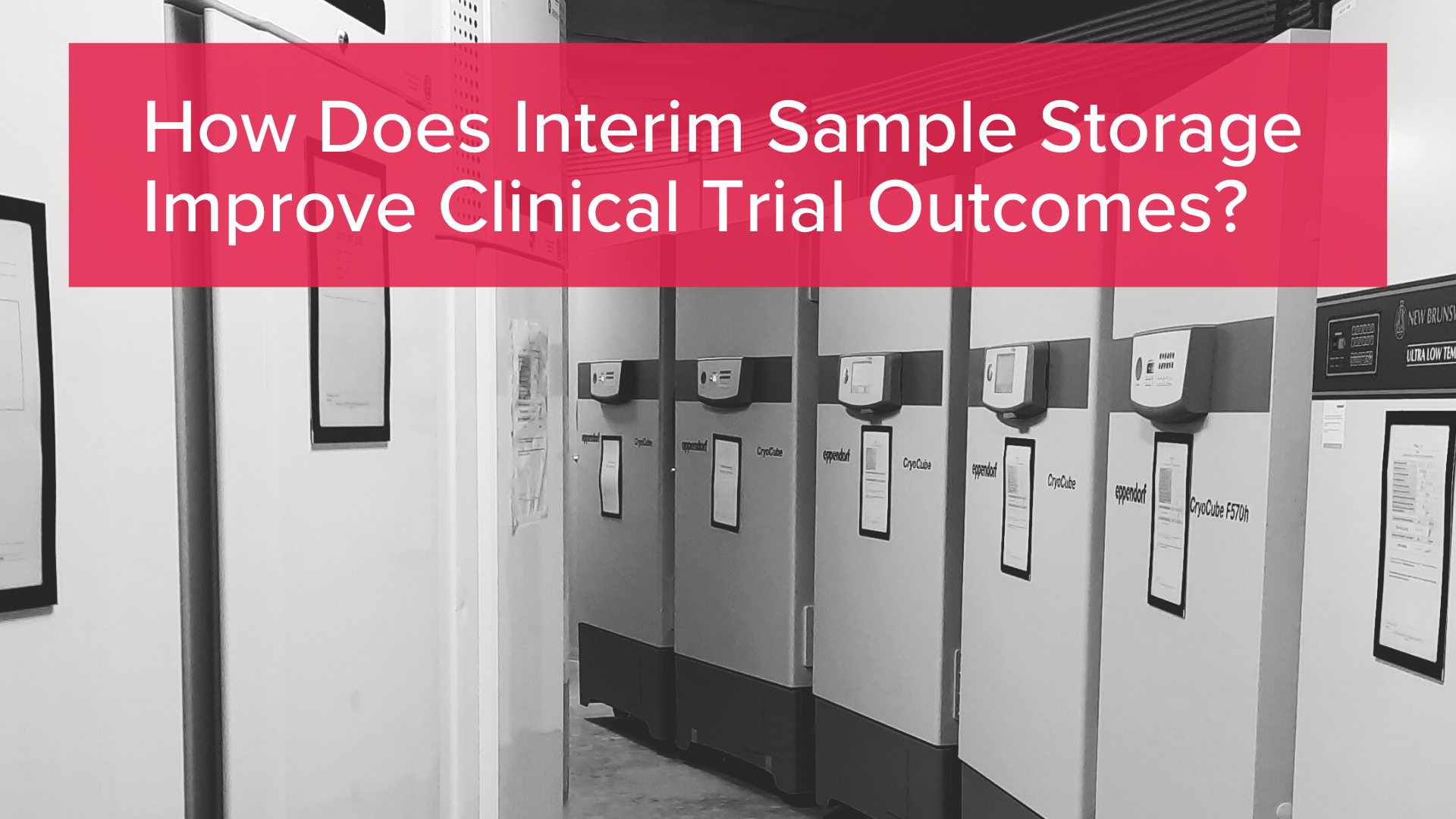
How Does Interim Sample Storage Improve Clinical Trial Outcomes?

Quality preservation of samples is key to ensuring reliable results from clinical trial testing. Therefore, when it comes to sample collection, shipping, and storage, decisions should be made with the utmost care and consideration.

Complex projects often involve multiple study sites and require the collection, processing, and testing of large numbers of samples. In such scenarios, it may not be feasible to conduct all the necessary preanalytical sample processing at each individual study site due to limited resources and expertise. To ensure the timely and accurate processing of samples, it is common practice to quickly remove the samples from the study site and to process and store them in a centralized facility for downstream testing. This allows for batch shipments of samples to central or specialty analytical labs, which can analyze many samples simultaneously and with a high degree of precision.

Interim sample storage services provide compliant and standardized preanalytical processing and maintenance of sample integrity and patient data throughout the process. Governance of storage facilities should include current industry best practices to ensure accountability with clinical, ethical, and legal operations.

Advantages of centralized sample storage

Sample storage can help you anticipate and resolve unpredictable complications that arise with clinical sample testing and shipping. Centralizing the operation can ensure consistency in sample processing, thus reducing variability and ultimately improving reproducibility of study results. Centralized storage also allows for quick sample removal, minimizing the risk of sample degradation or contamination, which can otherwise compromise the accuracy and validity of test results.

At CellCarta, storing clinical samples in one location is easy and dependable. Shipment and storage to one lab is less costly and requires less complex kits and instructions for the investigator sites. Prior to test initiation at a variety of downstream labs, samples can be shipped to the central storage locations to clean patient data on requisition forms via the automated Laboratory Information Management System (StarLIMS) query procedure over the CellCarta Customer Portal webserver, as well as to provide clean sample data inventory files per clinical trial at pre-defined intervals.

By keeping samples in our interim storage facility, we ensure their quick delivery to our many global facilities, thus sample test assignments can be rapidly applied. Post testing, remaining samples can return to interim storage facilities, providing convenient access to your inventory for other exploratory testing, if desired.

The need for proper and correct sample traceability

Storage facilities must meticulously track and manage samples. It is important to have independent operators who can ensure sample integrity when receiving, unpacking, labeling, entering, and storing samples.

At CellCarta, our standardized reception procedure consists of distinct qualified operators that adhere to a strict process, whereby samples are entered into StarLIMS, inspected for critical data, and stored. Post reception, all samples (independent of type or condition) follow accessioning and storage. Samples are individually accessioned in LIMS based on project-specific parameters (analytical/work plan): sample tracking including traceability with a full chain of custody. Thus, accurate sample inventory trackers can be provided either ad hoc or at an agreed upon interval with clients.

How should samples be stored?

Storage is dependent on sample type, expected length of storage, biomolecules of interest, and the intended downstream analysis. Samples should be processed and stored under the highest quality standards:

  • Active sample monitoring in a variety of temperatures
  • Active storage monitoring for temperature and environmental conditions (backup generators, redundant freezers on stand-by)
  • Active sample tracking and reconciliation with a LIMS

At CellCarta’s storage facilities we collect, catalogue, and maintain your clinical samples with the utmost care and meticulous quality management systems (QMS). Multisite research networks, clinical sample transport, processing, storage, and ultimately testing, require strict operational workflows and procedures, all of which can be expected at CellCarta. With more than 20 years of expert clinical trial support, adhering to industry best practices, we are proud of our continued performance and dedication to quality.

Contact our team to speak to an expert about your clinical trial needs.


About the author:

author photo

Michael Verelst is the Biosample Management & Preanalytics Section Head at CellCarta. He received his master’s degree in bio-engineering and postgraduate in clinical drug research. Based at the Antwerp site, he is responsible for the global management of samples related to histopathological or genomics testing, and interim storage. Michael has held various departmental roles within CellCarta over the past 10 years, building experience in the processing and analysis of clinical samples for various purposes.
How Interim Sample Storage Enhances Clinical Trial Outcomes

May 1, 2023

How Does Interim Sample Storage Improve Clinical Trial Outcomes?

Quality preservation of samples is key to ensuring reliable results from clinical trial testing. Therefore, when it comes to sample collection, shipping, and storage, decisions should be made with the utmost care and consideration.

Complex projects often involve multiple study sites and require the collection, processing, and testing of large numbers of samples. In such scenarios, it may not be feasible to conduct all the necessary preanalytical sample processing at each individual study site due to limited resources and expertise. To ensure the timely and accurate processing of samples, it is common practice to quickly remove the samples from the study site and to process and store them in a centralized facility for downstream testing. This allows for batch shipments of samples to central or specialty analytical labs, which can analyze many samples simultaneously and with a high degree of precision.

Interim sample storage services provide compliant and standardized preanalytical processing and maintenance of sample integrity and patient data throughout the process. Governance of storage facilities should include current industry best practices to ensure accountability with clinical, ethical, and legal operations.

Advantages of centralized sample storage

Sample storage can help you anticipate and resolve unpredictable complications that arise with clinical sample testing and shipping. Centralizing the operation can ensure consistency in sample processing, thus reducing variability and ultimately improving reproducibility of study results. Centralized storage also allows for quick sample removal, minimizing the risk of sample degradation or contamination, which can otherwise compromise the accuracy and validity of test results.

At CellCarta, storing clinical samples in one location is easy and dependable. Shipment and storage to one lab is less costly and requires less complex kits and instructions for the investigator sites. Prior to test initiation at a variety of downstream labs, samples can be shipped to the central storage locations to clean patient data on requisition forms via the automated Laboratory Information Management System (StarLIMS) query procedure over the CellCarta Customer Portal webserver, as well as to provide clean sample data inventory files per clinical trial at pre-defined intervals.

By keeping samples in our interim storage facility, we ensure their quick delivery to our many global facilities, thus sample test assignments can be rapidly applied. Post testing, remaining samples can return to interim storage facilities, providing convenient access to your inventory for other exploratory testing, if desired.

The need for proper and correct sample traceability

Storage facilities must meticulously track and manage samples. It is important to have independent operators who can ensure sample integrity when receiving, unpacking, labeling, entering, and storing samples.

At CellCarta, our standardized reception procedure consists of distinct qualified operators that adhere to a strict process, whereby samples are entered into StarLIMS, inspected for critical data, and stored. Post reception, all samples (independent of type or condition) follow accessioning and storage. Samples are individually accessioned in LIMS based on project-specific parameters (analytical/work plan): sample tracking including traceability with a full chain of custody. Thus, accurate sample inventory trackers can be provided either ad hoc or at an agreed upon interval with clients.

How should samples be stored?

Storage is dependent on sample type, expected length of storage, biomolecules of interest, and the intended downstream analysis. Samples should be processed and stored under the highest quality standards:

  • Active sample monitoring in a variety of temperatures
  • Active storage monitoring for temperature and environmental conditions (backup generators, redundant freezers on stand-by)
  • Active sample tracking and reconciliation with a LIMS

At CellCarta’s storage facilities we collect, catalogue, and maintain your clinical samples with the utmost care and meticulous quality management systems (QMS). Multisite research networks, clinical sample transport, processing, storage, and ultimately testing, require strict operational workflows and procedures, all of which can be expected at CellCarta. With more than 20 years of expert clinical trial support, adhering to industry best practices, we are proud of our continued performance and dedication to quality.

Contact our team to speak to an expert about your clinical trial needs.


About the author:

author photo

Michael Verelst is the Biosample Management & Preanalytics Section Head at CellCarta. He received his master’s degree in bio-engineering and postgraduate in clinical drug research. Based at the Antwerp site, he is responsible for the global management of samples related to histopathological or genomics testing, and interim storage. Michael has held various departmental roles within CellCarta over the past 10 years, building experience in the processing and analysis of clinical samples for various purposes.
Get Metadata Cytometry Analysis with CellEngine By CellCarta

January 31, 2023

metadata-cytometry-analysis

Analyzing data is one of the most challenging and rewarding parts of an experiment.

CellEngine by CellCarta leverages metadata during every step of cytometry analysis, from initial gating to final figure details, increasing the speed and depth of analysis possibilities.

Add Any Type of Metadata for Comprehensive Cytometry Analysis

Metadata can be entered directly or imported from a spreadsheet. In addition, there are tools for adding information that was included in a filename or FCS header.

Any information can be added, but common categories include:

  • Assay – the preparation conditions, run date, cytometer, or researcher who ran the sample
  • Sample – treatment condition or concentration, timepoint, or results from other assays
  • Source – cell line, disease information, donor ID, or demographic data

Data validation rules can be added to restrict values that are accepted for each variable, creating a robust defense against typos, miscopied data, or inconsistencies such as “IL-2” versus “IL2.”

Use Metadata to Select and Organize Files

Everywhere files are selected in CellEngine, they can be sorted and filtered by metadata, including when gating, creating a figure, using the built-in algorithms for dimensionality reduction and clustering, or exporting statistics.

This allows for straightforward selection of any group of files without risk of human error.

Generate Accurate, Insightful Figures Using Metadata

Metadata can be used to organize data into figures, acting as axes or data series.

This allows for easy creation of a wide number of figures – for example,

  • a line graph organized by timepoint
  • a set of histograms overlaid by treatment
  • a dose-response curve using concentration
  • a bar graph comparing populations normalized to a control condition.

Plots with multiple files can be further filtered on any metadata value, for example creating a figure using only samples from healthy donors.

Furthermore, batching can iterate through selected values of one or more metadata variables to automatically generate a series of figures.

If analysis is started before an experiment is complete, such as early during a months-long clinical trial, figures can be set to automatically update when new files are uploaded.

This allows users to begin work between timepoints or replicates, decreasing time between experiment completion and figure finalization.

CE Metadata Heatmap-cytometry-analysis

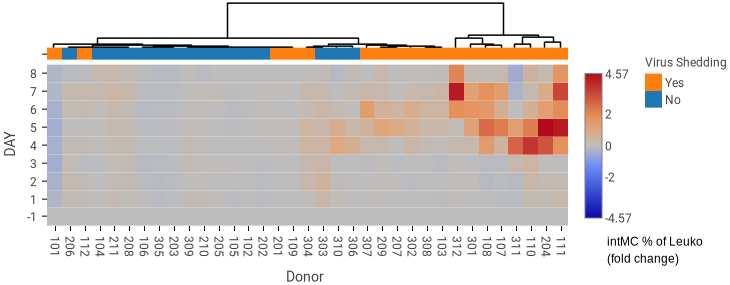
Figure 1: The ability to add additional metadata to heatmaps reveals a correlation between increased intermediate monocytes and shedding of virus during influenza infection. Data from Rahil Z et al. J Clin Invest 2020;130(11):5800-5816.

Accelerate Metadata-driven Cytometry Analysis with CellEngine

CellEngine’s metadata features are contained in a highly optimized, cloud-based analysis platform.

Together, users can iterate on their analysis and pursue hypotheses rapidly as questions emerge.

In addition, CellEngine has many other features designed to improve flow cytometry analysis, particularly for large and complex experiments.

Sign up for a free two-month trial or contact us for a live demo.

Explore In-Depth Features of CellEngine Software from our Expert


About the author:

author photo

Anita Ray is a technical application specialist with CellEngine. She has ten years of experience in cytometry and worked in translational immuno-oncology prior to joining the CellEngine team.

Get Metadata Cytometry Analysis with CellEngine By CellCarta

January 31, 2023

metadata-cytometry-analysis

Analyzing data is one of the most challenging and rewarding parts of an experiment.

CellEngine by CellCarta leverages metadata during every step of cytometry analysis, from initial gating to final figure details, increasing the speed and depth of analysis possibilities.

Add Any Type of Metadata for Comprehensive Cytometry Analysis

Metadata can be entered directly or imported from a spreadsheet. In addition, there are tools for adding information that was included in a filename or FCS header.

Any information can be added, but common categories include:

  • Assay – the preparation conditions, run date, cytometer, or researcher who ran the sample
  • Sample – treatment condition or concentration, timepoint, or results from other assays
  • Source – cell line, disease information, donor ID, or demographic data

Data validation rules can be added to restrict values that are accepted for each variable, creating a robust defense against typos, miscopied data, or inconsistencies such as “IL-2” versus “IL2.”

Use Metadata to Select and Organize Files

Everywhere files are selected in CellEngine, they can be sorted and filtered by metadata, including when gating, creating a figure, using the built-in algorithms for dimensionality reduction and clustering, or exporting statistics.

This allows for straightforward selection of any group of files without risk of human error.

Generate Accurate, Insightful Figures Using Metadata

Metadata can be used to organize data into figures, acting as axes or data series.

This allows for easy creation of a wide number of figures – for example,

  • a line graph organized by timepoint
  • a set of histograms overlaid by treatment
  • a dose-response curve using concentration
  • a bar graph comparing populations normalized to a control condition.

Plots with multiple files can be further filtered on any metadata value, for example creating a figure using only samples from healthy donors.

Furthermore, batching can iterate through selected values of one or more metadata variables to automatically generate a series of figures.

If analysis is started before an experiment is complete, such as early during a months-long clinical trial, figures can be set to automatically update when new files are uploaded.

This allows users to begin work between timepoints or replicates, decreasing time between experiment completion and figure finalization.

CE Metadata Heatmap-cytometry-analysis

Figure 1: The ability to add additional metadata to heatmaps reveals a correlation between increased intermediate monocytes and shedding of virus during influenza infection. Data from Rahil Z et al. J Clin Invest 2020;130(11):5800-5816.

Accelerate Metadata-driven Cytometry Analysis with CellEngine

CellEngine’s metadata features are contained in a highly optimized, cloud-based analysis platform.

Together, users can iterate on their analysis and pursue hypotheses rapidly as questions emerge.

In addition, CellEngine has many other features designed to improve flow cytometry analysis, particularly for large and complex experiments.

Sign up for a free two-month trial or contact us for a live demo.

Explore In-Depth Features of CellEngine Software from our Expert


About the author:

author photo

Anita Ray is a technical application specialist with CellEngine. She has ten years of experience in cytometry and worked in translational immuno-oncology prior to joining the CellEngine team.

Cytometry Analysis with Customized Autogating by CellEngine CellCarta

December 14, 2022

Autogating flow cytometry- customized autogating with cellengine

Ideally during cytometry data analysis, the same gate position is appropriate for every sample in a study. Unfortunately, a lot of factors can cause variability in populations of cells, many of which are unavoidable.

Staining intensity can change due to batch effects, experimental conditions, tissue origin, cytometer performance, or just normal donor variance.

Manually adjusting gates to every sample can be extremely time-consuming, particularly if a study is large or has many markers.

With CellEngine, our next-generation cytometry analysis software, gates can be adjusted automatically, freeing analysts of this burden.

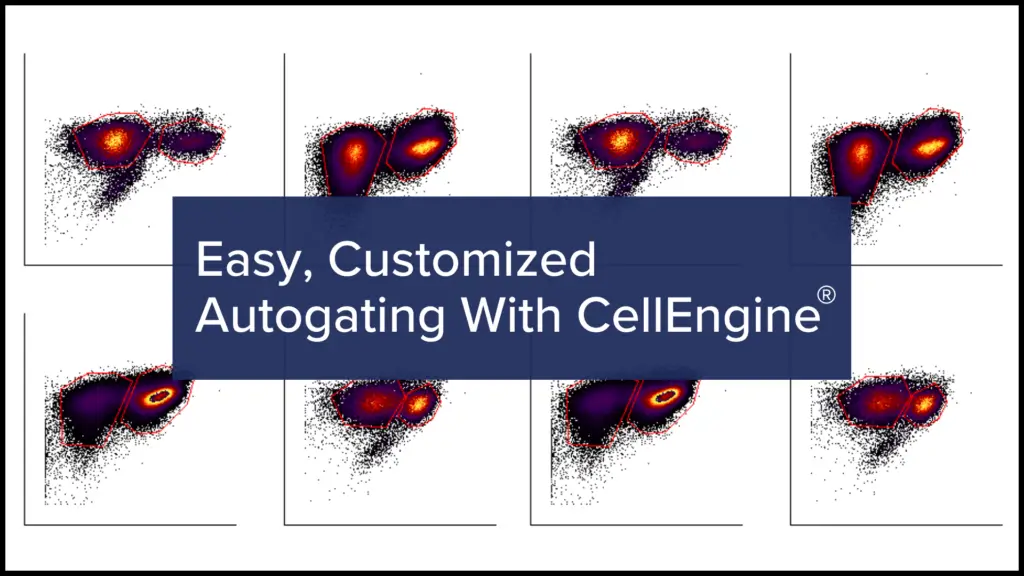
Autogating uses a manually gated training dataset as input, and it applies a machine learning algorithm to adjust the gates to the remainder of the dataset.

The algorithm follows your defined hierarchy, making the output easier to understand than unsupervised analysis methods.

The tool is easy to set up, runs in seconds, and the results are fully reviewable and changeable if needed.

1. Prepare a High-Quality Training Dataset

The training set used by the autogating algorithm is a user-defined subset of files that have been manually gated.

It should include examples from each of the experimental conditions in the study – for instance, both control and experimental samples, or samples from every tissue type.

High-quality training gates mean high-quality output, so a small number of files is usually sufficient, even for large datasets.

2. Organize and Group Files Efficiently for Consistent Gating

Files can be gated individually or in groups, with each file in the group having the same gate geometry.

For example, autogating can be instructed to gate all files for each donor the same way, thereby normalizing comparisons between individuals.

CellEngine conveniently allows defining those sample groups using metadata – in this example, the donor ID.

3. Let CellEngine Autogating Algorithm Customize Gates in Seconds

CellEngine’s autogating feature is designed to rapidly analyze large projects with many parameters. The autogating tool can adjust multiple gates simultaneously, making for a simple workflow.

CellEngine’s software and hardware optimization means that gates can be adjusted to thousands of files in seconds, so autogating is never a bottleneck to the next analysis.

If additional files are added later, autogating can correct gate positions for just those files, allowing for rapid analysis of the new data.

Autogating Easily Fits Into Your Existing Workflows

Gates created by the algorithm use the same 1D and 2D geometric shapes and hierarchy as manual gates. This allows the gates to be viewed like any other.

Furthermore, any gates that need correction can be manually adjusted. This allows autogating to be seamlessly used to supplement existing manual gating steps, so that analysts can spend more time on data interpretation and analysis.

Autogating is just one of many CellEngine features designed to improve flow cytometry analysis, particularly for large and complex experiments.

Sign up for a free two-month trial or contact us for a live demo.


Watch the following video from our expert to learn more


About the author:

author photo

Anita Ray is a technical application specialist with CellEngine. She has ten years of experience in cytometry and worked in translational immuno-oncology prior to joining the CellEngine team.

Cytometry Analysis with Customized Autogating by CellEngine CellCarta

December 14, 2022

Autogating flow cytometry- customized autogating with cellengine

Ideally during cytometry data analysis, the same gate position is appropriate for every sample in a study. Unfortunately, a lot of factors can cause variability in populations of cells, many of which are unavoidable.

Staining intensity can change due to batch effects, experimental conditions, tissue origin, cytometer performance, or just normal donor variance.

Manually adjusting gates to every sample can be extremely time-consuming, particularly if a study is large or has many markers.

With CellEngine, our next-generation cytometry analysis software, gates can be adjusted automatically, freeing analysts of this burden.

Autogating uses a manually gated training dataset as input, and it applies a machine learning algorithm to adjust the gates to the remainder of the dataset.

The algorithm follows your defined hierarchy, making the output easier to understand than unsupervised analysis methods.

The tool is easy to set up, runs in seconds, and the results are fully reviewable and changeable if needed.

1. Prepare a High-Quality Training Dataset

The training set used by the autogating algorithm is a user-defined subset of files that have been manually gated.

It should include examples from each of the experimental conditions in the study – for instance, both control and experimental samples, or samples from every tissue type.

High-quality training gates mean high-quality output, so a small number of files is usually sufficient, even for large datasets.

2. Organize and Group Files Efficiently for Consistent Gating

Files can be gated individually or in groups, with each file in the group having the same gate geometry.

For example, autogating can be instructed to gate all files for each donor the same way, thereby normalizing comparisons between individuals.

CellEngine conveniently allows defining those sample groups using metadata – in this example, the donor ID.

3. Let CellEngine Autogating Algorithm Customize Gates in Seconds

CellEngine’s autogating feature is designed to rapidly analyze large projects with many parameters. The autogating tool can adjust multiple gates simultaneously, making for a simple workflow.

CellEngine’s software and hardware optimization means that gates can be adjusted to thousands of files in seconds, so autogating is never a bottleneck to the next analysis.

If additional files are added later, autogating can correct gate positions for just those files, allowing for rapid analysis of the new data.

Autogating Easily Fits Into Your Existing Workflows

Gates created by the algorithm use the same 1D and 2D geometric shapes and hierarchy as manual gates. This allows the gates to be viewed like any other.

Furthermore, any gates that need correction can be manually adjusted. This allows autogating to be seamlessly used to supplement existing manual gating steps, so that analysts can spend more time on data interpretation and analysis.

Autogating is just one of many CellEngine features designed to improve flow cytometry analysis, particularly for large and complex experiments.

Sign up for a free two-month trial or contact us for a live demo.


Watch the following video from our expert to learn more


About the author:

author photo

Anita Ray is a technical application specialist with CellEngine. She has ten years of experience in cytometry and worked in translational immuno-oncology prior to joining the CellEngine team.

Demystifying HGRAC: Essential Guide for Clinical Trials in China

November 14, 2022

Human Genetic Resources Administration of China (HGRAC) applications can be made easy with the right team. At CellCarta, our trained experts provide the needed support for your HGRAC applications and clinical trials. As we understand the importance of sample management and logistics, our team works to successfully guide you through moving specimens, data, and information in-and-out of Jining, China following approval from the HGRAC.

What are HGRAC Applications?

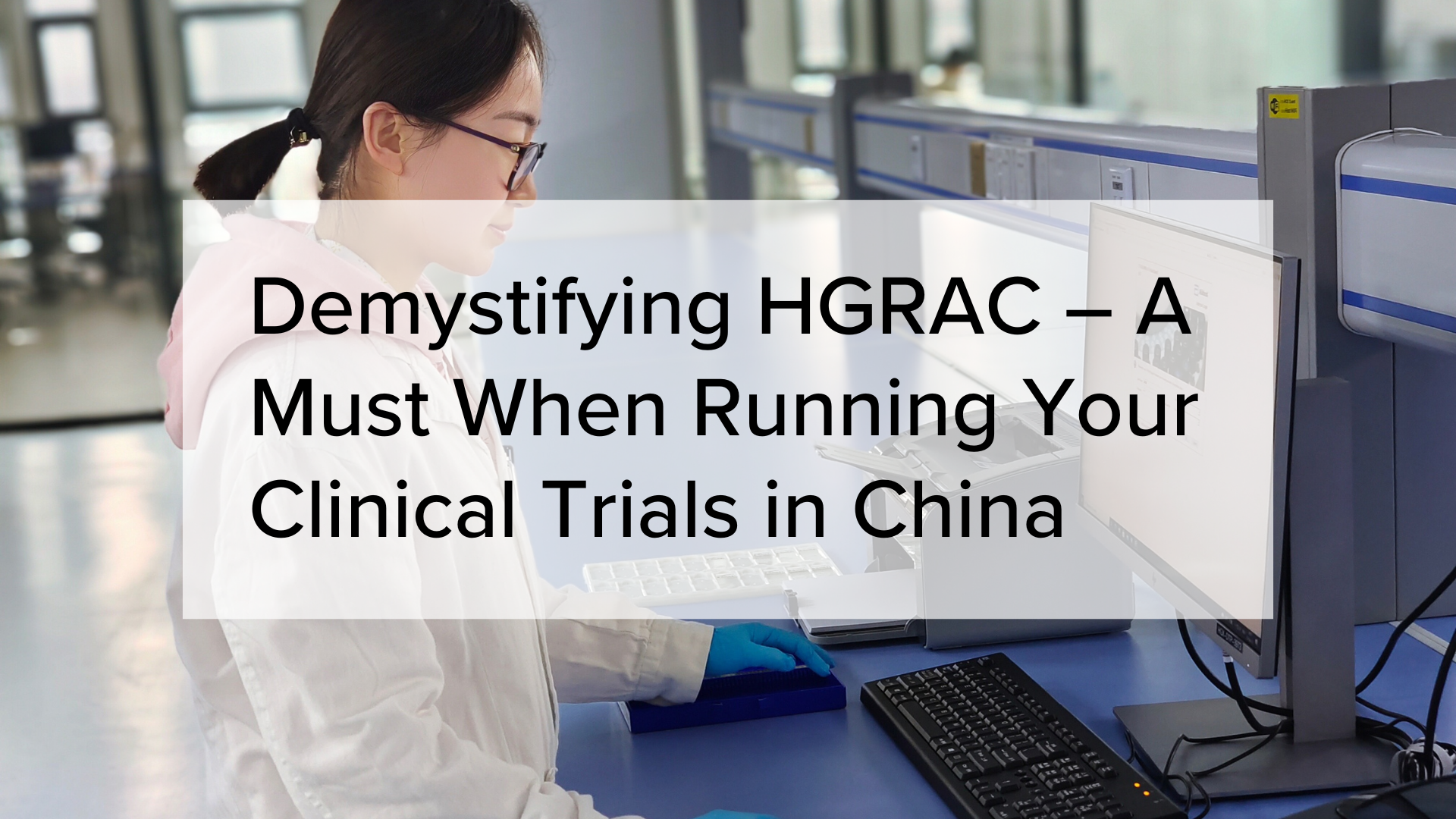
HGRAC works to manage exportation of human genetic resources (HGR), which includes patient laboratory samples (blood, saliva, urine, or tissue), and any data generated from sample testing1,2. HGRAC approval is a necessary part of the clinical trial initiation process in China. For global clinical trials collecting Chinese patient samples, pre-approval is required for the main participating foreign party2.

Our facility in Jining, China adheres to, and is familiar with, the required documentation, procedures, and deadlines associated with HGRAC applications.

With our services, working on HGRAC applications is straightforward and convenient. Obtaining approval for clinical and exploratory applications: IHC, ISH/FISH, MSD, ELISPOT, molecular, flow cytometry, and Nanostring, is hassle-free.

When to submit HGRAC Applications

HGRAC form submission is a requirement for the collection of Chinese patient samples, and approval must be obtained prior to study launch.

With CellCarta’s support the HGRAC application package is straightforward. Given our local team’s expertise, the review and signature process only take a few days. We provide support though consultative phone calls, expert application strategies, and review.

A walk through the HGRAC process

The application process starts with an online submission and review, followed by a paper dossier submission. An HGRAC meeting is then scheduled for experts to review the application. Proof of approval is obtained online, and a hard copy is also made available.

  • Online submission
  • Online review
  • Paper dossier submission
  • Meeting review
  • Online announcement
  • Hard copy approval

What type of information needs to be provided?

  • Testing and biomarker information
  • Sample information: type, volume, and/or slide size and number
  • Data information: flow and size for results and/or images
  • Sample/data storage and disposal plan
  • Additional information depending on the nature of the submission

Get started with your clinical trials in China!

Contact our team to get the right support for your HGRAC applications.

About the author:

author photo

Michelle Li is a Project Manager at CellCarta. She leads the China PM team, and she is the HGRAC expert and primary contact for HGRAC-related business: questions, reviews, and more. Michelle has over ten years of experience in central labs and pharmaceuticals, and is thus highly familiar with the entire clinical trial study process.

References

  1. China’s new administrative regulations on human genetic resources as applied to foreign persons | MoFo Life Sciences. (2019, August 23). Lifesciences.Mofo.Com. https://lifesciences.mofo.com/topics/china-regulations-on-human-genetic-resources-foreign-persons
  2. Chen, A. S. & Wang, A. Navigating the latest challenges of China. Arnold & Porter (2020). Available at: https://www.arnoldporter.com/en/perspectives/advisories/2020/07/navigating-chinas-genetic-resources-regulation. (Accessed: 16th August 2022)

Demystifying HGRAC: Essential Guide for Clinical Trials in China

November 14, 2022

Human Genetic Resources Administration of China (HGRAC) applications can be made easy with the right team. At CellCarta, our trained experts provide the needed support for your HGRAC applications and clinical trials. As we understand the importance of sample management and logistics, our team works to successfully guide you through moving specimens, data, and information in-and-out of Jining, China following approval from the HGRAC.

What are HGRAC Applications?

HGRAC works to manage exportation of human genetic resources (HGR), which includes patient laboratory samples (blood, saliva, urine, or tissue), and any data generated from sample testing1,2. HGRAC approval is a necessary part of the clinical trial initiation process in China. For global clinical trials collecting Chinese patient samples, pre-approval is required for the main participating foreign party2.

Our facility in Jining, China adheres to, and is familiar with, the required documentation, procedures, and deadlines associated with HGRAC applications.

With our services, working on HGRAC applications is straightforward and convenient. Obtaining approval for clinical and exploratory applications: IHC, ISH/FISH, MSD, ELISPOT, molecular, flow cytometry, and Nanostring, is hassle-free.

When to submit HGRAC Applications

HGRAC form submission is a requirement for the collection of Chinese patient samples, and approval must be obtained prior to study launch.

With CellCarta’s support the HGRAC application package is straightforward. Given our local team’s expertise, the review and signature process only take a few days. We provide support though consultative phone calls, expert application strategies, and review.

A walk through the HGRAC process

The application process starts with an online submission and review, followed by a paper dossier submission. An HGRAC meeting is then scheduled for experts to review the application. Proof of approval is obtained online, and a hard copy is also made available.

  • Online submission
  • Online review
  • Paper dossier submission
  • Meeting review
  • Online announcement
  • Hard copy approval

What type of information needs to be provided?

  • Testing and biomarker information
  • Sample information: type, volume, and/or slide size and number
  • Data information: flow and size for results and/or images
  • Sample/data storage and disposal plan
  • Additional information depending on the nature of the submission

Get started with your clinical trials in China!

Contact our team to get the right support for your HGRAC applications.

About the author:

author photo

Michelle Li is a Project Manager at CellCarta. She leads the China PM team, and she is the HGRAC expert and primary contact for HGRAC-related business: questions, reviews, and more. Michelle has over ten years of experience in central labs and pharmaceuticals, and is thus highly familiar with the entire clinical trial study process.

References

  1. China’s new administrative regulations on human genetic resources as applied to foreign persons | MoFo Life Sciences. (2019, August 23). Lifesciences.Mofo.Com. https://lifesciences.mofo.com/topics/china-regulations-on-human-genetic-resources-foreign-persons
  2. Chen, A. S. & Wang, A. Navigating the latest challenges of China. Arnold & Porter (2020). Available at: https://www.arnoldporter.com/en/perspectives/advisories/2020/07/navigating-chinas-genetic-resources-regulation. (Accessed: 16th August 2022)

Flow Cytometry Analysis With CellEngine®

October 12, 2022

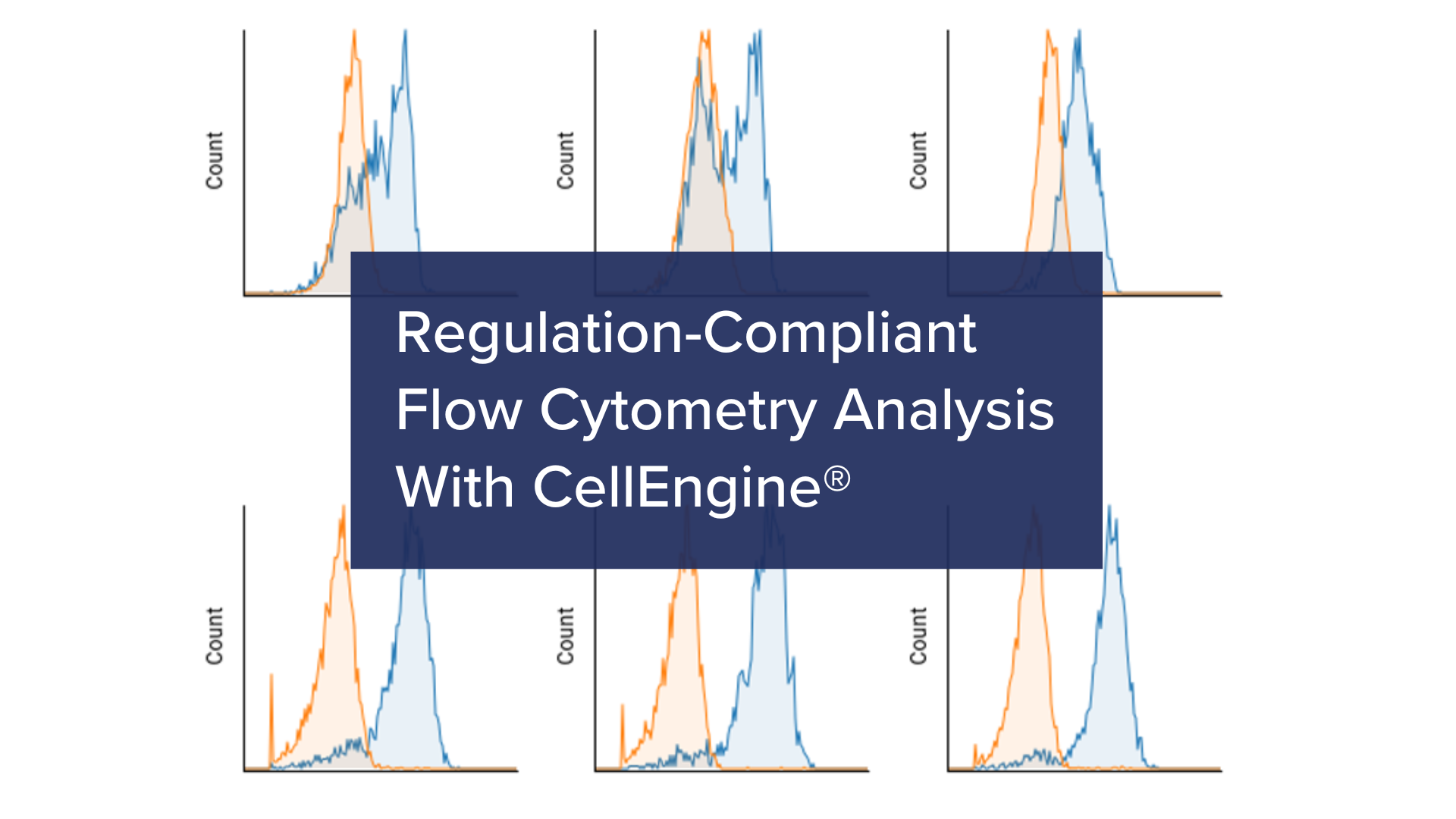
If your research is subject to 21 CFR part 11, EU Annex 11, or equivalent regulations, you may have grappled with designing a regulation-compliant workflow to analyze flow cytometry data. Such regulations establish the required controls over key aspects of data analysis. Most of these requirements can only be met when deliberately designed into the analysis software. CellEngine, a new generation of flow cytometry analysis software, provides all the features required for compliance, allowing for cloud-based analysis that can fully meet regulations.

Capturing Audit Trails

Logging the creation, modification, or deletion of records is an integral part of regulation compliant research. CellEngine allows creating revisions, which are permanent and immutable snapshots of experiments that create a permanent record of analysis at any point. Detailed audit trails are captured, including what work was done, when, and by whom. Append-only comments can also be added to the audit trail, capturing why changes were made.

Personalized Data Access

Only authorized users should be able to complete tasks in compliant workflows, and all users need unique electronic signatures. Data in CellEngine is private by default but can be shared if required. CellEngine’s powerful identity and access management system lets administrators define custom roles comprised of granular permissions. Permissions can be assigned to individuals on specific folders and experiments, defining exactly what users can and cannot do. Access is highly customizable, based on study needs. For example, a reviewer could examine analysis without the ability to make modifications.

Readily Available and Protected Records

Reviewable records are available in both human-readable and electronic forms. CellEngine allows the download of complete experiments via two components: an archive of the FCS files and attachments that were uploaded to the experiment, and a JSON file containing all other aspects of the experiment. Individual aspects of an experiment, including gated populations, plots, illustrations, and statistics, are also downloadable.

CellEngine supports regulatory requirements for records to be protected, accurate, and retrievable by storing duplicate copies of data in geographically separated locations to protect against natural disaster or hardware failure. Users can be restricted from deleting experiments, and retention policies can be set for each experiment to protect against deletion entirely.

Customized Workflow Validation

Regulation-compliant research must validate the accuracy, reliability, and consistency of workflows. CellEngine is the first cytometry analysis platform to offer validation customized to your workflow. Customized test scripting from your cytometer files, analyzed with your process, can be continuously validated. As CellEngine is updated, we can provide validation reports verifying consistency.

Mandatory Training

Users must have the appropriate training to meet regulations. The CellEngine team can assist with training at any stage, including onboarding and follow-up training as needed.

Learn more about CellEngine’s many features designed to improve consistency of flow cytometry analysis, particularly for large and complex experiments.

Sign up for a free two-month trial or contact us for a live demo.


Watch the following video from our expert to learn more


About the author:

author photo

Anita Ray is a technical application specialist with CellEngine. She has ten years of experience in cytometry and worked in translational immuno-oncology prior to joining the CellEngine team.

Flow Cytometry Analysis With CellEngine®

October 12, 2022

If your research is subject to 21 CFR part 11, EU Annex 11, or equivalent regulations, you may have grappled with designing a regulation-compliant workflow to analyze flow cytometry data. Such regulations establish the required controls over key aspects of data analysis. Most of these requirements can only be met when deliberately designed into the analysis software. CellEngine, a new generation of flow cytometry analysis software, provides all the features required for compliance, allowing for cloud-based analysis that can fully meet regulations.

Capturing Audit Trails

Logging the creation, modification, or deletion of records is an integral part of regulation compliant research. CellEngine allows creating revisions, which are permanent and immutable snapshots of experiments that create a permanent record of analysis at any point. Detailed audit trails are captured, including what work was done, when, and by whom. Append-only comments can also be added to the audit trail, capturing why changes were made.

Personalized Data Access

Only authorized users should be able to complete tasks in compliant workflows, and all users need unique electronic signatures. Data in CellEngine is private by default but can be shared if required. CellEngine’s powerful identity and access management system lets administrators define custom roles comprised of granular permissions. Permissions can be assigned to individuals on specific folders and experiments, defining exactly what users can and cannot do. Access is highly customizable, based on study needs. For example, a reviewer could examine analysis without the ability to make modifications.

Readily Available and Protected Records

Reviewable records are available in both human-readable and electronic forms. CellEngine allows the download of complete experiments via two components: an archive of the FCS files and attachments that were uploaded to the experiment, and a JSON file containing all other aspects of the experiment. Individual aspects of an experiment, including gated populations, plots, illustrations, and statistics, are also downloadable.

CellEngine supports regulatory requirements for records to be protected, accurate, and retrievable by storing duplicate copies of data in geographically separated locations to protect against natural disaster or hardware failure. Users can be restricted from deleting experiments, and retention policies can be set for each experiment to protect against deletion entirely.

Customized Workflow Validation

Regulation-compliant research must validate the accuracy, reliability, and consistency of workflows. CellEngine is the first cytometry analysis platform to offer validation customized to your workflow. Customized test scripting from your cytometer files, analyzed with your process, can be continuously validated. As CellEngine is updated, we can provide validation reports verifying consistency.

Mandatory Training

Users must have the appropriate training to meet regulations. The CellEngine team can assist with training at any stage, including onboarding and follow-up training as needed.

Learn more about CellEngine’s many features designed to improve consistency of flow cytometry analysis, particularly for large and complex experiments.

Sign up for a free two-month trial or contact us for a live demo.


Watch the following video from our expert to learn more


About the author:

author photo

Anita Ray is a technical application specialist with CellEngine. She has ten years of experience in cytometry and worked in translational immuno-oncology prior to joining the CellEngine team.