Get Metadata Cytometry Analysis with CellEngine By CellCarta

January 31, 2023
metadata-cytometry-analysis

Analyzing data is one of the most challenging and rewarding parts of an experiment.

CellEngine by CellCarta leverages metadata during every step of cytometry analysis, from initial gating to final figure details, increasing the speed and depth of analysis possibilities.

Add Any Type of Metadata for Comprehensive Cytometry Analysis

Metadata can be entered directly or imported from a spreadsheet. In addition, there are tools for adding information that was included in a filename or FCS header.

Any information can be added, but common categories include:

  • Assay – the preparation conditions, run date, cytometer, or researcher who ran the sample
  • Sample – treatment condition or concentration, timepoint, or results from other assays
  • Source – cell line, disease information, donor ID, or demographic data

Data validation rules can be added to restrict values that are accepted for each variable, creating a robust defense against typos, miscopied data, or inconsistencies such as “IL-2” versus “IL2.”

Use Metadata to Select and Organize Files

Everywhere files are selected in CellEngine, they can be sorted and filtered by metadata, including when gating, creating a figure, using the built-in algorithms for dimensionality reduction and clustering, or exporting statistics.

This allows for straightforward selection of any group of files without risk of human error.

Generate Accurate, Insightful Figures Using Metadata

Metadata can be used to organize data into figures, acting as axes or data series.

This allows for easy creation of a wide number of figures – for example,

  • a line graph organized by timepoint
  • a set of histograms overlaid by treatment
  • a dose-response curve using concentration
  • a bar graph comparing populations normalized to a control condition.

Plots with multiple files can be further filtered on any metadata value, for example creating a figure using only samples from healthy donors.

Furthermore, batching can iterate through selected values of one or more metadata variables to automatically generate a series of figures.

If analysis is started before an experiment is complete, such as early during a months-long clinical trial, figures can be set to automatically update when new files are uploaded.

This allows users to begin work between timepoints or replicates, decreasing time between experiment completion and figure finalization.
CE Metadata Heatmap-cytometry-analysis

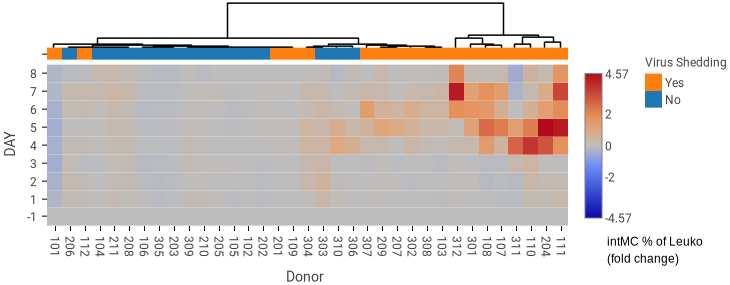
Figure 1: The ability to add additional metadata to heatmaps reveals a correlation between increased intermediate monocytes and shedding of virus during influenza infection. Data from Rahil Z et al. J Clin Invest 2020;130(11):5800-5816.

Accelerate Metadata-driven Cytometry Analysis with CellEngine

CellEngine’s metadata features are contained in a highly optimized, cloud-based analysis platform.

Together, users can iterate on their analysis and pursue hypotheses rapidly as questions emerge.

In addition, CellEngine has many other features designed to improve flow cytometry analysis, particularly for large and complex experiments.

Sign up for a free two-month trial or contact us for a live demo.

Explore In-Depth Features of CellEngine Software from our Expert


About the author:

author photo

Anita Ray is a technical application specialist with CellEngine. She has ten years of experience in cytometry and worked in translational immuno-oncology prior to joining the CellEngine team.
Get Metadata Cytometry Analysis with CellEngine By CellCarta

January 31, 2023

metadata-cytometry-analysis

Analyzing data is one of the most challenging and rewarding parts of an experiment.

CellEngine by CellCarta leverages metadata during every step of cytometry analysis, from initial gating to final figure details, increasing the speed and depth of analysis possibilities.

Add Any Type of Metadata for Comprehensive Cytometry Analysis

Metadata can be entered directly or imported from a spreadsheet. In addition, there are tools for adding information that was included in a filename or FCS header.

Any information can be added, but common categories include:

  • Assay – the preparation conditions, run date, cytometer, or researcher who ran the sample
  • Sample – treatment condition or concentration, timepoint, or results from other assays
  • Source – cell line, disease information, donor ID, or demographic data

Data validation rules can be added to restrict values that are accepted for each variable, creating a robust defense against typos, miscopied data, or inconsistencies such as “IL-2” versus “IL2.”

Use Metadata to Select and Organize Files

Everywhere files are selected in CellEngine, they can be sorted and filtered by metadata, including when gating, creating a figure, using the built-in algorithms for dimensionality reduction and clustering, or exporting statistics.

This allows for straightforward selection of any group of files without risk of human error.

Generate Accurate, Insightful Figures Using Metadata

Metadata can be used to organize data into figures, acting as axes or data series.

This allows for easy creation of a wide number of figures – for example,

  • a line graph organized by timepoint
  • a set of histograms overlaid by treatment
  • a dose-response curve using concentration
  • a bar graph comparing populations normalized to a control condition.

Plots with multiple files can be further filtered on any metadata value, for example creating a figure using only samples from healthy donors.

Furthermore, batching can iterate through selected values of one or more metadata variables to automatically generate a series of figures.

If analysis is started before an experiment is complete, such as early during a months-long clinical trial, figures can be set to automatically update when new files are uploaded.

This allows users to begin work between timepoints or replicates, decreasing time between experiment completion and figure finalization.

CE Metadata Heatmap-cytometry-analysis

Figure 1: The ability to add additional metadata to heatmaps reveals a correlation between increased intermediate monocytes and shedding of virus during influenza infection. Data from Rahil Z et al. J Clin Invest 2020;130(11):5800-5816.

Accelerate Metadata-driven Cytometry Analysis with CellEngine

CellEngine’s metadata features are contained in a highly optimized, cloud-based analysis platform.

Together, users can iterate on their analysis and pursue hypotheses rapidly as questions emerge.

In addition, CellEngine has many other features designed to improve flow cytometry analysis, particularly for large and complex experiments.

Sign up for a free two-month trial or contact us for a live demo.

Explore In-Depth Features of CellEngine Software from our Expert


About the author:

author photo

Anita Ray is a technical application specialist with CellEngine. She has ten years of experience in cytometry and worked in translational immuno-oncology prior to joining the CellEngine team.
Cytometry Analysis with Customized Autogating by CellEngine CellCarta

December 14, 2022

Autogating flow cytometry- customized autogating with cellengine

Ideally during cytometry data analysis, the same gate position is appropriate for every sample in a study. Unfortunately, a lot of factors can cause variability in populations of cells, many of which are unavoidable.

Staining intensity can change due to batch effects, experimental conditions, tissue origin, cytometer performance, or just normal donor variance.

Manually adjusting gates to every sample can be extremely time-consuming, particularly if a study is large or has many markers.

With CellEngine, our next-generation cytometry analysis software, gates can be adjusted automatically, freeing analysts of this burden.

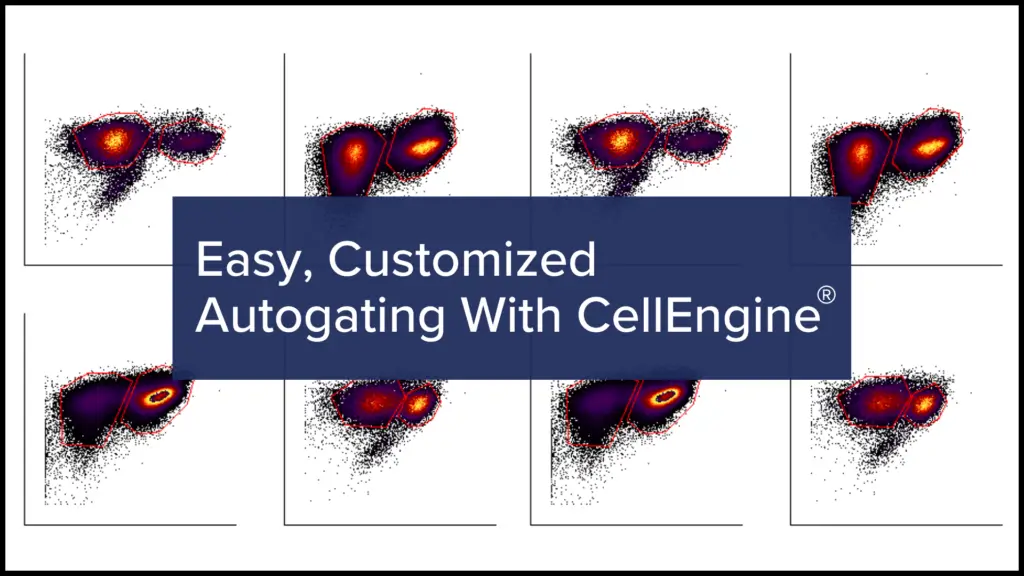
Autogating uses a manually gated training dataset as input, and it applies a machine learning algorithm to adjust the gates to the remainder of the dataset.

The algorithm follows your defined hierarchy, making the output easier to understand than unsupervised analysis methods.

The tool is easy to set up, runs in seconds, and the results are fully reviewable and changeable if needed.

1. Prepare a High-Quality Training Dataset

The training set used by the autogating algorithm is a user-defined subset of files that have been manually gated.

It should include examples from each of the experimental conditions in the study – for instance, both control and experimental samples, or samples from every tissue type.

High-quality training gates mean high-quality output, so a small number of files is usually sufficient, even for large datasets.

2. Organize and Group Files Efficiently for Consistent Gating

Files can be gated individually or in groups, with each file in the group having the same gate geometry.

For example, autogating can be instructed to gate all files for each donor the same way, thereby normalizing comparisons between individuals.

CellEngine conveniently allows defining those sample groups using metadata – in this example, the donor ID.

3. Let CellEngine Autogating Algorithm Customize Gates in Seconds

CellEngine’s autogating feature is designed to rapidly analyze large projects with many parameters. The autogating tool can adjust multiple gates simultaneously, making for a simple workflow.

CellEngine’s software and hardware optimization means that gates can be adjusted to thousands of files in seconds, so autogating is never a bottleneck to the next analysis.

If additional files are added later, autogating can correct gate positions for just those files, allowing for rapid analysis of the new data.

Autogating Easily Fits Into Your Existing Workflows

Gates created by the algorithm use the same 1D and 2D geometric shapes and hierarchy as manual gates. This allows the gates to be viewed like any other.

Furthermore, any gates that need correction can be manually adjusted. This allows autogating to be seamlessly used to supplement existing manual gating steps, so that analysts can spend more time on data interpretation and analysis.

Autogating is just one of many CellEngine features designed to improve flow cytometry analysis, particularly for large and complex experiments.

Sign up for a free two-month trial or contact us for a live demo.


Watch the following video from our expert to learn more


About the author:

author photo

Anita Ray is a technical application specialist with CellEngine. She has ten years of experience in cytometry and worked in translational immuno-oncology prior to joining the CellEngine team.
Cytometry Analysis with Customized Autogating by CellEngine CellCarta

December 14, 2022

Autogating flow cytometry- customized autogating with cellengine

Ideally during cytometry data analysis, the same gate position is appropriate for every sample in a study. Unfortunately, a lot of factors can cause variability in populations of cells, many of which are unavoidable.

Staining intensity can change due to batch effects, experimental conditions, tissue origin, cytometer performance, or just normal donor variance.

Manually adjusting gates to every sample can be extremely time-consuming, particularly if a study is large or has many markers.

With CellEngine, our next-generation cytometry analysis software, gates can be adjusted automatically, freeing analysts of this burden.

Autogating uses a manually gated training dataset as input, and it applies a machine learning algorithm to adjust the gates to the remainder of the dataset.

The algorithm follows your defined hierarchy, making the output easier to understand than unsupervised analysis methods.

The tool is easy to set up, runs in seconds, and the results are fully reviewable and changeable if needed.

1. Prepare a High-Quality Training Dataset

The training set used by the autogating algorithm is a user-defined subset of files that have been manually gated.

It should include examples from each of the experimental conditions in the study – for instance, both control and experimental samples, or samples from every tissue type.

High-quality training gates mean high-quality output, so a small number of files is usually sufficient, even for large datasets.

2. Organize and Group Files Efficiently for Consistent Gating

Files can be gated individually or in groups, with each file in the group having the same gate geometry.

For example, autogating can be instructed to gate all files for each donor the same way, thereby normalizing comparisons between individuals.

CellEngine conveniently allows defining those sample groups using metadata – in this example, the donor ID.

3. Let CellEngine Autogating Algorithm Customize Gates in Seconds

CellEngine’s autogating feature is designed to rapidly analyze large projects with many parameters. The autogating tool can adjust multiple gates simultaneously, making for a simple workflow.

CellEngine’s software and hardware optimization means that gates can be adjusted to thousands of files in seconds, so autogating is never a bottleneck to the next analysis.

If additional files are added later, autogating can correct gate positions for just those files, allowing for rapid analysis of the new data.

Autogating Easily Fits Into Your Existing Workflows

Gates created by the algorithm use the same 1D and 2D geometric shapes and hierarchy as manual gates. This allows the gates to be viewed like any other.

Furthermore, any gates that need correction can be manually adjusted. This allows autogating to be seamlessly used to supplement existing manual gating steps, so that analysts can spend more time on data interpretation and analysis.

Autogating is just one of many CellEngine features designed to improve flow cytometry analysis, particularly for large and complex experiments.

Sign up for a free two-month trial or contact us for a live demo.


Watch the following video from our expert to learn more


About the author:

author photo

Anita Ray is a technical application specialist with CellEngine. She has ten years of experience in cytometry and worked in translational immuno-oncology prior to joining the CellEngine team.
Flow Cytometry Analysis With CellEngine®

October 12, 2022

If your research is subject to 21 CFR part 11, EU Annex 11, or equivalent regulations, you may have grappled with designing a regulation-compliant workflow to analyze flow cytometry data. Such regulations establish the required controls over key aspects of data analysis. Most of these requirements can only be met when deliberately designed into the analysis software. CellEngine, a new generation of flow cytometry analysis software, provides all the features required for compliance, allowing for cloud-based analysis that can fully meet regulations.

Capturing Audit Trails

Logging the creation, modification, or deletion of records is an integral part of regulation compliant research. CellEngine allows creating revisions, which are permanent and immutable snapshots of experiments that create a permanent record of analysis at any point. Detailed audit trails are captured, including what work was done, when, and by whom. Append-only comments can also be added to the audit trail, capturing why changes were made.

Personalized Data Access

Only authorized users should be able to complete tasks in compliant workflows, and all users need unique electronic signatures. Data in CellEngine is private by default but can be shared if required. CellEngine’s powerful identity and access management system lets administrators define custom roles comprised of granular permissions. Permissions can be assigned to individuals on specific folders and experiments, defining exactly what users can and cannot do. Access is highly customizable, based on study needs. For example, a reviewer could examine analysis without the ability to make modifications.

Readily Available and Protected Records

Reviewable records are available in both human-readable and electronic forms. CellEngine allows the download of complete experiments via two components: an archive of the FCS files and attachments that were uploaded to the experiment, and a JSON file containing all other aspects of the experiment. Individual aspects of an experiment, including gated populations, plots, illustrations, and statistics, are also downloadable.

CellEngine supports regulatory requirements for records to be protected, accurate, and retrievable by storing duplicate copies of data in geographically separated locations to protect against natural disaster or hardware failure. Users can be restricted from deleting experiments, and retention policies can be set for each experiment to protect against deletion entirely.

Customized Workflow Validation

Regulation-compliant research must validate the accuracy, reliability, and consistency of workflows. CellEngine is the first cytometry analysis platform to offer validation customized to your workflow. Customized test scripting from your cytometer files, analyzed with your process, can be continuously validated. As CellEngine is updated, we can provide validation reports verifying consistency.

Mandatory Training

Users must have the appropriate training to meet regulations. The CellEngine team can assist with training at any stage, including onboarding and follow-up training as needed.

Learn more about CellEngine’s many features designed to improve consistency of flow cytometry analysis, particularly for large and complex experiments.

Sign up for a free two-month trial or contact us for a live demo.


Watch the following video from our expert to learn more


About the author:

author photo

Anita Ray is a technical application specialist with CellEngine. She has ten years of experience in cytometry and worked in translational immuno-oncology prior to joining the CellEngine team.

Flow Cytometry Analysis With CellEngine®

October 12, 2022

If your research is subject to 21 CFR part 11, EU Annex 11, or equivalent regulations, you may have grappled with designing a regulation-compliant workflow to analyze flow cytometry data. Such regulations establish the required controls over key aspects of data analysis. Most of these requirements can only be met when deliberately designed into the analysis software. CellEngine, a new generation of flow cytometry analysis software, provides all the features required for compliance, allowing for cloud-based analysis that can fully meet regulations.

Capturing Audit Trails

Logging the creation, modification, or deletion of records is an integral part of regulation compliant research. CellEngine allows creating revisions, which are permanent and immutable snapshots of experiments that create a permanent record of analysis at any point. Detailed audit trails are captured, including what work was done, when, and by whom. Append-only comments can also be added to the audit trail, capturing why changes were made.

Personalized Data Access

Only authorized users should be able to complete tasks in compliant workflows, and all users need unique electronic signatures. Data in CellEngine is private by default but can be shared if required. CellEngine’s powerful identity and access management system lets administrators define custom roles comprised of granular permissions. Permissions can be assigned to individuals on specific folders and experiments, defining exactly what users can and cannot do. Access is highly customizable, based on study needs. For example, a reviewer could examine analysis without the ability to make modifications.

Readily Available and Protected Records

Reviewable records are available in both human-readable and electronic forms. CellEngine allows the download of complete experiments via two components: an archive of the FCS files and attachments that were uploaded to the experiment, and a JSON file containing all other aspects of the experiment. Individual aspects of an experiment, including gated populations, plots, illustrations, and statistics, are also downloadable.

CellEngine supports regulatory requirements for records to be protected, accurate, and retrievable by storing duplicate copies of data in geographically separated locations to protect against natural disaster or hardware failure. Users can be restricted from deleting experiments, and retention policies can be set for each experiment to protect against deletion entirely.

Customized Workflow Validation

Regulation-compliant research must validate the accuracy, reliability, and consistency of workflows. CellEngine is the first cytometry analysis platform to offer validation customized to your workflow. Customized test scripting from your cytometer files, analyzed with your process, can be continuously validated. As CellEngine is updated, we can provide validation reports verifying consistency.

Mandatory Training

Users must have the appropriate training to meet regulations. The CellEngine team can assist with training at any stage, including onboarding and follow-up training as needed.

Learn more about CellEngine’s many features designed to improve consistency of flow cytometry analysis, particularly for large and complex experiments.

Sign up for a free two-month trial or contact us for a live demo.


Watch the following video from our expert to learn more


About the author:

author photo

Anita Ray is a technical application specialist with CellEngine. She has ten years of experience in cytometry and worked in translational immuno-oncology prior to joining the CellEngine team.

CellEngine: Get The Next-Generation Cytometry Analysis Software

September 12, 2022

CellEngine™: Transitioning to the Next Generation of Cytometry Analysis Software

Today’s high-dimensional cytometry can measure dozens of analytes for millions of cells, and high-throughput cytometers can generate thousands of files, totaling hundreds of gigabytes of data. With most software, analyzing this amount of data is slow, creating complex visualizations can be difficult or impossible, and sharing data with coworkers and collaborators can be cumbersome. Finally, few programs provide regulatory compliance features necessary for running clinical trials.

CellEngineTM addresses the gaps where other software fails

CellEngine is a cloud-based cytometry analysis software platform, designed to tackle these challenges. CellEngine provides fast, full analytical and visualization functionality in one software program. Its cloud-native design allows easy collaboration, while providing enterprise-grade data safety and security. A first-class API offers full access to any CellEngine feature, allowing easy integration into bioinformatics pipelines and LIMS systems. For research performed in regulated environments, CellEngine supplies all the features needed for use in 21 CFR 11-compliant workflows.

Lightning-fast analysis of large, complex datasets

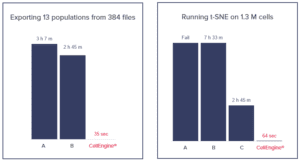
CellEngine is orders of magnitude faster than other analysis software. Optimized by performance experts to achieve the speed needed to analyze large, high-dimensional datasets, CellEngine provides rapid analysis that is easy for anyone to use—no coding skills required. CellEngine can run advanced analysis pipelines with PhenoGraph, t-SNE, UMAP, SOM, and more on millions of cells in just minutes. In a head-to-head comparison of CellEngine and other software, 384 data files were analyzed from 13 different populations. The other software took hours, while CellEngine took seconds. With a more complex t-SNE visualization, CellEngine only took minutes instead of hours.

CellEngine™: Transitioning to the Next Generation of Cytometry Analysis Software

Versatile analysis and advanced visualization of high-dimensional cytometry data

A wide variety of options for visualizations can be created within CellEngine, all driven by your experiment metadata. Dot plots, histograms, heatmaps, dose response curves, metadata-driven layouts, and algorithmic visualizations are available to distill your data into figures and slides.

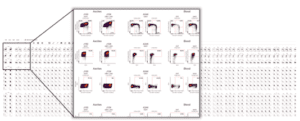
CellEngine can easily create pivot tables and batched analysis across samples or experimental conditions, allowing quick visualization of large datasets. Metadata-driven layouts take seconds to create by simply annotating files and selecting visualization parameters. In the pivot table below, various samples are organized by time points, conditions, and patient, providing a highly informative output for longitudinal studies.

CellEngine™: Transitioning to the Next Generation of Cytometry Analysis Software

Supervised autogating for trusted data in less time

CellEngine includes a built-in tool for supervised autogating by using the power of machine-learning to automatically tailor your gates. The tool uses a small set of manually gated files from your dataset and adjusts gate positions to match in seconds. This approach reduces subjectivity and increases consistency, while saving massive amounts of time.

How does CellCarta utilize CellEngine to meet our clients’ needs?

As a flow and mass cytometry CRO, CellCarta generates many high-dimensional data files daily and outgrew our previous software. CellEngine’s speed and visualization features are invaluable for analyzing multi-year clinical studies with thousands of samples. Because CellEngine is cloud-based, it allows for secure, easy communication of data and analysis to our clients. Its 21 CFR 11 compliance allows us to use it in primary and secondary endpoint studies. CellEngine’s rich API integrates into our bioinformatics pipelines, performing tasks such as automatic data upload and pre-processing. CellCarta provides more informative data to our clients, faster, helping them to rapidly advance their therapeutics.

Welcome to a new generation of cytometry analysis software.  Let CellEngine make your data talk. Sign up for a free two-month trial or contact us for a live demo.

Watch the following video from our expert to learn more.


About the author:

author photo

Susan Reynolds is a Scientific Business Director at CellCarta specializing in multi-omic flow cytometric application platforms. She has held various roles in the industry with emphasis on strategic development and commercialization of emerging novel platforms.

CellEngine: Get The Next-Generation Cytometry Analysis Software

September 12, 2022

CellEngine™: Transitioning to the Next Generation of Cytometry Analysis Software

Today’s high-dimensional cytometry can measure dozens of analytes for millions of cells, and high-throughput cytometers can generate thousands of files, totaling hundreds of gigabytes of data. With most software, analyzing this amount of data is slow, creating complex visualizations can be difficult or impossible, and sharing data with coworkers and collaborators can be cumbersome. Finally, few programs provide regulatory compliance features necessary for running clinical trials.

CellEngineTM addresses the gaps where other software fails

CellEngine is a cloud-based cytometry analysis software platform, designed to tackle these challenges. CellEngine provides fast, full analytical and visualization functionality in one software program. Its cloud-native design allows easy collaboration, while providing enterprise-grade data safety and security. A first-class API offers full access to any CellEngine feature, allowing easy integration into bioinformatics pipelines and LIMS systems. For research performed in regulated environments, CellEngine supplies all the features needed for use in 21 CFR 11-compliant workflows.

Lightning-fast analysis of large, complex datasets

CellEngine is orders of magnitude faster than other analysis software. Optimized by performance experts to achieve the speed needed to analyze large, high-dimensional datasets, CellEngine provides rapid analysis that is easy for anyone to use—no coding skills required. CellEngine can run advanced analysis pipelines with PhenoGraph, t-SNE, UMAP, SOM, and more on millions of cells in just minutes. In a head-to-head comparison of CellEngine and other software, 384 data files were analyzed from 13 different populations. The other software took hours, while CellEngine took seconds. With a more complex t-SNE visualization, CellEngine only took minutes instead of hours.

CellEngine™: Transitioning to the Next Generation of Cytometry Analysis Software

Versatile analysis and advanced visualization of high-dimensional cytometry data

A wide variety of options for visualizations can be created within CellEngine, all driven by your experiment metadata. Dot plots, histograms, heatmaps, dose response curves, metadata-driven layouts, and algorithmic visualizations are available to distill your data into figures and slides.

CellEngine can easily create pivot tables and batched analysis across samples or experimental conditions, allowing quick visualization of large datasets. Metadata-driven layouts take seconds to create by simply annotating files and selecting visualization parameters. In the pivot table below, various samples are organized by time points, conditions, and patient, providing a highly informative output for longitudinal studies.

CellEngine™: Transitioning to the Next Generation of Cytometry Analysis Software

Supervised autogating for trusted data in less time

CellEngine includes a built-in tool for supervised autogating by using the power of machine-learning to automatically tailor your gates. The tool uses a small set of manually gated files from your dataset and adjusts gate positions to match in seconds. This approach reduces subjectivity and increases consistency, while saving massive amounts of time.

How does CellCarta utilize CellEngine to meet our clients’ needs?

As a flow and mass cytometry CRO, CellCarta generates many high-dimensional data files daily and outgrew our previous software. CellEngine’s speed and visualization features are invaluable for analyzing multi-year clinical studies with thousands of samples. Because CellEngine is cloud-based, it allows for secure, easy communication of data and analysis to our clients. Its 21 CFR 11 compliance allows us to use it in primary and secondary endpoint studies. CellEngine’s rich API integrates into our bioinformatics pipelines, performing tasks such as automatic data upload and pre-processing. CellCarta provides more informative data to our clients, faster, helping them to rapidly advance their therapeutics.

Welcome to a new generation of cytometry analysis software.  Let CellEngine make your data talk. Sign up for a free two-month trial or contact us for a live demo.

Watch the following video from our expert to learn more.


About the author:

author photo

Susan Reynolds is a Scientific Business Director at CellCarta specializing in multi-omic flow cytometric application platforms. She has held various roles in the industry with emphasis on strategic development and commercialization of emerging novel platforms.

Flow Cytometry Data Analysis: Fast & Visual with CellEngine

February 4, 2022

Common challenges faced with existing flow cytometry software include speed, ability to create complex visualizations of large studies and meeting regulatory compliance.

CellEngine was built from the ground up by CellCarta to solve these challenges.

Topics in this presentation include:

  • Extensive end-to-end analysis features and unmatched performance of the cloud-based cytometry analysis software
  • Rigorous validation and comprehensive 21 CFR part 11-compliance features which are an excellent fit for regulated environments
  • Analyzing longitudinal clinical studies with metadata-driven visualizations
  • The ease of reproducibly analyzing datasets containing thousands of samples with speed and rich API

This webinar was hosted with XTalks and featured the following speakers:

Zachary Bjornson-Hooper, PhD, Sr. Director, Informatics, CellCarta

Dr. Bjornson-Hooper completed his undergraduate studies in biology at the Massachusetts Institute of Technology and earned his PhD in microbiology and immunology at Stanford University. He has extensive wet lab experience in comparative immunology, flow & mass cytometry and viral genomics, including leading the development of an atlas of immune signaling responses in various animal models relevant to infectious disease research.

At CellCarta, he oversees the development of the CellEngine single-cell analysis platform.

Dave McIlwain, PhD, Senior Research Scientist, Stanford University School of Medicine, Nolan Lab

Dr. McIlwain studies host response to infections using high-dimensional single-cell and spatial proteomics tools. He trained for his PhD at the University of Toronto, yielding insights into alternative mRNA splicing and iRhom2 as a new factor controlling the production of inflammatory mediator TNF.

As a post-doctoral fellow, Dr. McIlwain investigated host response to viral infection in animal models at the University of Dusseldorf in Germany before moving to Stanford University.

Pier Federico Gherardini, PhD, Computational Biology Consultant, Pragmatica.Bio

Dr. Gherardini has 14 years of experience in computational biology and bioinformatics and obtained his PhD from the University of Rome Tor Vergata before moving to Stanford for postdoctoral training.

Dr. Gherardini has developed computational tools for the analysis of cytometry data and a technology to measure gene expression in single cells using mass cytometry.

Flow Cytometry Data Analysis: Fast & Visual with CellEngine

February 4, 2022

Common challenges faced with existing flow cytometry software include speed, ability to create complex visualizations of large studies and meeting regulatory compliance.

CellEngine was built from the ground up by CellCarta to solve these challenges.

Topics in this presentation include:

  • Extensive end-to-end analysis features and unmatched performance of the cloud-based cytometry analysis software
  • Rigorous validation and comprehensive 21 CFR part 11-compliance features which are an excellent fit for regulated environments
  • Analyzing longitudinal clinical studies with metadata-driven visualizations
  • The ease of reproducibly analyzing datasets containing thousands of samples with speed and rich API

This webinar was hosted with XTalks and featured the following speakers:

Zachary Bjornson-Hooper, PhD, Sr. Director, Informatics, CellCarta

Dr. Bjornson-Hooper completed his undergraduate studies in biology at the Massachusetts Institute of Technology and earned his PhD in microbiology and immunology at Stanford University. He has extensive wet lab experience in comparative immunology, flow & mass cytometry and viral genomics, including leading the development of an atlas of immune signaling responses in various animal models relevant to infectious disease research.

At CellCarta, he oversees the development of the CellEngine single-cell analysis platform.

Dave McIlwain, PhD, Senior Research Scientist, Stanford University School of Medicine, Nolan Lab

Dr. McIlwain studies host response to infections using high-dimensional single-cell and spatial proteomics tools. He trained for his PhD at the University of Toronto, yielding insights into alternative mRNA splicing and iRhom2 as a new factor controlling the production of inflammatory mediator TNF.

As a post-doctoral fellow, Dr. McIlwain investigated host response to viral infection in animal models at the University of Dusseldorf in Germany before moving to Stanford University.

Pier Federico Gherardini, PhD, Computational Biology Consultant, Pragmatica.Bio

Dr. Gherardini has 14 years of experience in computational biology and bioinformatics and obtained his PhD from the University of Rome Tor Vergata before moving to Stanford for postdoctoral training.

Dr. Gherardini has developed computational tools for the analysis of cytometry data and a technology to measure gene expression in single cells using mass cytometry.