August 18, 2025
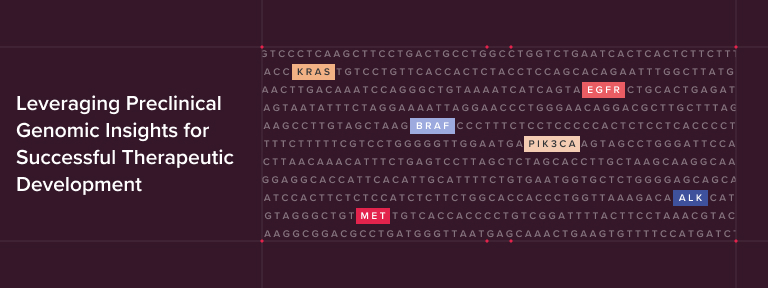
In early-stage drug development, there’s often a rush to move promising candidates forward. Tight timelines and competitive pressures can lead to companies having an over-reliance on ‘quantity over quality’ in research and development,1 hoping to maximize their chances of success by bringing more products into the pipeline.
While this may offer short-term momentum, advancing drug candidates without establishing a strong link between target and disease at the preclinical stages can lead to costly, later-stage setbacks. When targets are poorly defined, programs risk progressing on shaky foundations that can compromise other aspects of the pipeline, from study design and patient selection to commercial potential.
Understanding what makes a target worth pursuing, and how to evaluate it effectively, is key to laying the groundwork for clinical success.
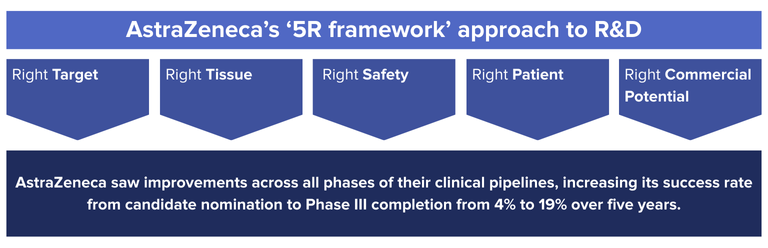
Developing a strong biological foundation for your target is a key driver in the downstream success of a therapeutic candidate. One example of this is AstraZeneca’s ‘5R framework’ approach to R&D, in which they aimed to improve their R&D productivity by focusing on 5 technical determinants: the right target, right tissue, right safety, right patient, and right commercial potential.1
The ‘right target’ principle emphasized selecting targets with a strong link to disease, with a focus on developing a deeper initial biological understanding through fewer, more informative screens—using technologies such as high-content imaging, high-throughput electrophysiology, and advances in genomics technologies such as transcriptomics.
The result? AstraZeneca saw improvements across all phases of their clinical pipelines, increasing its success rate from candidate nomination to Phase III completion from 4% to 19% over five years.1 By focusing only on the most promising candidates and providing robust study data to inform late-stage clinical trials, not only did they improve candidate success rate, they also saved research costs and accelerated all phases of their clinical trials.
This improvement is a clear demonstration of the impact that strong preclinical research can have on downstream outcomes. A greater focus on target quality in early development enables teams to prioritize candidates with stronger potential for therapeutic impact, increasing the likelihood of success.
Genomics is a key tool in enabling better target selection, allowing researchers to understand the biological relevance of a target at a molecular level. The growth of techniques in next-generation sequencing (NGS ), RNA sequencing, whole exome sequencing (WES), single-cell sequencing, T-cell/B-cell receptor (TCR/BCR) profiling, and associated analytical methods refining mutation profiling allows teams to uncover associations between genes, pathways, and disease, and assess whether modulating a particular target will likely yield clinical benefit.
In preclinical research, these insights are especially valuable when deciding which candidates to advance, enabling:
Get in touch to find out how we can support your preclinical development.
The value of genomic profiling doesn’t end in early development. When applied strategically, molecular insights generated in preclinical research can guide key decisions throughout the pipeline.
Early identification of response biomarkers can support more focused trial designs, while understanding resistance pathways can shape monitoring strategies and combination therapy planning. Early-stage genomics work can also lay the foundation for companion diagnostics, enabling the targeted therapy to launch with a clearly defined patient population.
Advances in NGS have led to further investment in genomics to help identify novel, genetically validated targets in early development.1 As such, NGS is now more accessible in early development, allowing teams to build a stronger understanding of target biology and downstream biomarker opportunities sooner in the process.
The development of Osimertinib, a treatment for non-small cell lung cancer (NSCLC), illustrates how genomic insight can strengthen target confidence and accelerate clinical development.1 In NSCLC, the EGFR T790M mutation had been identified as a common resistance mechanism in patients progressing on first-generation EGFR inhibitors.
AstraZeneca recognized the clinical relevance of this mutation, designing Osimertinib to address this specific, established resistance mechanism. Because the EGFR T790M target was well-characterized, the AstraZeneca team were able to design a more tailored clinical program and use a mutation-specific companion diagnostic for more precise patient selection from the outset.
Combining this with the other elements of the 5R framework resulted in Osimertinib having one of the fastest recorded clinical development programs, going from initial human dosing to launch in just over 2.5 years. The program’s success is a clear example of how well-validated genomic targets can inform trial design, enable targeted patient selection, and accelerate path to market.
Translating early genomic insight into clinical success requires the right assays and dedicated expertise. CellCarta offers a wide range of tools suited to preclinical and translational research, including RNAseq, whole genome and whole exome sequencing, single-cell analysis, and Olink proteomics. For companies that require a tailored approach, we offer custom assay development, alongside several validated panels designed around well-established genes, which can streamline trial efficiency. Our validated assay offerings include:
By combining these advanced validated platforms with custom analysis pipelines, we can help sponsors narrow down the most promising biomarkers and transition seamlessly into focused platforms, such as qPCR, dPCR, or NGS, at the later clinical trial stages.
Our capabilities can support both small and large pharma companies with early-phase development, right through to regulatory submission. Combined with our global infrastructure, expertise in handling challenging samples, and access to all major genomic analysis platforms, CellCarta ensures high-quality data from early discovery through clinical execution, aiding success at all stages of the pipeline.
Want to learn more about how our services can support your preclinical research? Chat with one of our experts!
August 18, 2025
In early-stage drug development, there’s often a rush to move promising candidates forward. Tight timelines and competitive pressures can lead to companies having an over-reliance on ‘quantity over quality’ in research and development,1 hoping to maximize their chances of success by bringing more products into the pipeline.
While this may offer short-term momentum, advancing drug candidates without establishing a strong link between target and disease at the preclinical stages can lead to costly, later-stage setbacks. When targets are poorly defined, programs risk progressing on shaky foundations that can compromise other aspects of the pipeline, from study design and patient selection to commercial potential.
Understanding what makes a target worth pursuing, and how to evaluate it effectively, is key to laying the groundwork for clinical success.
Developing a strong biological foundation for your target is a key driver in the downstream success of a therapeutic candidate. One example of this is AstraZeneca’s ‘5R framework’ approach to R&D, in which they aimed to improve their R&D productivity by focusing on 5 technical determinants: the right target, right tissue, right safety, right patient, and right commercial potential.1
The ‘right target’ principle emphasized selecting targets with a strong link to disease, with a focus on developing a deeper initial biological understanding through fewer, more informative screens—using technologies such as high-content imaging, high-throughput electrophysiology, and advances in genomics technologies such as transcriptomics.
The result? AstraZeneca saw improvements across all phases of their clinical pipelines, increasing its success rate from candidate nomination to Phase III completion from 4% to 19% over five years.1 By focusing only on the most promising candidates and providing robust study data to inform late-stage clinical trials, not only did they improve candidate success rate, they also saved research costs and accelerated all phases of their clinical trials.
This improvement is a clear demonstration of the impact that strong preclinical research can have on downstream outcomes. A greater focus on target quality in early development enables teams to prioritize candidates with stronger potential for therapeutic impact, increasing the likelihood of success.
Genomics is a key tool in enabling better target selection, allowing researchers to understand the biological relevance of a target at a molecular level. The growth of techniques in next-generation sequencing (NGS ), RNA sequencing, whole exome sequencing (WES), single-cell sequencing, T-cell/B-cell receptor (TCR/BCR) profiling, and associated analytical methods refining mutation profiling allows teams to uncover associations between genes, pathways, and disease, and assess whether modulating a particular target will likely yield clinical benefit.
In preclinical research, these insights are especially valuable when deciding which candidates to advance, enabling:
Get in touch to find out how we can support your preclinical development.
The value of genomic profiling doesn’t end in early development. When applied strategically, molecular insights generated in preclinical research can guide key decisions throughout the pipeline.
Early identification of response biomarkers can support more focused trial designs, while understanding resistance pathways can shape monitoring strategies and combination therapy planning. Early-stage genomics work can also lay the foundation for companion diagnostics, enabling the targeted therapy to launch with a clearly defined patient population.
Advances in NGS have led to further investment in genomics to help identify novel, genetically validated targets in early development.1 As such, NGS is now more accessible in early development, allowing teams to build a stronger understanding of target biology and downstream biomarker opportunities sooner in the process.
The development of Osimertinib, a treatment for non-small cell lung cancer (NSCLC), illustrates how genomic insight can strengthen target confidence and accelerate clinical development.1 In NSCLC, the EGFR T790M mutation had been identified as a common resistance mechanism in patients progressing on first-generation EGFR inhibitors.
AstraZeneca recognized the clinical relevance of this mutation, designing Osimertinib to address this specific, established resistance mechanism. Because the EGFR T790M target was well-characterized, the AstraZeneca team were able to design a more tailored clinical program and use a mutation-specific companion diagnostic for more precise patient selection from the outset.
Combining this with the other elements of the 5R framework resulted in Osimertinib having one of the fastest recorded clinical development programs, going from initial human dosing to launch in just over 2.5 years. The program’s success is a clear example of how well-validated genomic targets can inform trial design, enable targeted patient selection, and accelerate path to market.
Translating early genomic insight into clinical success requires the right assays and dedicated expertise. CellCarta offers a wide range of tools suited to preclinical and translational research, including RNAseq, whole genome and whole exome sequencing, single-cell analysis, and Olink proteomics. For companies that require a tailored approach, we offer custom assay development, alongside several validated panels designed around well-established genes, which can streamline trial efficiency. Our validated assay offerings include:
By combining these advanced validated platforms with custom analysis pipelines, we can help sponsors narrow down the most promising biomarkers and transition seamlessly into focused platforms, such as qPCR, dPCR, or NGS, at the later clinical trial stages.
Our capabilities can support both small and large pharma companies with early-phase development, right through to regulatory submission. Combined with our global infrastructure, expertise in handling challenging samples, and access to all major genomic analysis platforms, CellCarta ensures high-quality data from early discovery through clinical execution, aiding success at all stages of the pipeline.
Want to learn more about how our services can support your preclinical research? Chat with one of our experts!
August 18, 2025
How samples are initially handled, stored, and utilized can determine how much they are able to contribute to a study later down the line, particularly in longitudinal studies where samples may need to be revisited across multiple timepoints or analyses.
Yet pre-analytical processes, such as sample accessioning and processing, are often regarded simply as technical necessities rather than strategic opportunities to extend sample utility. When done thoughtfully, pre-analytical processes can add significant value, helping teams get more data from less material while preserving data quality.
After a sample is collected, its value depends on the decisions made next. Accessioning, storage, and processing steps each influence how much insight can be generated from a sample, and how consistently, across the course of a study.
During sample accessioning, standardized intake and documentation are key to ensure traceability across sites and timepoints. From there, storage methods must align with both immediate and long-term analysis goals. If these steps aren’t carefully managed, samples may be mislabeled, mishandled, or stored incorrectly, all of which could compromise stability and impact their downstream applications.
If genomic analysis is expected at any stage of the study, it is vital that this is also taken into account at the pre-analytical planning stage. Building it into the sample strategy early can help to maximize the value of each sample and avoid missed opportunities for insight.
DNA/RNA extraction is a pre-analytical step that lays the foundation for reliable downstream analysis by preserving nucleic acid quality and yield, both essential for generating robust molecular data. It is also important to capture molecular quality control (QC) metrics and metadata at this stage to support data integrity and traceability.
However, given the limited availability of patient samples, many teams are hesitant to perform DNA/RNA extraction, and when they do, it’s often done cautiously, extracting DNA and RNA separately out of concern of compromising data quality. In doing so, they may consume more of the sample than necessary, limiting what can be done later in the study.
Optimized and validated dual DNA/RNA extraction, however, can overcome these challenges. Co-extraction techniques can enable high-quality extraction of both analytes from a single sample, reducing material consumption without compromising data quality. More of the original tissue or sample is preserved for future testing, while both DNA and RNA are made available for downstream analysis.
With a validated co-extraction approach in place, and with a CRO partner that has deep sample management expertise, you can gain valuable genomic insights while preserving sample integrity for use throughout the study lifecycle.
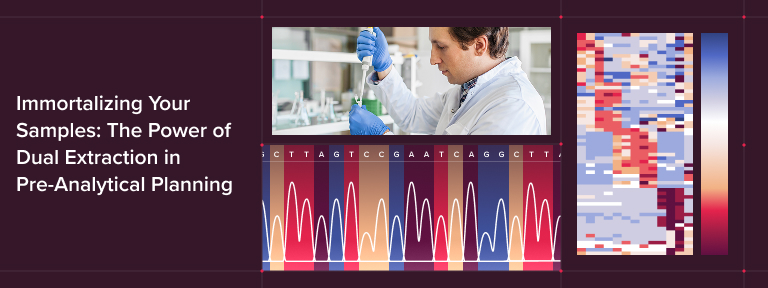
Dual extraction of DNA/RNA generates rich genomic data, immortalizing sample value for use across future analyses.
At CellCarta, we offer dual DNA/RNA tissue extraction supported by pathologists, who are able to calculate the exact number of slides needed to achieve target yields. Using this method, we can reduce the amount of sample required for extraction, so you can be sure that tissue is being used as efficiently as possible and is preserved for future analysis.
Validation data (Figure 1) shows that our dual extraction method achieves yields comparable to single-analyte extraction kits, demonstrating that high performance can be achieved with less material.
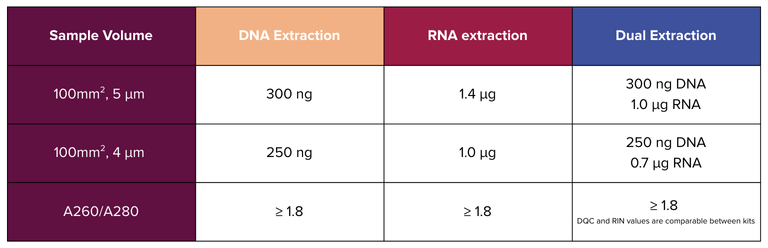
Figure 1: Yield metrics for DNA and RNA extraction from 4 μm and 5 μm slides, using standard single-analyte kits vs. CellCarta’s dual extraction method (Allprep)
By minimizing sample consumption while maintaining quality, dual extraction enables more from every slide and helps teams carry sample value further through the study.
Speak to one of our experts to find out more about how our dual extraction method can support your next project.
Alongside our dual extraction offering, CellCarta’s meticulous sample management and logistics services are designed to protect sample integrity at every step and keep trials running smoothly. We provide:
Governed by our robust quality management system, CellCarta helps ensure every sample is moved quickly, reliably, and with full traceability across every stage of your study, so you can get the quality data you need.
Looking to strengthen your pre-analytical strategy? Contact our team to find out how we can support your next study.
August 18, 2025
How samples are initially handled, stored, and utilized can determine how much they are able to contribute to a study later down the line, particularly in longitudinal studies where samples may need to be revisited across multiple timepoints or analyses.
Yet pre-analytical processes, such as sample accessioning and processing, are often regarded simply as technical necessities rather than strategic opportunities to extend sample utility. When done thoughtfully, pre-analytical processes can add significant value, helping teams get more data from less material while preserving data quality.
After a sample is collected, its value depends on the decisions made next. Accessioning, storage, and processing steps each influence how much insight can be generated from a sample, and how consistently, across the course of a study.
During sample accessioning, standardized intake and documentation are key to ensure traceability across sites and timepoints. From there, storage methods must align with both immediate and long-term analysis goals. If these steps aren’t carefully managed, samples may be mislabeled, mishandled, or stored incorrectly, all of which could compromise stability and impact their downstream applications.
If genomic analysis is expected at any stage of the study, it is vital that this is also taken into account at the pre-analytical planning stage. Building it into the sample strategy early can help to maximize the value of each sample and avoid missed opportunities for insight.
DNA/RNA extraction is a pre-analytical step that lays the foundation for reliable downstream analysis by preserving nucleic acid quality and yield, both essential for generating robust molecular data. It is also important to capture molecular quality control (QC) metrics and metadata at this stage to support data integrity and traceability.
However, given the limited availability of patient samples, many teams are hesitant to perform DNA/RNA extraction, and when they do, it’s often done cautiously, extracting DNA and RNA separately out of concern of compromising data quality. In doing so, they may consume more of the sample than necessary, limiting what can be done later in the study.
Optimized and validated dual DNA/RNA extraction, however, can overcome these challenges. Co-extraction techniques can enable high-quality extraction of both analytes from a single sample, reducing material consumption without compromising data quality. More of the original tissue or sample is preserved for future testing, while both DNA and RNA are made available for downstream analysis.
With a validated co-extraction approach in place, and with a CRO partner that has deep sample management expertise, you can gain valuable genomic insights while preserving sample integrity for use throughout the study lifecycle.
Dual extraction of DNA/RNA generates rich genomic data, immortalizing sample value for use across future analyses.
At CellCarta, we offer dual DNA/RNA tissue extraction supported by pathologists, who are able to calculate the exact number of slides needed to achieve target yields. Using this method, we can reduce the amount of sample required for extraction, so you can be sure that tissue is being used as efficiently as possible and is preserved for future analysis.
Validation data (Figure 1) shows that our dual extraction method achieves yields comparable to single-analyte extraction kits, demonstrating that high performance can be achieved with less material.
Figure 1: Yield metrics for DNA and RNA extraction from 4 μm and 5 μm slides, using standard single-analyte kits vs. CellCarta’s dual extraction method (Allprep)
By minimizing sample consumption while maintaining quality, dual extraction enables more from every slide and helps teams carry sample value further through the study.
Speak to one of our experts to find out more about how our dual extraction method can support your next project.
Alongside our dual extraction offering, CellCarta’s meticulous sample management and logistics services are designed to protect sample integrity at every step and keep trials running smoothly. We provide:
Governed by our robust quality management system, CellCarta helps ensure every sample is moved quickly, reliably, and with full traceability across every stage of your study, so you can get the quality data you need.
Looking to strengthen your pre-analytical strategy? Contact our team to find out how we can support your next study.
August 18, 2025
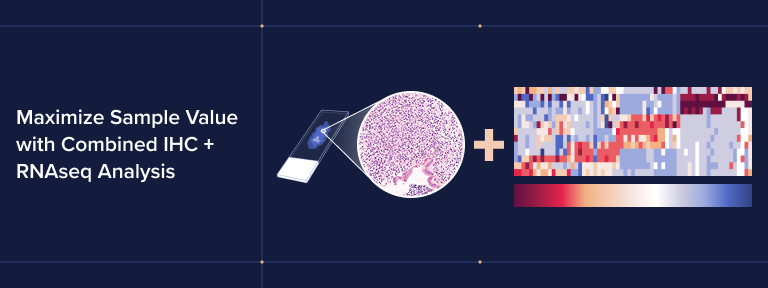
In clinical trials, patient tissue samples are limited, so extracting the most valuable data you can from each slide is critical.
Combining immunohistochemistry (IHC) and RNA sequencing (RNAseq) on the same sample offers a way to increase the insight gained from limited material. However, while many teams are aware of the potential to extract both spatial and molecular data from a single slide, they often exclude RNAseq due to tissue and budget constraints, viewing it as purely exploratory rather than essential for clinical decision-making.
But, with the right approach, RNAseq can be added alongside IHC to unlock molecular insights that extend the value of each tissue sample, generating richer, more connected data.
While IHC provides spatial detail and protein-level expression, RNAseq adds molecular depth, capturing bulk gene expression across a sample to reveal underlying transcriptional activity and mutational burden, supporting a wide range of research applications.
When combined with IHC data from the same sample, RNAseq can offer deeper insight than IHC alone, allowing for:
IHC and RNAseq can also be scaled across large sample volumes, making the combined approach suitable for large-scale clinical studies.
Get in touch to find out how we can support combined IHC and RNAseq analysis.
In immuno-oncology, predicting patient response to immune checkpoint inhibitors (ICI) presents a major challenge. While several features have been shown to correlate with ICI response—e.g., tumor mutational burden (TMB), microsatellite instability (MSI), immune gene expression signatures, and tumor-infiltrating lymphocytes (TILs)—measuring them typically requires multiple different omics techniques.
However, combining multiple techniques is costly and time-consuming, and—most importantly—consumes precious patient material that is often limited and irreplaceable. RNAseq, on the other hand, can overcome these challenges by serving as an all-in-one omics solution, providing comprehensive molecular information from a single experiment.
Through a specially developed suite of data processing and analysis pipelines, CellCarta has established a method of extracting all four key features from RNAseq of tumor samples (Figure 1).
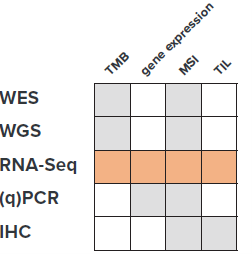
Figure 1: Summary of established features associated with ICI responses and the different techniques used to measure them. WES: whole-exome sequencing, WGS: whole-genome sequencing, RNA-Seq: RNA sequencing, qPCR: quantitative PCR, IHC: immunohistochemistry.
Not only does this method reduce the cost and time associated with analysis, but it also offers the possibility to improve ICI response prediction by integrating features into a single model (Figure 2). For more information on how our RNAseq technique improves response predictions, check out our white paper.
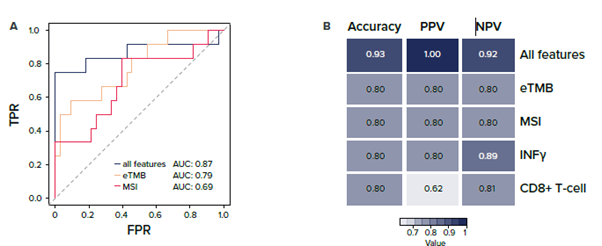
Figure 2: Improved response prediction when integrating all features compared to individual features. A) Logistic regression model incorporating all features (eTMB, MSI, CD8+ T-cell, M1 macrophage, IFNγ signature, and CTL signature; AUC = 0.87) vs. eTMB (AUC = 0.79) and MSI (AUC = 0.69). Higher AUC value for all features compared to eTMB or MSI scoring alone. Prediction performance is demonstrated by a ROC curve and area under the ROC curve (AUC). B) Performance metrics for each model. AUC: area under the ROC curve, TPR: true positive rate, FPR: false positive rate, PPV: positive predictive value, NPV: negative predictive value.
By enabling comprehensive profiling of the tumor and tumor microenvironment from a single sample, CellCarta’s RNAseq workflow makes it easier to generate clinically relevant insights without adding complexity or consuming more tissue. Combined with IHC to add vital spatial and protein-level context, this approach delivers a deeper, more connected picture of tumor biology from limited material, supporting more informed predictive biomarker development and patient selection decisions.
CellCarta supports clinical and translational research teams in implementing IHC and RNAseq workflows that are both efficient and reproducible. Our infrastructure and expertise help ensure high-quality results from limited tissue across sites and studies. We offer:
Whether you’re integrating IHC and RNAseq for the first time or scaling up for a multi-site study, CellCarta is equipped to help you get more from every sample.
Want to explore IHC and RNAseq integration in your next project? Contact our experts.
August 18, 2025
In clinical trials, patient tissue samples are limited, so extracting the most valuable data you can from each slide is critical.
Combining immunohistochemistry (IHC) and RNA sequencing (RNAseq) on the same sample offers a way to increase the insight gained from limited material. However, while many teams are aware of the potential to extract both spatial and molecular data from a single slide, they often exclude RNAseq due to tissue and budget constraints, viewing it as purely exploratory rather than essential for clinical decision-making.
But, with the right approach, RNAseq can be added alongside IHC to unlock molecular insights that extend the value of each tissue sample, generating richer, more connected data.
While IHC provides spatial detail and protein-level expression, RNAseq adds molecular depth, capturing bulk gene expression across a sample to reveal underlying transcriptional activity and mutational burden, supporting a wide range of research applications.
When combined with IHC data from the same sample, RNAseq can offer deeper insight than IHC alone, allowing for:
IHC and RNAseq can also be scaled across large sample volumes, making the combined approach suitable for large-scale clinical studies.
Get in touch to find out how we can support combined IHC and RNAseq analysis.
In immuno-oncology, predicting patient response to immune checkpoint inhibitors (ICI) presents a major challenge. While several features have been shown to correlate with ICI response—e.g., tumor mutational burden (TMB), microsatellite instability (MSI), immune gene expression signatures, and tumor-infiltrating lymphocytes (TILs)—measuring them typically requires multiple different omics techniques.
However, combining multiple techniques is costly and time-consuming, and—most importantly—consumes precious patient material that is often limited and irreplaceable. RNAseq, on the other hand, can overcome these challenges by serving as an all-in-one omics solution, providing comprehensive molecular information from a single experiment.
Through a specially developed suite of data processing and analysis pipelines, CellCarta has established a method of extracting all four key features from RNAseq of tumor samples (Figure 1).
Figure 1: Summary of established features associated with ICI responses and the different techniques used to measure them. WES: whole-exome sequencing, WGS: whole-genome sequencing, RNA-Seq: RNA sequencing, qPCR: quantitative PCR, IHC: immunohistochemistry.
Not only does this method reduce the cost and time associated with analysis, but it also offers the possibility to improve ICI response prediction by integrating features into a single model (Figure 2). For more information on how our RNAseq technique improves response predictions, check out our white paper.
Figure 2: Improved response prediction when integrating all features compared to individual features. A) Logistic regression model incorporating all features (eTMB, MSI, CD8+ T-cell, M1 macrophage, IFNγ signature, and CTL signature; AUC = 0.87) vs. eTMB (AUC = 0.79) and MSI (AUC = 0.69). Higher AUC value for all features compared to eTMB or MSI scoring alone. Prediction performance is demonstrated by a ROC curve and area under the ROC curve (AUC). B) Performance metrics for each model. AUC: area under the ROC curve, TPR: true positive rate, FPR: false positive rate, PPV: positive predictive value, NPV: negative predictive value.
By enabling comprehensive profiling of the tumor and tumor microenvironment from a single sample, CellCarta’s RNAseq workflow makes it easier to generate clinically relevant insights without adding complexity or consuming more tissue. Combined with IHC to add vital spatial and protein-level context, this approach delivers a deeper, more connected picture of tumor biology from limited material, supporting more informed predictive biomarker development and patient selection decisions.
CellCarta supports clinical and translational research teams in implementing IHC and RNAseq workflows that are both efficient and reproducible. Our infrastructure and expertise help ensure high-quality results from limited tissue across sites and studies. We offer:
Whether you’re integrating IHC and RNAseq for the first time or scaling up for a multi-site study, CellCarta is equipped to help you get more from every sample.
Want to explore IHC and RNAseq integration in your next project? Contact our experts.
August 18, 2025
Patient enrollment can be a significant challenge in clinical trials, particularly when it comes to identifying the right patients for trial recruitment. Globally, more than 80% of clinical trials fail to meet required enrollment numbers on time, often resulting in costly study extensions or the addition of new trial sites.1
In precision oncology, tight timelines, limited patient pools, and narrow eligibility criteria complicate trial patient selection, often creating delays that stall promising therapies and escalate development costs. Finding an efficient way to identify the most suitable patients is essential to ensure smooth trial operations and accurately identify a drug’s clinical benefits.
One of the most effective ways to improve patient enrollment efficiency is to select patients based on the molecular features most relevant to the treatment being studied. In oncology, this involves carrying out tumor mutation profiling.
Depending on the study goals, profiling might involve targeted sequencing of key oncogenes such as EGFR, KRAS, FGFR, BRAF, or PIK3CA, or broader panels that detect co-occurring mutations, gene fusions, resistance mechanisms, or biomarkers like microsatellite instability (MSI), and tumor mutational burden (TMB).2
Although molecular profiling has become a standard tool in oncology care (helping clinicians match patients to targeted therapies based on their tumor biology), in early exploratory research and clinical trials, it is often underused. As a result, many studies still rely on broader selection criteria, making it harder to recruit the right patients.
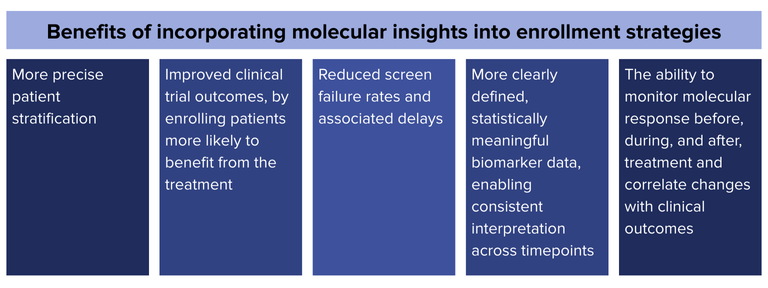
Incorporating molecular insights into enrollment strategies enables more precise patient stratification, allowing for:
While many sponsors recognize the importance of this approach, it can be challenging to determine which molecular profiling assay is best suited to a clinical trial’s specific needs, as assays must strike the right balance between scientific depth and operational practicality. With broad tumor profiling assays, the choice is easier. Because they are already validated and designed to include clinically relevant genes, they offer a practical, ready-to-implement option that can be integrated into patient enrollment without adding unnecessary complexity.
Contact us to find out how we can support with tumor mutation profiling.
To support streamlined patient selection and monitoring in clinical trials, CellCarta offers a wide portfolio of genomic assays, including three broad, validated tumor profiling panels that identify key driver mutations and clinically relevant gene expression. These assays deliver both broad and targeted profiling options and are ready to implement for clinical use, enabling rapid deployment for patient enrollment.
For studies requiring a more tailored approach, CellCarta also offers custom panel development.
oncoReveal® CDx is an IVDR and FDA approved, next-generation sequencing (NGS)-based companion diagnostic (CDx) test, developed to provide rapid, clinically actionable insights across a wide range of solid tumors.
A streamlined single-tube workflow and high sensitivity enables fast turnaround and reliable performance, even on low DNA input clinical samples.
CellCarta is the first CRO to offer the oncoReveal® CDx pan-cancer panel to support patient management in clinical studies.
For trials that require broader genomic coverage, we also offer the The TruSight Oncology 500 (TSO500) panel. TSO500 Comp is a comprehensive pan-cancer NGS panel enabling simultaneous analysis of DNA and RNA variants across hundreds of genes, making it well-suited for exploring complex molecular signatures, co-occurring alterations, and emerging biomarkers.
Aspyre® Lung is a clinically validated qPCR-based assay enabling ultra-sensitive mutation detection across NSCLC genes, with a rapid turnaround time and low sample input requirements.
CellCarta collaborated with a large global biopharma company to support patient enrollment in a study of high-risk non–muscle-invasive bladder cancer (HR-NMIBC), where no standard NGS assay was available. Working alongside Pillar Biosciences, the team rapidly implemented and validated a customized solution by combining two existing targeted NGS panels, and clinical samples from the CellCarta biobank.
The two panels, OncoReveal™ Essentials LBx and Fusion LBx, covered key DNA mutations and RNA fusions, including FGFR alterations relevant to the study population.
The customized approach enabled accurate, sensitive detection from limited samples, allowing the sponsor to shift from an existing qPCR assay to an NGS-based strategy that better suited their enrollment goal.
CellCarta works with clinical trial teams to help make tumor mutation profiling fast and easy to implement, and more reliable across sites. We offer:
Interested in how our tumor mutation profiling services could support your next trial? Contact us to speak to one of our experts.
August 18, 2025
Patient enrollment can be a significant challenge in clinical trials, particularly when it comes to identifying the right patients for trial recruitment. Globally, more than 80% of clinical trials fail to meet required enrollment numbers on time, often resulting in costly study extensions or the addition of new trial sites.1
In precision oncology, tight timelines, limited patient pools, and narrow eligibility criteria complicate trial patient selection, often creating delays that stall promising therapies and escalate development costs. Finding an efficient way to identify the most suitable patients is essential to ensure smooth trial operations and accurately identify a drug’s clinical benefits.
One of the most effective ways to improve patient enrollment efficiency is to select patients based on the molecular features most relevant to the treatment being studied. In oncology, this involves carrying out tumor mutation profiling.
Depending on the study goals, profiling might involve targeted sequencing of key oncogenes such as EGFR, KRAS, FGFR, BRAF, or PIK3CA, or broader panels that detect co-occurring mutations, gene fusions, resistance mechanisms, or biomarkers like microsatellite instability (MSI), and tumor mutational burden (TMB).2
Although molecular profiling has become a standard tool in oncology care (helping clinicians match patients to targeted therapies based on their tumor biology), in early exploratory research and clinical trials, it is often underused. As a result, many studies still rely on broader selection criteria, making it harder to recruit the right patients.
Incorporating molecular insights into enrollment strategies enables more precise patient stratification, allowing for:
While many sponsors recognize the importance of this approach, it can be challenging to determine which molecular profiling assay is best suited to a clinical trial’s specific needs, as assays must strike the right balance between scientific depth and operational practicality. With broad tumor profiling assays, the choice is easier. Because they are already validated and designed to include clinically relevant genes, they offer a practical, ready-to-implement option that can be integrated into patient enrollment without adding unnecessary complexity.
Contact us to find out how we can support with tumor mutation profiling.
To support streamlined patient selection and monitoring in clinical trials, CellCarta offers a wide portfolio of genomic assays, including three broad, validated tumor profiling panels that identify key driver mutations and clinically relevant gene expression. These assays deliver both broad and targeted profiling options and are ready to implement for clinical use, enabling rapid deployment for patient enrollment.
For studies requiring a more tailored approach, CellCarta also offers custom panel development.
oncoReveal® CDx is an IVDR and FDA approved, next-generation sequencing (NGS)-based companion diagnostic (CDx) test, developed to provide rapid, clinically actionable insights across a wide range of solid tumors.
A streamlined single-tube workflow and high sensitivity enables fast turnaround and reliable performance, even on low DNA input clinical samples.
CellCarta is the first CRO to offer the oncoReveal® CDx pan-cancer panel to support patient management in clinical studies.
For trials that require broader genomic coverage, we also offer the The TruSight Oncology 500 (TSO500) panel. TSO500 Comp is a comprehensive pan-cancer NGS panel enabling simultaneous analysis of DNA and RNA variants across hundreds of genes, making it well-suited for exploring complex molecular signatures, co-occurring alterations, and emerging biomarkers.
Aspyre® Lung is a clinically validated qPCR-based assay enabling ultra-sensitive mutation detection across NSCLC genes, with a rapid turnaround time and low sample input requirements.
CellCarta collaborated with a large global biopharma company to support patient enrollment in a study of high-risk non–muscle-invasive bladder cancer (HR-NMIBC), where no standard NGS assay was available. Working alongside Pillar Biosciences, the team rapidly implemented and validated a customized solution by combining two existing targeted NGS panels, and clinical samples from the CellCarta biobank.
The two panels, OncoReveal™ Essentials LBx and Fusion LBx, covered key DNA mutations and RNA fusions, including FGFR alterations relevant to the study population.
The customized approach enabled accurate, sensitive detection from limited samples, allowing the sponsor to shift from an existing qPCR assay to an NGS-based strategy that better suited their enrollment goal.
CellCarta works with clinical trial teams to help make tumor mutation profiling fast and easy to implement, and more reliable across sites. We offer:
Interested in how our tumor mutation profiling services could support your next trial? Contact us to speak to one of our experts.