Genomic Assay List

Updated August 17, 2026

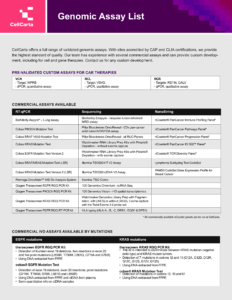
CellCarta offers a full range of validated genomic assays. With sites accredited by CAP and CLIA certifications, we provide the highest standard of quality. Our team continually develops new biomarker assays and has experience with several commercial assays. Contact us for any custom development.

DOWNLOAD OUR BROCHURE

Genomic Assay List

Updated August 17, 2026

CellCarta offers a full range of validated genomic assays. With sites accredited by CAP and CLIA certifications, we provide the highest standard of quality. Our team continually develops new biomarker assays and has experience with several commercial assays. Contact us for any custom development.

DOWNLOAD OUR BROCHURE

CAR Kinetics in Autoimmune Studies: Expert Insights on Designing Effective Monitoring Strategies | CellCarta

June 30, 2026

CAR-based therapies, originally developed for oncology, are now advancing into autoimmune diseases with promising early clinical results.1 In this setting, the biological context differs, and so does the way CAR kinetics are evaluated and understood.

To explore what this means in practice, we sat down with Laïla-Aïcha Hanafi, Director Global Assay Development here at CellCarta. With a background in immuno-oncology and translational biomarkers for cell therapies, Laïla works closely with sponsors to design and execute CAR kinetic strategies across programs.

In this Q&A, she shares how immunologists approach CAR kinetic monitoring in autoimmune disease and what sponsors should consider when designing their strategy.

How does CAR kinetic monitoring in autoimmune diseases differ from oncology?

It may sound obvious, but the differences in monitoring strategies really come down to the differing goals of CAR therapies in oncology versus autoimmune diseases. In oncology, the aim is to achieve strong CAR expansion and maintain those cells over time to sustain tumor control. Whereas in autoimmune disease, the focus is on eliminating diseased B cells, allowing the immune system to reset, and then letting CAR levels decline. From a monitoring perspective, that difference translates into two key considerations.

First, the timeline. In oncology, monitoring can extend for six months to a year or more because persistence is part of the intended outcome. In autoimmune programs, the most informative window is often much earlier, typically around the first one to two weeks post-infusion, when CAR expansion peaks. After that, the focus shifts to confirming contraction and monitoring immune cell recovery rather than tracking long-term maintenance.

Second, assay sensitivity. In autoimmune disease, starting doses are lower; as a result, CAR expansion may be harder to detect than in oncology. Detecting and quantifying those lower levels reliably requires highly sensitive, well-optimized assays.

What key factors should be considered when choosing an assay for CAR kinetic monitoring in autoimmune diseases?

Assay selection in autoimmune CAR programs largely comes down to sensitivity, specificity, and what type of information you need to generate.

In practice, two main assay families are used to monitor CAR kinetics: flow cytometry and PCR-based approaches. Digital PCR can provide highly sensitive, quantitative detection of the CAR construct and can be run in batches. It gives a clear numerical readout of CAR signal in the sample, but it does not indicate which cells are expressing the CAR.

Flow cytometry, on the other hand, allows direct detection of CAR-expressing cells and makes it possible to identify which cell types have been transfected. This is important in certain contexts, such as in vivo CAR approaches, where the CAR construct may not be restricted to a single predefined cell population. Flow cytometry also enables phenotyping alongside enumeration, providing additional biological insight.

In autoimmune programs, that biological context is particularly relevant, as sponsors need to understand how CAR levels relate to downstream immune effects, especially B-cell depletion and recovery.

In most cases, it’s best to use both approaches. PCR offers sensitivity and quantitative measurement of the construct, while flow cytometry provides cell-level resolution and biological context.

How should immunologists use CAR enumeration and absolute counts to interpret CAR kinetics in autoimmune disease?

Enumeration is the starting point for understanding CAR kinetics—it shows whether CAR cells are present and how their levels change over time. But interpreting those numbers meaningfully requires looking at absolute counts rather than percentages alone.

Absolute counts allow teams to construct the full kinetic curve: how quickly the CAR cells expand, how high they peak, and how long they remain detectable. That information helps in understanding dose, exposure, and how the CAR levels relate to B-cell reduction.

The early expansion phase, typically around day 7–14 post-infusion, is where absolute counts really add value, allowing the assessment of peak levels and overall exposure. Later in the timeline, when CAR levels are much lower, small numerical differences become less meaningful. At that stage, interpretation focuses more on whether CAR cells are still detectable rather than on detailed quantitative comparisons.

What are the biggest interpretation challenges in autoimmune CAR monitoring?

As mentioned, one of the main challenges is sensitivity. Because CAR expansion may be lower in autoimmune programs, detecting small populations reliably can be difficult. Increasing assay input or optimizing the assay design may be necessary to capture low-level signals.

Specificity is just as important, particularly when using flow cytometry. Background signal or non-specific binding can obscure low-level CAR detection. Addressing this may require increasing assay input to improve sensitivity, refining gating strategies, or adding additional markers, such as negative selection or “dump” channels, to reduce background.

Finally, as CAR levels decline, deeper phenotyping becomes more difficult. To ensure detailed biological insight can be extracted, it is better to conduct subpopulation analysis during the expansion peak, when there are sufficient events to analyze.

Overall, what would you say are the key things sponsors should keep in mind when designing CAR kinetic monitoring strategies for autoimmune programs?

In autoimmune programs, timing and sensitivity are key. Plan monitoring around the most informative window (days 7–14 post-infusion), make sure assays are sensitive enough for lower signals, and think beyond simple detection.

At the same time, it’s important not to look at CAR levels in isolation. In autoimmune disease, what ultimately matters is how those kinetics translate into biological effect. Monitoring B-cell depletion and recovery, including changes in specific subsets, helps connect CAR exposure to immune reset.

In the end, good CAR kinetic monitoring in autoimmune programs is about seeing the full picture, not just whether CAR cells are present, but how the kinetic profile aligns with downstream immune changes and the therapeutic goal.

Supporting CAR Kinetic Monitoring in Autoimmune Programs

To support robust CAR kinetic monitoring from early expansion through immune reconstitution, CellCarta provides integrated assay solutions tailored to autoimmune programs.

  • Digital PCR: custom and off-the-shelf assays for sensitive, quantitative detection of CAR constructs.
  • Flow cytometry: custom CAR detection panels for enumeration and phenotyping, and spectral flow cytometry for deeper immune profiling.
  • Advanced immune profiling: CyTOF for high-dimensional phenotyping and single-cell genomics for deeper biological characterization.
  • Ready-to-deploy assays for pharmacodynamic monitoring, including: B-cell aplasia and recovery, memory B-cell phenotyping, TBNK CD20 panels, and absolute B-cell enumeration.

Explore how CellCarta’s immunology platforms can help you generate high-quality CAR kinetic and immune monitoring data for your autoimmune programs

 

About the author:

author photo

Laïla-Aïcha Hanafi is the Director of Global Assay Development at CellCarta. She supplemented her PhD in immuno-oncology with post-doctoral studies in translational biomarkers for cell therapies at the Fred Hutchinson Cancer Center. Laïla has combined scientific knowledge and operational efficiency to address biomarker needs in clinical trial and prioritizing high-quality data to move therapies to the next stage of clinical deployment. 


Reference

  1. https://pmc.ncbi.nlm.nih.gov/articles/PMC12488630/pdf/fimmu-16-1613622.pdf

CAR Kinetics in Autoimmune Studies: Expert Insights on Designing Effective Monitoring Strategies | CellCarta

June 30, 2026

CAR-based therapies, originally developed for oncology, are now advancing into autoimmune diseases with promising early clinical results.1 In this setting, the biological context differs, and so does the way CAR kinetics are evaluated and understood.

To explore what this means in practice, we sat down with Laïla-Aïcha Hanafi, Director Global Assay Development here at CellCarta. With a background in immuno-oncology and translational biomarkers for cell therapies, Laïla works closely with sponsors to design and execute CAR kinetic strategies across programs.

In this Q&A, she shares how immunologists approach CAR kinetic monitoring in autoimmune disease and what sponsors should consider when designing their strategy.

How does CAR kinetic monitoring in autoimmune diseases differ from oncology?

It may sound obvious, but the differences in monitoring strategies really come down to the differing goals of CAR therapies in oncology versus autoimmune diseases. In oncology, the aim is to achieve strong CAR expansion and maintain those cells over time to sustain tumor control. Whereas in autoimmune disease, the focus is on eliminating diseased B cells, allowing the immune system to reset, and then letting CAR levels decline. From a monitoring perspective, that difference translates into two key considerations.

First, the timeline. In oncology, monitoring can extend for six months to a year or more because persistence is part of the intended outcome. In autoimmune programs, the most informative window is often much earlier, typically around the first one to two weeks post-infusion, when CAR expansion peaks. After that, the focus shifts to confirming contraction and monitoring immune cell recovery rather than tracking long-term maintenance.

Second, assay sensitivity. In autoimmune disease, starting doses are lower; as a result, CAR expansion may be harder to detect than in oncology. Detecting and quantifying those lower levels reliably requires highly sensitive, well-optimized assays.

What key factors should be considered when choosing an assay for CAR kinetic monitoring in autoimmune diseases?

Assay selection in autoimmune CAR programs largely comes down to sensitivity, specificity, and what type of information you need to generate.

In practice, two main assay families are used to monitor CAR kinetics: flow cytometry and PCR-based approaches. Digital PCR can provide highly sensitive, quantitative detection of the CAR construct and can be run in batches. It gives a clear numerical readout of CAR signal in the sample, but it does not indicate which cells are expressing the CAR.

Flow cytometry, on the other hand, allows direct detection of CAR-expressing cells and makes it possible to identify which cell types have been transfected. This is important in certain contexts, such as in vivo CAR approaches, where the CAR construct may not be restricted to a single predefined cell population. Flow cytometry also enables phenotyping alongside enumeration, providing additional biological insight.

In autoimmune programs, that biological context is particularly relevant, as sponsors need to understand how CAR levels relate to downstream immune effects, especially B-cell depletion and recovery.

In most cases, it’s best to use both approaches. PCR offers sensitivity and quantitative measurement of the construct, while flow cytometry provides cell-level resolution and biological context.

How should immunologists use CAR enumeration and absolute counts to interpret CAR kinetics in autoimmune disease?

Enumeration is the starting point for understanding CAR kinetics—it shows whether CAR cells are present and how their levels change over time. But interpreting those numbers meaningfully requires looking at absolute counts rather than percentages alone.

Absolute counts allow teams to construct the full kinetic curve: how quickly the CAR cells expand, how high they peak, and how long they remain detectable. That information helps in understanding dose, exposure, and how the CAR levels relate to B-cell reduction.

The early expansion phase, typically around day 7–14 post-infusion, is where absolute counts really add value, allowing the assessment of peak levels and overall exposure. Later in the timeline, when CAR levels are much lower, small numerical differences become less meaningful. At that stage, interpretation focuses more on whether CAR cells are still detectable rather than on detailed quantitative comparisons.

What are the biggest interpretation challenges in autoimmune CAR monitoring?

As mentioned, one of the main challenges is sensitivity. Because CAR expansion may be lower in autoimmune programs, detecting small populations reliably can be difficult. Increasing assay input or optimizing the assay design may be necessary to capture low-level signals.

Specificity is just as important, particularly when using flow cytometry. Background signal or non-specific binding can obscure low-level CAR detection. Addressing this may require increasing assay input to improve sensitivity, refining gating strategies, or adding additional markers, such as negative selection or “dump” channels, to reduce background.

Finally, as CAR levels decline, deeper phenotyping becomes more difficult. To ensure detailed biological insight can be extracted, it is better to conduct subpopulation analysis during the expansion peak, when there are sufficient events to analyze.

Overall, what would you say are the key things sponsors should keep in mind when designing CAR kinetic monitoring strategies for autoimmune programs?

In autoimmune programs, timing and sensitivity are key. Plan monitoring around the most informative window (days 7–14 post-infusion), make sure assays are sensitive enough for lower signals, and think beyond simple detection.

At the same time, it’s important not to look at CAR levels in isolation. In autoimmune disease, what ultimately matters is how those kinetics translate into biological effect. Monitoring B-cell depletion and recovery, including changes in specific subsets, helps connect CAR exposure to immune reset.

In the end, good CAR kinetic monitoring in autoimmune programs is about seeing the full picture, not just whether CAR cells are present, but how the kinetic profile aligns with downstream immune changes and the therapeutic goal.

Supporting CAR Kinetic Monitoring in Autoimmune Programs

To support robust CAR kinetic monitoring from early expansion through immune reconstitution, CellCarta provides integrated assay solutions tailored to autoimmune programs.

  • Digital PCR: custom and off-the-shelf assays for sensitive, quantitative detection of CAR constructs.
  • Flow cytometry: custom CAR detection panels for enumeration and phenotyping, and spectral flow cytometry for deeper immune profiling.
  • Advanced immune profiling: CyTOF for high-dimensional phenotyping and single-cell genomics for deeper biological characterization.
  • Ready-to-deploy assays for pharmacodynamic monitoring, including: B-cell aplasia and recovery, memory B-cell phenotyping, TBNK CD20 panels, and absolute B-cell enumeration.

Explore how CellCarta’s immunology platforms can help you generate high-quality CAR kinetic and immune monitoring data for your autoimmune programs
 

About the author:

author photo

Laïla-Aïcha Hanafi is the Director of Global Assay Development at CellCarta. She supplemented her PhD in immuno-oncology with post-doctoral studies in translational biomarkers for cell therapies at the Fred Hutchinson Cancer Center. Laïla has combined scientific knowledge and operational efficiency to address biomarker needs in clinical trial and prioritizing high-quality data to move therapies to the next stage of clinical deployment. 


Reference

  1. https://pmc.ncbi.nlm.nih.gov/articles/PMC12488630/pdf/fimmu-16-1613622.pdf

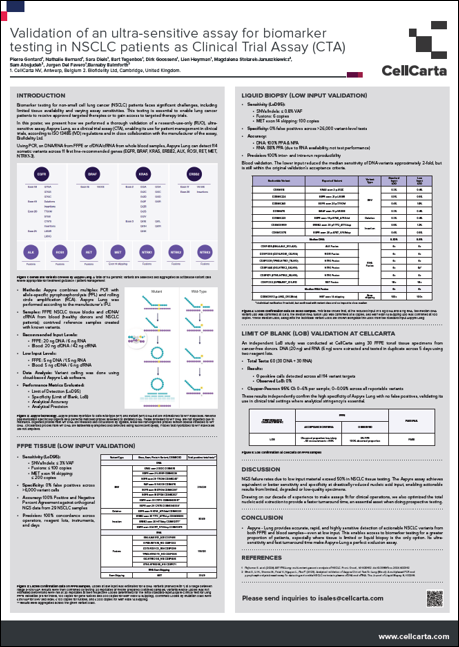
Validation of an ultra-sensitive assay for biomarker testing in NSCLC patients as Clinical Trial Assay (CTA)

March 3, 2026

Validation of an ultra-sensitive assay for biomarker testing in NSCLC patients as Clinical Trial Assay (CTA)

Validation of an ultra-sensitive assay for biomarker testing in NSCLC patients as Clinical Trial Assay (CTA)

March 3, 2026

Validation of an ultra-sensitive assay for biomarker testing in NSCLC patients as Clinical Trial Assay (CTA)

Preclinical Genomic Insights for Therapeutic Development

August 18, 2025

The risk of poor target selection in preclinical development

In early-stage drug development, there’s often a rush to move promising candidates forward. Tight timelines and competitive pressures can lead to companies having an over-reliance on ‘quantity over quality’ in research and development,hoping to maximize their chances of success by bringing more products into the pipeline.

While this may offer short-term momentum, advancing drug candidates without establishing a strong link between target and disease at the preclinical stages can lead to costly, later-stage setbacks. When targets are poorly defined, programs risk progressing on shaky foundations that can compromise other aspects of the pipeline, from study design and patient selection to commercial potential.

Understanding what makes a target worth pursuing, and how to evaluate it effectively, is key to laying the groundwork for clinical success.

Improving trial outcomes starts with the right target

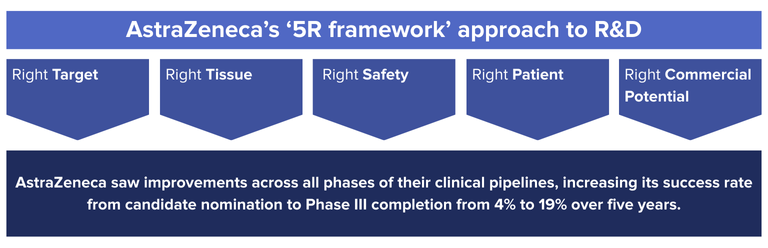
Developing a strong biological foundation for your target is a key driver in the downstream success of a therapeutic candidate. One example of this is AstraZeneca’s ‘5R framework’ approach to R&D, in which they aimed to improve their R&D productivity by focusing on 5 technical determinants: the right target, right tissue, right safety, right patient, and right commercial potential.1

The ‘right target’ principle emphasized selecting targets with a strong link to disease, with a focus on developing a deeper initial biological understanding through fewer, more informative screens—using technologies such as high-content imaging, high-throughput electrophysiology, and advances in genomics technologies such as transcriptomics.

The result? AstraZeneca saw improvements across all phases of their clinical pipelines, increasing its success rate from candidate nomination to Phase III completion from 4% to 19% over five years.1 By focusing only on the most promising candidates and providing robust study data to inform late-stage clinical trials, not only did they improve candidate success rate, they also saved research costs and accelerated all phases of their clinical trials.

Section image

This improvement is a clear demonstration of the impact that strong preclinical research can have on downstream outcomes. A greater focus on target quality in early development enables teams to prioritize candidates with stronger potential for therapeutic impact, increasing the likelihood of success.

The key role of genomics in better target selection

Genomics is a key tool in enabling better target selection, allowing researchers to understand the biological relevance of a target at a molecular level. The growth of techniques in next-generation sequencing (NGS ), RNA sequencing, whole exome sequencing (WES), single-cell sequencing, T-cell/B-cell receptor (TCR/BCR) profiling, and associated analytical methods refining mutation profiling allows teams to uncover associations between genes, pathways, and disease, and assess whether modulating a particular target will likely yield clinical benefit.

In preclinical research, these insights are especially valuable when deciding which candidates to advance, enabling:

  •  Identification of genetically validated targets with known links to human disease
  • Clarification of the mechanism of action (MOA) by showing how a compound influences gene expression or pathway activation
  • Detection of early biomarkers that provide later value in patient stratification or response monitoring
  • Identification of potential off-target effects or resistance mechanisms that could impact long-term viability

Get in touch to find out how we can support your preclinical development.

The impact of early genomic insight on downstream success

The value of genomic profiling doesn’t end in early development. When applied strategically, molecular insights generated in preclinical research can guide key decisions throughout the pipeline.

Early identification of response biomarkers can support more focused trial designs, while understanding resistance pathways can shape monitoring strategies and combination therapy planning. Early-stage genomics work can also lay the foundation for companion diagnostics, enabling the targeted therapy to launch with a clearly defined patient population.

Advances in NGS have led to further investment in genomics to help identify novel, genetically validated targets in early development.1 As such, NGS is now more accessible in early development, allowing teams to build a stronger understanding of target biology and downstream biomarker opportunities sooner in the process.

Case study: Osimertinib and the value of a well-characterized target

The development of Osimertinib, a treatment for non-small cell lung cancer (NSCLC), illustrates how genomic insight can strengthen target confidence and accelerate clinical development.1 In NSCLC, the EGFR T790M mutation had been identified as a common resistance mechanism in patients progressing on first-generation EGFR inhibitors.

AstraZeneca recognized the clinical relevance of this mutation, designing Osimertinib to address this specific, established resistance mechanism. Because the EGFR T790M target was well-characterized, the AstraZeneca team were able to design a more tailored clinical program and use a mutation-specific companion diagnostic for more precise patient selection from the outset.

Combining this with the other elements of the 5R framework resulted in Osimertinib having one of the fastest recorded clinical development programs, going from initial human dosing to launch in just over 2.5 years. The program’s success is a clear example of how well-validated genomic targets can inform trial design, enable targeted patient selection, and accelerate path to market.

Support early development decisions with the right tools and expertise

Translating early genomic insight into clinical success requires the right assays and dedicated expertise. CellCarta offers a wide range of tools suited to preclinical and translational research, including RNAseq, whole genome and whole exome sequencing, single-cell analysis, and Olink proteomics. For companies that require a tailored approach, we offer custom assay development, alongside several validated panels designed around well-established genes, which can streamline trial efficiency. Our validated assay offerings include:

  • oncoReveal® CDx: An FDA-approved targeted NGS panel covering 22 key genes across numerous tumor types
  • TSO500: A comprehensive pan-cancer panel covering 523 genes for DNA variants and 55 for RNA variants
  • Aspyre® lung: Ultra-sensitive, high-fidelity multiplex PCR/reverse-transcriptase (RT)-PCR, covering 11 genes and including a fusion panel for the detection of established NSCLC biomarkers in both DNA and RNA.

By combining these advanced validated platforms with custom analysis pipelines, we can help sponsors narrow down the most promising biomarkers and transition seamlessly into focused platforms, such as qPCR, dPCR, or NGS, at the later clinical trial stages.

Our capabilities can support both small and large pharma companies with early-phase development, right through to regulatory submission. Combined with our global infrastructure, expertise in handling challenging samples, and access to all major genomic analysis platforms, CellCarta ensures high-quality data from early discovery through clinical execution, aiding success at all stages of the pipeline.

Want to learn more about how our services can support your preclinical research? Chat with one of our experts!

References

  1. https://www.nature.com/articles/nrd.2017.244

Preclinical Genomic Insights for Therapeutic Development

August 18, 2025

The risk of poor target selection in preclinical development

In early-stage drug development, there’s often a rush to move promising candidates forward. Tight timelines and competitive pressures can lead to companies having an over-reliance on ‘quantity over quality’ in research and development,hoping to maximize their chances of success by bringing more products into the pipeline.

While this may offer short-term momentum, advancing drug candidates without establishing a strong link between target and disease at the preclinical stages can lead to costly, later-stage setbacks. When targets are poorly defined, programs risk progressing on shaky foundations that can compromise other aspects of the pipeline, from study design and patient selection to commercial potential.

Understanding what makes a target worth pursuing, and how to evaluate it effectively, is key to laying the groundwork for clinical success.

Improving trial outcomes starts with the right target

Developing a strong biological foundation for your target is a key driver in the downstream success of a therapeutic candidate. One example of this is AstraZeneca’s ‘5R framework’ approach to R&D, in which they aimed to improve their R&D productivity by focusing on 5 technical determinants: the right target, right tissue, right safety, right patient, and right commercial potential.1

The ‘right target’ principle emphasized selecting targets with a strong link to disease, with a focus on developing a deeper initial biological understanding through fewer, more informative screens—using technologies such as high-content imaging, high-throughput electrophysiology, and advances in genomics technologies such as transcriptomics.

The result? AstraZeneca saw improvements across all phases of their clinical pipelines, increasing its success rate from candidate nomination to Phase III completion from 4% to 19% over five years.1 By focusing only on the most promising candidates and providing robust study data to inform late-stage clinical trials, not only did they improve candidate success rate, they also saved research costs and accelerated all phases of their clinical trials.

Section image

This improvement is a clear demonstration of the impact that strong preclinical research can have on downstream outcomes. A greater focus on target quality in early development enables teams to prioritize candidates with stronger potential for therapeutic impact, increasing the likelihood of success.

The key role of genomics in better target selection

Genomics is a key tool in enabling better target selection, allowing researchers to understand the biological relevance of a target at a molecular level. The growth of techniques in next-generation sequencing (NGS ), RNA sequencing, whole exome sequencing (WES), single-cell sequencing, T-cell/B-cell receptor (TCR/BCR) profiling, and associated analytical methods refining mutation profiling allows teams to uncover associations between genes, pathways, and disease, and assess whether modulating a particular target will likely yield clinical benefit.

In preclinical research, these insights are especially valuable when deciding which candidates to advance, enabling:

  •  Identification of genetically validated targets with known links to human disease
  • Clarification of the mechanism of action (MOA) by showing how a compound influences gene expression or pathway activation
  • Detection of early biomarkers that provide later value in patient stratification or response monitoring
  • Identification of potential off-target effects or resistance mechanisms that could impact long-term viability

Get in touch to find out how we can support your preclinical development.

The impact of early genomic insight on downstream success

The value of genomic profiling doesn’t end in early development. When applied strategically, molecular insights generated in preclinical research can guide key decisions throughout the pipeline.

Early identification of response biomarkers can support more focused trial designs, while understanding resistance pathways can shape monitoring strategies and combination therapy planning. Early-stage genomics work can also lay the foundation for companion diagnostics, enabling the targeted therapy to launch with a clearly defined patient population.

Advances in NGS have led to further investment in genomics to help identify novel, genetically validated targets in early development.1 As such, NGS is now more accessible in early development, allowing teams to build a stronger understanding of target biology and downstream biomarker opportunities sooner in the process.

Case study: Osimertinib and the value of a well-characterized target

The development of Osimertinib, a treatment for non-small cell lung cancer (NSCLC), illustrates how genomic insight can strengthen target confidence and accelerate clinical development.1 In NSCLC, the EGFR T790M mutation had been identified as a common resistance mechanism in patients progressing on first-generation EGFR inhibitors.

AstraZeneca recognized the clinical relevance of this mutation, designing Osimertinib to address this specific, established resistance mechanism. Because the EGFR T790M target was well-characterized, the AstraZeneca team were able to design a more tailored clinical program and use a mutation-specific companion diagnostic for more precise patient selection from the outset.

Combining this with the other elements of the 5R framework resulted in Osimertinib having one of the fastest recorded clinical development programs, going from initial human dosing to launch in just over 2.5 years. The program’s success is a clear example of how well-validated genomic targets can inform trial design, enable targeted patient selection, and accelerate path to market.

Support early development decisions with the right tools and expertise

Translating early genomic insight into clinical success requires the right assays and dedicated expertise. CellCarta offers a wide range of tools suited to preclinical and translational research, including RNAseq, whole genome and whole exome sequencing, single-cell analysis, and Olink proteomics. For companies that require a tailored approach, we offer custom assay development, alongside several validated panels designed around well-established genes, which can streamline trial efficiency. Our validated assay offerings include:

  • oncoReveal® CDx: An FDA-approved targeted NGS panel covering 22 key genes across numerous tumor types
  • TSO500: A comprehensive pan-cancer panel covering 523 genes for DNA variants and 55 for RNA variants
  • Aspyre® lung: Ultra-sensitive, high-fidelity multiplex PCR/reverse-transcriptase (RT)-PCR, covering 11 genes and including a fusion panel for the detection of established NSCLC biomarkers in both DNA and RNA.

By combining these advanced validated platforms with custom analysis pipelines, we can help sponsors narrow down the most promising biomarkers and transition seamlessly into focused platforms, such as qPCR, dPCR, or NGS, at the later clinical trial stages.

Our capabilities can support both small and large pharma companies with early-phase development, right through to regulatory submission. Combined with our global infrastructure, expertise in handling challenging samples, and access to all major genomic analysis platforms, CellCarta ensures high-quality data from early discovery through clinical execution, aiding success at all stages of the pipeline.

Want to learn more about how our services can support your preclinical research? Chat with one of our experts!

References

  1. https://www.nature.com/articles/nrd.2017.244

Enhancing Clinical Trial Enrollment with Molecular Profiling

August 18, 2025

Patient enrollment: a clinical trial bottleneck

Patient enrollment can be a significant challenge in clinical trials, particularly when it comes to identifying the right patients for trial recruitment. Globally, more than 80% of clinical trials fail to meet required enrollment numbers on time, often resulting in costly study extensions or the addition of new trial sites.1

In precision oncology, tight timelines, limited patient pools, and narrow eligibility criteria complicate trial patient selection, often creating delays that stall promising therapies and escalate development costs. Finding an efficient way to identify the most suitable patients is essential to ensure smooth trial operations and accurately identify a drug’s clinical benefits.

Why identifying driver mutations matters

One of the most effective ways to improve patient enrollment efficiency is to select patients based on the molecular features most relevant to the treatment being studied. In oncology, this involves carrying out tumor mutation profiling.

Depending on the study goals, profiling might involve targeted sequencing of key oncogenes such as EGFR, KRAS, FGFR, BRAF, or PIK3CA, or broader panels that detect co-occurring mutations, gene fusions, resistance mechanisms, or biomarkers like microsatellite instability (MSI), and tumor mutational burden (TMB).2

Although molecular profiling has become a standard tool in oncology care (helping clinicians match patients to targeted therapies based on their tumor biology), in early exploratory research and clinical trials, it is often underused. As a result, many studies still rely on broader selection criteria, making it harder to recruit the right patients.

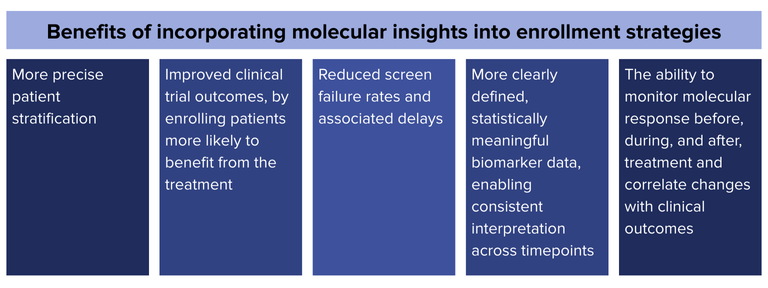
Incorporating molecular insights into enrollment strategies enables more precise patient stratification, allowing for:

  • Improved clinical trial outcomes, by enrolling patients more likely to benefit from the treatment
  • Reduced screen failure rates and associated delays
  • More clearly defined, statistically meaningful biomarker data, enabling consistent interpretation across timepoints
  • The ability to monitor molecular response before, during, and after, treatment and correlate changes with clinical outcomes
Section image

While many sponsors recognize the importance of this approach, it can be challenging to determine which molecular profiling assay is best suited to a clinical trial’s specific needs, as assays must strike the right balance between scientific depth and operational practicality. With broad tumor profiling assays, the choice is easier. Because they are already validated and designed to include clinically relevant genes, they offer a practical, ready-to-implement option that can be integrated into patient enrollment without adding unnecessary complexity.

Contact us to find out how we can support with tumor mutation profiling.

Fast, ready-to-deploy assays

To support streamlined patient selection and monitoring in clinical trials, CellCarta offers a wide portfolio of genomic assays, including three broad, validated tumor profiling panels that identify key driver mutations and clinically relevant gene expression. These assays deliver both broad and targeted profiling options and are ready to implement for clinical use, enabling rapid deployment for patient enrollment.

For studies requiring a more tailored approach, CellCarta also offers custom panel development.

oncoReveal® CDx: NGS based CDx test for key oncogenes

oncoReveal® CDx is an IVDR and FDA approved, next-generation sequencing (NGS)-based companion diagnostic (CDx) test, developed to provide rapid, clinically actionable insights across a wide range of solid tumors.

A streamlined single-tube workflow and high sensitivity enables fast turnaround and reliable performance, even on low DNA input clinical samples.

  • Gene coverage: 22 clinically relevant genes, including EGFR, KRAS, BRAF, PIK3CA
  • Tumor types: non-small cell lung cancer (NSCLC), colorectal cancer (CRC), and pan-cancer solid tumor
  • Sample type: DNA from formalin-fixed paraffin-embedded (FFPE) tissue samples
  • Sensitivity: detects CDx variants down to 1.5% variant allele frequency (VAF), and non-CDx tumor profiling variants down to 1.4-2.2% VAF

CellCarta is the first CRO to offer the oncoReveal® CDx pan-cancer panel to support patient management in clinical studies.

TSO500 Comp: Pan-cancer NGS assay for DNA and RNA variants

For trials that require broader genomic coverage, we also offer the The TruSight Oncology 500 (TSO500) panel.  TSO500 Comp is a comprehensive pan-cancer NGS panel enabling simultaneous analysis of DNA and RNA variants across hundreds of genes, making it well-suited for exploring complex molecular signatures, co-occurring alterations, and emerging biomarkers.

  • Gene coverage: 523 pan-cancer genes for DNA variants, 55 for RNA
  • Tumor types: a broad range of solid tumor types, including breast, colorectal, lung, and ovarian
  • Sample type: DNA and RNA from FFPE tissue samples, and blood-derived ctDNA
  • Sensitivity: ≥ 95% (small variants, 5% VAF)

Aspyre® Lung: Ultra-sensitive detection of NSCLC biomarkers

Aspyre® Lung is a clinically validated qPCR-based assay enabling ultra-sensitive mutation detection across NSCLC genes, with a rapid turnaround time and low sample input requirements.

  • Gene coverage: 11 NSCLC genes; 77 variants for DNA (including EGFR, BRAF, KRAS, and ERB2), and 36 for RNA (including ALK, ROS1, MET, and NTRK1)
  • Tumor type: Non-small cell lung cancer
  • Sample type: FFPE-derived DNA and RNA, and blood-derived cfDNA and cfRNA
  • Sensitivity: ≤ 3% VAF (tissue) or3-0.8% VAF (Blood)

Case study: supporting patient selection where standard assays fall short

CellCarta collaborated with a large global biopharma company to support patient enrollment in a study of high-risk non–muscle-invasive bladder cancer (HR-NMIBC), where no standard NGS assay was available. Working alongside Pillar Biosciences, the team rapidly implemented and validated a customized solution by combining two existing targeted NGS panels, and clinical samples from the CellCarta biobank.

The two panels, OncoReveal™ Essentials LBx and Fusion LBx, covered key DNA mutations and RNA fusions, including FGFR alterations relevant to the study population.

The customized approach enabled accurate, sensitive detection from limited samples, allowing the sponsor to shift from an existing qPCR assay to an NGS-based strategy that better suited their enrollment goal.

Access fast, reliable, consistent profiling

CellCarta works with clinical trial teams to help make tumor mutation profiling fast and easy to implement, and more reliable across sites. We offer:

  • Ready-to-deploy, off-the-shelf assay options, as well as customized assay options, depending on your biomarker strategy
  • Expertise in all and access to all other major platforms, enabling flexibility across study designs
  • Global Reach with genomics labs in China, Europe, North America, all with standardized SOPs for coordinated operations across trial sites
  • Expert support for challenging samples, enabled by in-house pre-analytical services

Interested in how our tumor mutation profiling services could support your next trial? Contact us to speak to one of our experts.

References

  1. https://pmc.ncbi.nlm.nih.gov/articles/PMC7342339/
  2. https://genomemedicine.biomedcentral.com/articles/10.1186/s13073-019-0703-1

Enhancing Clinical Trial Enrollment with Molecular Profiling

August 18, 2025

Patient enrollment: a clinical trial bottleneck

Patient enrollment can be a significant challenge in clinical trials, particularly when it comes to identifying the right patients for trial recruitment. Globally, more than 80% of clinical trials fail to meet required enrollment numbers on time, often resulting in costly study extensions or the addition of new trial sites.1

In precision oncology, tight timelines, limited patient pools, and narrow eligibility criteria complicate trial patient selection, often creating delays that stall promising therapies and escalate development costs. Finding an efficient way to identify the most suitable patients is essential to ensure smooth trial operations and accurately identify a drug’s clinical benefits.

Why identifying driver mutations matters

One of the most effective ways to improve patient enrollment efficiency is to select patients based on the molecular features most relevant to the treatment being studied. In oncology, this involves carrying out tumor mutation profiling.

Depending on the study goals, profiling might involve targeted sequencing of key oncogenes such as EGFR, KRAS, FGFR, BRAF, or PIK3CA, or broader panels that detect co-occurring mutations, gene fusions, resistance mechanisms, or biomarkers like microsatellite instability (MSI), and tumor mutational burden (TMB).2

Although molecular profiling has become a standard tool in oncology care (helping clinicians match patients to targeted therapies based on their tumor biology), in early exploratory research and clinical trials, it is often underused. As a result, many studies still rely on broader selection criteria, making it harder to recruit the right patients.

Incorporating molecular insights into enrollment strategies enables more precise patient stratification, allowing for:

  • Improved clinical trial outcomes, by enrolling patients more likely to benefit from the treatment
  • Reduced screen failure rates and associated delays
  • More clearly defined, statistically meaningful biomarker data, enabling consistent interpretation across timepoints
  • The ability to monitor molecular response before, during, and after, treatment and correlate changes with clinical outcomes
Section image

While many sponsors recognize the importance of this approach, it can be challenging to determine which molecular profiling assay is best suited to a clinical trial’s specific needs, as assays must strike the right balance between scientific depth and operational practicality. With broad tumor profiling assays, the choice is easier. Because they are already validated and designed to include clinically relevant genes, they offer a practical, ready-to-implement option that can be integrated into patient enrollment without adding unnecessary complexity.

Contact us to find out how we can support with tumor mutation profiling.

Fast, ready-to-deploy assays

To support streamlined patient selection and monitoring in clinical trials, CellCarta offers a wide portfolio of genomic assays, including three broad, validated tumor profiling panels that identify key driver mutations and clinically relevant gene expression. These assays deliver both broad and targeted profiling options and are ready to implement for clinical use, enabling rapid deployment for patient enrollment.

For studies requiring a more tailored approach, CellCarta also offers custom panel development.

oncoReveal® CDx: NGS based CDx test for key oncogenes

oncoReveal® CDx is an IVDR and FDA approved, next-generation sequencing (NGS)-based companion diagnostic (CDx) test, developed to provide rapid, clinically actionable insights across a wide range of solid tumors.

A streamlined single-tube workflow and high sensitivity enables fast turnaround and reliable performance, even on low DNA input clinical samples.

  • Gene coverage: 22 clinically relevant genes, including EGFR, KRAS, BRAF, PIK3CA
  • Tumor types: non-small cell lung cancer (NSCLC), colorectal cancer (CRC), and pan-cancer solid tumor
  • Sample type: DNA from formalin-fixed paraffin-embedded (FFPE) tissue samples
  • Sensitivity: detects CDx variants down to 1.5% variant allele frequency (VAF), and non-CDx tumor profiling variants down to 1.4-2.2% VAF

CellCarta is the first CRO to offer the oncoReveal® CDx pan-cancer panel to support patient management in clinical studies.

TSO500 Comp: Pan-cancer NGS assay for DNA and RNA variants

For trials that require broader genomic coverage, we also offer the The TruSight Oncology 500 (TSO500) panel.  TSO500 Comp is a comprehensive pan-cancer NGS panel enabling simultaneous analysis of DNA and RNA variants across hundreds of genes, making it well-suited for exploring complex molecular signatures, co-occurring alterations, and emerging biomarkers.

  • Gene coverage: 523 pan-cancer genes for DNA variants, 55 for RNA
  • Tumor types: a broad range of solid tumor types, including breast, colorectal, lung, and ovarian
  • Sample type: DNA and RNA from FFPE tissue samples, and blood-derived ctDNA
  • Sensitivity: ≥ 95% (small variants, 5% VAF)

Aspyre® Lung: Ultra-sensitive detection of NSCLC biomarkers

Aspyre® Lung is a clinically validated qPCR-based assay enabling ultra-sensitive mutation detection across NSCLC genes, with a rapid turnaround time and low sample input requirements.

  • Gene coverage: 11 NSCLC genes; 77 variants for DNA (including EGFR, BRAF, KRAS, and ERB2), and 36 for RNA (including ALK, ROS1, MET, and NTRK1)
  • Tumor type: Non-small cell lung cancer
  • Sample type: FFPE-derived DNA and RNA, and blood-derived cfDNA and cfRNA
  • Sensitivity: ≤ 3% VAF (tissue) or3-0.8% VAF (Blood)

Case study: supporting patient selection where standard assays fall short

CellCarta collaborated with a large global biopharma company to support patient enrollment in a study of high-risk non–muscle-invasive bladder cancer (HR-NMIBC), where no standard NGS assay was available. Working alongside Pillar Biosciences, the team rapidly implemented and validated a customized solution by combining two existing targeted NGS panels, and clinical samples from the CellCarta biobank.

The two panels, OncoReveal™ Essentials LBx and Fusion LBx, covered key DNA mutations and RNA fusions, including FGFR alterations relevant to the study population.

The customized approach enabled accurate, sensitive detection from limited samples, allowing the sponsor to shift from an existing qPCR assay to an NGS-based strategy that better suited their enrollment goal.

Access fast, reliable, consistent profiling

CellCarta works with clinical trial teams to help make tumor mutation profiling fast and easy to implement, and more reliable across sites. We offer:

  • Ready-to-deploy, off-the-shelf assay options, as well as customized assay options, depending on your biomarker strategy
  • Expertise in all and access to all other major platforms, enabling flexibility across study designs
  • Global Reach with genomics labs in China, Europe, North America, all with standardized SOPs for coordinated operations across trial sites
  • Expert support for challenging samples, enabled by in-house pre-analytical services

Interested in how our tumor mutation profiling services could support your next trial? Contact us to speak to one of our experts.

References

  1. https://pmc.ncbi.nlm.nih.gov/articles/PMC7342339/
  2. https://genomemedicine.biomedcentral.com/articles/10.1186/s13073-019-0703-1