Maximize Sample Value with Combined IHC and RNAseq Analysis

August 18, 2025
Making the most of limited tissue samples

In clinical trials, patient tissue samples are limited, so extracting the most valuable data you can from each slide is critical.

Combining immunohistochemistry (IHC) and RNA sequencing (RNAseq) on the same sample offers a way to increase the insight gained from limited material. However, while many teams are aware of the potential to extract both spatial and molecular data from a single slide, they often exclude RNAseq due to tissue and budget constraints, viewing it as purely exploratory rather than essential for clinical decision-making.

But, with the right approach, RNAseq can be added alongside IHC to unlock molecular insights that extend the value of each tissue sample, generating richer, more connected data.

Extracting deeper insights with IHC and RNAseq combined

While IHC provides spatial detail and protein-level expression, RNAseq adds molecular depth, capturing bulk gene expression across a sample to reveal underlying transcriptional activity and mutational burden, supporting a wide range of research applications.

When combined with IHC data from the same sample, RNAseq can offer deeper insight than IHC alone, allowing for:

  • A stronger understanding of a drug’s mechanism of action
  • Better biomarker discovery and refinement over time by bridging discovery to research and implementation
  • Richer, comparable data across time points in longitudinal studies
  • Correlation of transcript abundance with protein localization and expression in specific cell types
  • Dissection of cellular heterogeneity within a tissue sample
  • A fuller picture of the tumor-immune landscape, which is particularly valuable for immunotherapy studies

IHC and RNAseq can also be scaled across large sample volumes, making the combined approach suitable for large-scale clinical studies.

Get in touch to find out how we can support combined IHC and RNAseq analysis.

Case study: RNAseq for predicting immune checkpoint inhibition response

In immuno-oncology, predicting patient response to immune checkpoint inhibitors (ICI) presents a major challenge. While several features have been shown to correlate with ICI response—e.g., tumor mutational burden (TMB), microsatellite instability (MSI), immune gene expression signatures, and tumor-infiltrating lymphocytes (TILs)—measuring them typically requires multiple different omics techniques.

However, combining multiple techniques is costly and time-consuming, and—most importantly—consumes precious patient material that is often limited and irreplaceable. RNAseq, on the other hand, can overcome these challenges by serving as an all-in-one omics solution, providing comprehensive molecular information from a single experiment.

Through a specially developed suite of data processing and analysis pipelines, CellCarta has established a method of extracting all four key features from RNAseq of tumor samples (Figure 1).
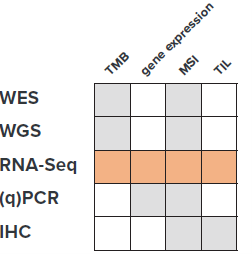
Figure 1: Summary of established features associated with ICI responses and the different techniques used to measure them. WES: whole-exome sequencing, WGS: whole-genome sequencing, RNA-Seq: RNA sequencing, qPCR: quantitative PCR, IHC: immunohistochemistry.


Not only does this method reduce the cost and time associated with analysis, but it also offers the possibility to improve ICI response prediction by integrating features into a single model (Figure 2). For more information on how our RNAseq technique improves response predictions, check out our white paper.
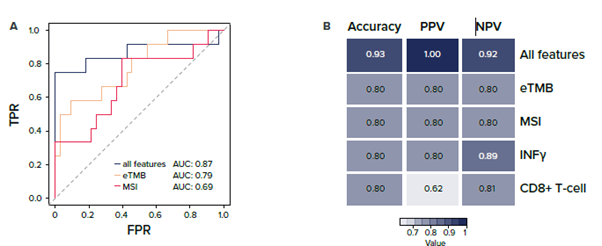
Figure 2: Improved response prediction when integrating all features compared to individual features. A) Logistic regression model incorporating all features (eTMB, MSI, CD8+ T-cell, M1 macrophage, IFNγ signature, and CTL signature; AUC = 0.87) vs. eTMB (AUC = 0.79) and MSI (AUC = 0.69). Higher AUC value for all features compared to eTMB or MSI scoring alone. Prediction performance is demonstrated by a ROC curve and area under the ROC curve (AUC). B) Performance metrics for each model. AUC: area under the ROC curve, TPR: true positive rate, FPR: false positive rate, PPV: positive predictive value, NPV: negative predictive value.


By enabling comprehensive profiling of the tumor and tumor microenvironment from a single sample, CellCarta’s RNAseq workflow makes it easier to generate clinically relevant insights without adding complexity or consuming more tissue. Combined with IHC to add vital spatial and protein-level context, this approach delivers a deeper, more connected picture of tumor biology from limited material, supporting more informed predictive biomarker development and patient selection decisions.

Enable integrated tissue profiling with confidence

CellCarta supports clinical and translational research teams in implementing IHC and RNAseq workflows that are both efficient and reproducible. Our infrastructure and expertise help ensure high-quality results from limited tissue across sites and studies. We offer:

  •  Access to all major sequencing platforms, enabling flexibility across study designs
  •  Off-the-shelf and customized assay options, depending on your biomarker strategy
  •  Global reach, with standardized SOPs and coordinated operations across trial sites
  • Expert support for all samples, enabled by in-house pre-analytical services

Whether you’re integrating IHC and RNAseq for the first time or scaling up for a multi-site study, CellCarta is equipped to help you get more from every sample.

Want to explore IHC and RNAseq integration in your next project? Contact our experts.
Maximize Sample Value with Combined IHC and RNAseq Analysis

August 18, 2025

Making the most of limited tissue samples

In clinical trials, patient tissue samples are limited, so extracting the most valuable data you can from each slide is critical.

Combining immunohistochemistry (IHC) and RNA sequencing (RNAseq) on the same sample offers a way to increase the insight gained from limited material. However, while many teams are aware of the potential to extract both spatial and molecular data from a single slide, they often exclude RNAseq due to tissue and budget constraints, viewing it as purely exploratory rather than essential for clinical decision-making.

But, with the right approach, RNAseq can be added alongside IHC to unlock molecular insights that extend the value of each tissue sample, generating richer, more connected data.

Extracting deeper insights with IHC and RNAseq combined

While IHC provides spatial detail and protein-level expression, RNAseq adds molecular depth, capturing bulk gene expression across a sample to reveal underlying transcriptional activity and mutational burden, supporting a wide range of research applications.

When combined with IHC data from the same sample, RNAseq can offer deeper insight than IHC alone, allowing for:

  • A stronger understanding of a drug’s mechanism of action
  • Better biomarker discovery and refinement over time by bridging discovery to research and implementation
  • Richer, comparable data across time points in longitudinal studies
  • Correlation of transcript abundance with protein localization and expression in specific cell types
  • Dissection of cellular heterogeneity within a tissue sample
  • A fuller picture of the tumor-immune landscape, which is particularly valuable for immunotherapy studies

IHC and RNAseq can also be scaled across large sample volumes, making the combined approach suitable for large-scale clinical studies.

Get in touch to find out how we can support combined IHC and RNAseq analysis.

Case study: RNAseq for predicting immune checkpoint inhibition response

In immuno-oncology, predicting patient response to immune checkpoint inhibitors (ICI) presents a major challenge. While several features have been shown to correlate with ICI response—e.g., tumor mutational burden (TMB), microsatellite instability (MSI), immune gene expression signatures, and tumor-infiltrating lymphocytes (TILs)—measuring them typically requires multiple different omics techniques.

However, combining multiple techniques is costly and time-consuming, and—most importantly—consumes precious patient material that is often limited and irreplaceable. RNAseq, on the other hand, can overcome these challenges by serving as an all-in-one omics solution, providing comprehensive molecular information from a single experiment.

Through a specially developed suite of data processing and analysis pipelines, CellCarta has established a method of extracting all four key features from RNAseq of tumor samples (Figure 1).

Figure 1: Summary of established features associated with ICI responses and the different techniques used to measure them. WES: whole-exome sequencing, WGS: whole-genome sequencing, RNA-Seq: RNA sequencing, qPCR: quantitative PCR, IHC: immunohistochemistry.


Not only does this method reduce the cost and time associated with analysis, but it also offers the possibility to improve ICI response prediction by integrating features into a single model (Figure 2). For more information on how our RNAseq technique improves response predictions, check out our white paper.

Figure 2: Improved response prediction when integrating all features compared to individual features. A) Logistic regression model incorporating all features (eTMB, MSI, CD8+ T-cell, M1 macrophage, IFNγ signature, and CTL signature; AUC = 0.87) vs. eTMB (AUC = 0.79) and MSI (AUC = 0.69). Higher AUC value for all features compared to eTMB or MSI scoring alone. Prediction performance is demonstrated by a ROC curve and area under the ROC curve (AUC). B) Performance metrics for each model. AUC: area under the ROC curve, TPR: true positive rate, FPR: false positive rate, PPV: positive predictive value, NPV: negative predictive value.


By enabling comprehensive profiling of the tumor and tumor microenvironment from a single sample, CellCarta’s RNAseq workflow makes it easier to generate clinically relevant insights without adding complexity or consuming more tissue. Combined with IHC to add vital spatial and protein-level context, this approach delivers a deeper, more connected picture of tumor biology from limited material, supporting more informed predictive biomarker development and patient selection decisions.

Enable integrated tissue profiling with confidence

CellCarta supports clinical and translational research teams in implementing IHC and RNAseq workflows that are both efficient and reproducible. Our infrastructure and expertise help ensure high-quality results from limited tissue across sites and studies. We offer:

  •  Access to all major sequencing platforms, enabling flexibility across study designs
  •  Off-the-shelf and customized assay options, depending on your biomarker strategy
  •  Global reach, with standardized SOPs and coordinated operations across trial sites
  • Expert support for all samples, enabled by in-house pre-analytical services

Whether you’re integrating IHC and RNAseq for the first time or scaling up for a multi-site study, CellCarta is equipped to help you get more from every sample.

Want to explore IHC and RNAseq integration in your next project? Contact our experts.
Enhancing Clinical Trial Enrollment with Molecular Profiling

August 18, 2025

Patient enrollment: a clinical trial bottleneck

Patient enrollment can be a significant challenge in clinical trials, particularly when it comes to identifying the right patients for trial recruitment. Globally, more than 80% of clinical trials fail to meet required enrollment numbers on time, often resulting in costly study extensions or the addition of new trial sites.1

In precision oncology, tight timelines, limited patient pools, and narrow eligibility criteria complicate trial patient selection, often creating delays that stall promising therapies and escalate development costs. Finding an efficient way to identify the most suitable patients is essential to ensure smooth trial operations and accurately identify a drug’s clinical benefits.

Why identifying driver mutations matters

One of the most effective ways to improve patient enrollment efficiency is to select patients based on the molecular features most relevant to the treatment being studied. In oncology, this involves carrying out tumor mutation profiling.

Depending on the study goals, profiling might involve targeted sequencing of key oncogenes such as EGFR, KRAS, FGFR, BRAF, or PIK3CA, or broader panels that detect co-occurring mutations, gene fusions, resistance mechanisms, or biomarkers like microsatellite instability (MSI), and tumor mutational burden (TMB).2

Although molecular profiling has become a standard tool in oncology care (helping clinicians match patients to targeted therapies based on their tumor biology), in early exploratory research and clinical trials, it is often underused. As a result, many studies still rely on broader selection criteria, making it harder to recruit the right patients.

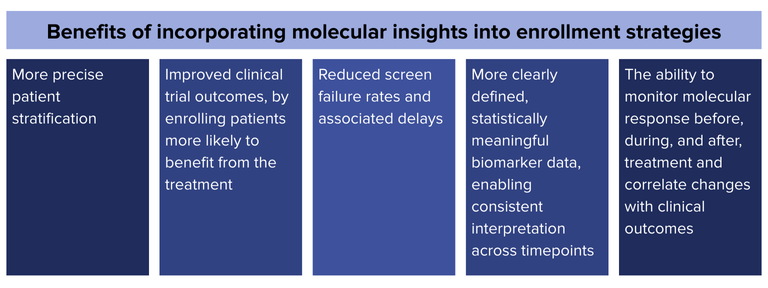
Incorporating molecular insights into enrollment strategies enables more precise patient stratification, allowing for:

  • Improved clinical trial outcomes, by enrolling patients more likely to benefit from the treatment
  • Reduced screen failure rates and associated delays
  • More clearly defined, statistically meaningful biomarker data, enabling consistent interpretation across timepoints
  • The ability to monitor molecular response before, during, and after, treatment and correlate changes with clinical outcomes
Section image

While many sponsors recognize the importance of this approach, it can be challenging to determine which molecular profiling assay is best suited to a clinical trial’s specific needs, as assays must strike the right balance between scientific depth and operational practicality. With broad tumor profiling assays, the choice is easier. Because they are already validated and designed to include clinically relevant genes, they offer a practical, ready-to-implement option that can be integrated into patient enrollment without adding unnecessary complexity.

Contact us to find out how we can support with tumor mutation profiling.

Fast, ready-to-deploy assays

To support streamlined patient selection and monitoring in clinical trials, CellCarta offers a wide portfolio of genomic assays, including three broad, validated tumor profiling panels that identify key driver mutations and clinically relevant gene expression. These assays deliver both broad and targeted profiling options and are ready to implement for clinical use, enabling rapid deployment for patient enrollment.

For studies requiring a more tailored approach, CellCarta also offers custom panel development.

oncoReveal® CDx: NGS based CDx test for key oncogenes

oncoReveal® CDx is an IVDR and FDA approved, next-generation sequencing (NGS)-based companion diagnostic (CDx) test, developed to provide rapid, clinically actionable insights across a wide range of solid tumors.

A streamlined single-tube workflow and high sensitivity enables fast turnaround and reliable performance, even on low DNA input clinical samples.

  • Gene coverage: 22 clinically relevant genes, including EGFR, KRAS, BRAF, PIK3CA
  • Tumor types: non-small cell lung cancer (NSCLC), colorectal cancer (CRC), and pan-cancer solid tumor
  • Sample type: DNA from formalin-fixed paraffin-embedded (FFPE) tissue samples
  • Sensitivity: detects CDx variants down to 1.5% variant allele frequency (VAF), and non-CDx tumor profiling variants down to 1.4-2.2% VAF

CellCarta is the first CRO to offer the oncoReveal® CDx pan-cancer panel to support patient management in clinical studies.

TSO500 Comp: Pan-cancer NGS assay for DNA and RNA variants

For trials that require broader genomic coverage, we also offer the The TruSight Oncology 500 (TSO500) panel.  TSO500 Comp is a comprehensive pan-cancer NGS panel enabling simultaneous analysis of DNA and RNA variants across hundreds of genes, making it well-suited for exploring complex molecular signatures, co-occurring alterations, and emerging biomarkers.

  • Gene coverage: 523 pan-cancer genes for DNA variants, 55 for RNA
  • Tumor types: a broad range of solid tumor types, including breast, colorectal, lung, and ovarian
  • Sample type: DNA and RNA from FFPE tissue samples, and blood-derived ctDNA
  • Sensitivity: ≥ 95% (small variants, 5% VAF)

Aspyre® Lung: Ultra-sensitive detection of NSCLC biomarkers

Aspyre® Lung is a clinically validated qPCR-based assay enabling ultra-sensitive mutation detection across NSCLC genes, with a rapid turnaround time and low sample input requirements.

  • Gene coverage: 11 NSCLC genes; 77 variants for DNA (including EGFR, BRAF, KRAS, and ERB2), and 36 for RNA (including ALK, ROS1, MET, and NTRK1)
  • Tumor type: Non-small cell lung cancer
  • Sample type: FFPE-derived DNA and RNA, and blood-derived cfDNA and cfRNA
  • Sensitivity: ≤ 3% VAF (tissue) or3-0.8% VAF (Blood)

Case study: supporting patient selection where standard assays fall short

CellCarta collaborated with a large global biopharma company to support patient enrollment in a study of high-risk non–muscle-invasive bladder cancer (HR-NMIBC), where no standard NGS assay was available. Working alongside Pillar Biosciences, the team rapidly implemented and validated a customized solution by combining two existing targeted NGS panels, and clinical samples from the CellCarta biobank.

The two panels, OncoReveal™ Essentials LBx and Fusion LBx, covered key DNA mutations and RNA fusions, including FGFR alterations relevant to the study population.

The customized approach enabled accurate, sensitive detection from limited samples, allowing the sponsor to shift from an existing qPCR assay to an NGS-based strategy that better suited their enrollment goal.

Access fast, reliable, consistent profiling

CellCarta works with clinical trial teams to help make tumor mutation profiling fast and easy to implement, and more reliable across sites. We offer:

  • Ready-to-deploy, off-the-shelf assay options, as well as customized assay options, depending on your biomarker strategy
  • Expertise in all and access to all other major platforms, enabling flexibility across study designs
  • Global Reach with genomics labs in China, Europe, North America, all with standardized SOPs for coordinated operations across trial sites
  • Expert support for challenging samples, enabled by in-house pre-analytical services

Interested in how our tumor mutation profiling services could support your next trial? Contact us to speak to one of our experts.

References

  1. https://pmc.ncbi.nlm.nih.gov/articles/PMC7342339/
  2. https://genomemedicine.biomedcentral.com/articles/10.1186/s13073-019-0703-1

Enhancing Clinical Trial Enrollment with Molecular Profiling

August 18, 2025

Patient enrollment: a clinical trial bottleneck

Patient enrollment can be a significant challenge in clinical trials, particularly when it comes to identifying the right patients for trial recruitment. Globally, more than 80% of clinical trials fail to meet required enrollment numbers on time, often resulting in costly study extensions or the addition of new trial sites.1

In precision oncology, tight timelines, limited patient pools, and narrow eligibility criteria complicate trial patient selection, often creating delays that stall promising therapies and escalate development costs. Finding an efficient way to identify the most suitable patients is essential to ensure smooth trial operations and accurately identify a drug’s clinical benefits.

Why identifying driver mutations matters

One of the most effective ways to improve patient enrollment efficiency is to select patients based on the molecular features most relevant to the treatment being studied. In oncology, this involves carrying out tumor mutation profiling.

Depending on the study goals, profiling might involve targeted sequencing of key oncogenes such as EGFR, KRAS, FGFR, BRAF, or PIK3CA, or broader panels that detect co-occurring mutations, gene fusions, resistance mechanisms, or biomarkers like microsatellite instability (MSI), and tumor mutational burden (TMB).2

Although molecular profiling has become a standard tool in oncology care (helping clinicians match patients to targeted therapies based on their tumor biology), in early exploratory research and clinical trials, it is often underused. As a result, many studies still rely on broader selection criteria, making it harder to recruit the right patients.

Incorporating molecular insights into enrollment strategies enables more precise patient stratification, allowing for:

  • Improved clinical trial outcomes, by enrolling patients more likely to benefit from the treatment
  • Reduced screen failure rates and associated delays
  • More clearly defined, statistically meaningful biomarker data, enabling consistent interpretation across timepoints
  • The ability to monitor molecular response before, during, and after, treatment and correlate changes with clinical outcomes
Section image

While many sponsors recognize the importance of this approach, it can be challenging to determine which molecular profiling assay is best suited to a clinical trial’s specific needs, as assays must strike the right balance between scientific depth and operational practicality. With broad tumor profiling assays, the choice is easier. Because they are already validated and designed to include clinically relevant genes, they offer a practical, ready-to-implement option that can be integrated into patient enrollment without adding unnecessary complexity.

Contact us to find out how we can support with tumor mutation profiling.

Fast, ready-to-deploy assays

To support streamlined patient selection and monitoring in clinical trials, CellCarta offers a wide portfolio of genomic assays, including three broad, validated tumor profiling panels that identify key driver mutations and clinically relevant gene expression. These assays deliver both broad and targeted profiling options and are ready to implement for clinical use, enabling rapid deployment for patient enrollment.

For studies requiring a more tailored approach, CellCarta also offers custom panel development.

oncoReveal® CDx: NGS based CDx test for key oncogenes

oncoReveal® CDx is an IVDR and FDA approved, next-generation sequencing (NGS)-based companion diagnostic (CDx) test, developed to provide rapid, clinically actionable insights across a wide range of solid tumors.

A streamlined single-tube workflow and high sensitivity enables fast turnaround and reliable performance, even on low DNA input clinical samples.

  • Gene coverage: 22 clinically relevant genes, including EGFR, KRAS, BRAF, PIK3CA
  • Tumor types: non-small cell lung cancer (NSCLC), colorectal cancer (CRC), and pan-cancer solid tumor
  • Sample type: DNA from formalin-fixed paraffin-embedded (FFPE) tissue samples
  • Sensitivity: detects CDx variants down to 1.5% variant allele frequency (VAF), and non-CDx tumor profiling variants down to 1.4-2.2% VAF

CellCarta is the first CRO to offer the oncoReveal® CDx pan-cancer panel to support patient management in clinical studies.

TSO500 Comp: Pan-cancer NGS assay for DNA and RNA variants

For trials that require broader genomic coverage, we also offer the The TruSight Oncology 500 (TSO500) panel.  TSO500 Comp is a comprehensive pan-cancer NGS panel enabling simultaneous analysis of DNA and RNA variants across hundreds of genes, making it well-suited for exploring complex molecular signatures, co-occurring alterations, and emerging biomarkers.

  • Gene coverage: 523 pan-cancer genes for DNA variants, 55 for RNA
  • Tumor types: a broad range of solid tumor types, including breast, colorectal, lung, and ovarian
  • Sample type: DNA and RNA from FFPE tissue samples, and blood-derived ctDNA
  • Sensitivity: ≥ 95% (small variants, 5% VAF)

Aspyre® Lung: Ultra-sensitive detection of NSCLC biomarkers

Aspyre® Lung is a clinically validated qPCR-based assay enabling ultra-sensitive mutation detection across NSCLC genes, with a rapid turnaround time and low sample input requirements.

  • Gene coverage: 11 NSCLC genes; 77 variants for DNA (including EGFR, BRAF, KRAS, and ERB2), and 36 for RNA (including ALK, ROS1, MET, and NTRK1)
  • Tumor type: Non-small cell lung cancer
  • Sample type: FFPE-derived DNA and RNA, and blood-derived cfDNA and cfRNA
  • Sensitivity: ≤ 3% VAF (tissue) or3-0.8% VAF (Blood)

Case study: supporting patient selection where standard assays fall short

CellCarta collaborated with a large global biopharma company to support patient enrollment in a study of high-risk non–muscle-invasive bladder cancer (HR-NMIBC), where no standard NGS assay was available. Working alongside Pillar Biosciences, the team rapidly implemented and validated a customized solution by combining two existing targeted NGS panels, and clinical samples from the CellCarta biobank.

The two panels, OncoReveal™ Essentials LBx and Fusion LBx, covered key DNA mutations and RNA fusions, including FGFR alterations relevant to the study population.

The customized approach enabled accurate, sensitive detection from limited samples, allowing the sponsor to shift from an existing qPCR assay to an NGS-based strategy that better suited their enrollment goal.

Access fast, reliable, consistent profiling

CellCarta works with clinical trial teams to help make tumor mutation profiling fast and easy to implement, and more reliable across sites. We offer:

  • Ready-to-deploy, off-the-shelf assay options, as well as customized assay options, depending on your biomarker strategy
  • Expertise in all and access to all other major platforms, enabling flexibility across study designs
  • Global Reach with genomics labs in China, Europe, North America, all with standardized SOPs for coordinated operations across trial sites
  • Expert support for challenging samples, enabled by in-house pre-analytical services

Interested in how our tumor mutation profiling services could support your next trial? Contact us to speak to one of our experts.

References

  1. https://pmc.ncbi.nlm.nih.gov/articles/PMC7342339/
  2. https://genomemedicine.biomedcentral.com/articles/10.1186/s13073-019-0703-1

Next-Gen Immune Monitoring: The Value of Single-Cell Sequencing

August 12, 2025

Section image

What is single-cell sequencing?

Single-cell sequencing is a set of technologies used to measure molecular information by next-generation sequencing in individual cells, rather than pooled cell populations as in bulk sequencing. While bulk sequencing methods report an average across mixed cell populations, single-cell sequencing captures subtle variations between cells that would otherwise go undetected, giving deeper insights that can drive therapeutic development.

Applying it effectively in clinical studies relies on understanding where it brings the most value, and what it can offer beyond bulk sequencing. So, what insights can single-cell sequencing offer, and where can this valuable technique fit into a clinical strategy?

Moving beyond averages: the value of single-cell sequencing

Analyzing gene expression at single-cell resolution allows researchers to uncover patterns that bulk methods often obscure. With this approach, it becomes possible to:

  • Trace biological signals back to specific cell types
  • Capture subtle differences between cells within the same sample
  • Investigate how heterogeneous cell populations respond to therapy or evolve over time
  • Define new predictive biomarkers based on cellular features

Single-cell sequencing offers multi-omics insight into each individual cell by combining, as needed, single-cell transcriptomics (RNA expression), single-cell proteomics (protein expression profiling through the use of DNA-barcoded antibodies), and single-cell immune repertoire analysis (TCR and BCR clonotyping), to give a broad window into cellular identity, state, and function. Researchers can also add spatial resolution, with single-cell spatial sequencing, tailoring workflows to suit a wide range of applications and sample types.

Single-cell applications: where does it fit in the clinical development pipeline?

Single-cell sequencing can support development across multiple therapeutics development stages:

  • Discovery: utilize single-cell transcriptomics to profile complex cell populations, identify novel biomarkers, and explore transcriptomic changes across conditions, cell types, or timepoints
  • Preclinical: measure pharmacodynamic effects, validate candidate biomarkers, or evaluate target engagement and off-target activity in complex tissues
  • Clinical: understand variability in response across individuals or cohorts and identify a narrow set of biomarkers for later clinical phase

These capabilities can support development across numerous different therapeutic modalities, for example:

Cell Therapies T Cell Engagers Vaccines
Before trial Characterize apheresis sample and manufactured cell product Characterize T cell state to measure responsiveness potential Establish baseline TCR and BCR repertoire composition
During trial Monitor cell product state changes (activation, proliferation, memory, exhaustion, etc.) Track host immune status (activation, exhaustion, etc.) Track clonal expansion and phenotype of antigen-specific B & T cells
After trial Retrospective analysis to understand drug action, identify signatures correlating with drug activity, and interpret observed clinical responses

Find out more about single-cell sequencing applications.

Flexible Single-Cell Sequencing with 10X Genomics Workflows

To support a range of study goals, sample types, practical requirements, and research questions, CellCarta implements two widely used 10x Genomics workflows.

Chromium GEM-X Single Cell Workflow

The 5’ Single Cell Immune Profiling workflow captures gene expression across the full transcriptome. It is well suited to early-stage research or exploratory single-cell applications where researchers are aiming to characterize complex immune populations, identify novel biomarkers or  investigate the immune repertoire composition.

  • Offers broad coverage of ~28,000 genes
  • Supports multiomic readouts (RNA, protein, TCR/BCR)
  • Uses fresh or cryopreserved peripheral blood mononuclear cells (PBMCs), whole blood, and cell lines

Chromium GEM-X Flex Workflow

Rather than sequencing the full transcriptome, this method uses pre-designed probe panels to focus on a curated set of protein-coding genes. It provides a more focused dataset and can be more tolerant of fixed or partially degraded samples, making it a practical option for studies using archival material or working within specific biomarker frameworks.

  • Coverage of ~18,000 genes
  • Supports protein and RNA readouts
  • Compatible with fresh or cryopreserved PBMCs, whole blood, and cell lines, as well as fixed samples

Single-Cell Data Analysis Tool

Generating high-quality single-cell data is only the first step; how that data is analyzed determines its usefulness for informing study decisions. At CellCarta, we take an immunology-first approach to data analysis, using our cloud-based CellEngine® software to mirror a traditional flow cytometry analysis.

Through CellEngine, immunologists can explore single-cell transcriptomic data using familiar, interactive tools like gating, clustering (tSNE, UMAP), and visualizations such as dot plots, contour plots, and histograms. The software also supports secondary analysis across patients, timepoints, and treatment conditions using heatmaps, bar charts, and other comparative formats.

This approach helps researchers generate highly relevant, actionable insights with confidence. Explore how this approach supports deep immunophenotyping in clinical trials in our CITE-seq case study.

Supporting more informed research at every stage

Single-cell sequencing gives researchers a clearer view of how therapies interact with complex biological systems. By analyzing cells individually, it becomes possible to uncover novel biomarkers, track immune dynamics, and explore differences in response that bulk sequencing methods miss, enabling more informed decisions throughout development.

Interested in finding out more on how single-cell sequencing could support your study? Get in touch with the CellCarta team!

About the author:

author photo

Céline Vandamme is a Scientific Business Director at CellCarta, specializing in the flow cytometry platform. With a PhD in immunology, and a broad expertise gained through her work at various academic and pharmaceutical institutions, Céline has profuse experience in designing flow cytometry assays to support immune monitoring activities in clinical trials.

Next-Gen Immune Monitoring: The Value of Single-Cell Sequencing

August 12, 2025

Section image

What is single-cell sequencing?

Single-cell sequencing is a set of technologies used to measure molecular information by next-generation sequencing in individual cells, rather than pooled cell populations as in bulk sequencing. While bulk sequencing methods report an average across mixed cell populations, single-cell sequencing captures subtle variations between cells that would otherwise go undetected, giving deeper insights that can drive therapeutic development.

Applying it effectively in clinical studies relies on understanding where it brings the most value, and what it can offer beyond bulk sequencing. So, what insights can single-cell sequencing offer, and where can this valuable technique fit into a clinical strategy?

Moving beyond averages: the value of single-cell sequencing

Analyzing gene expression at single-cell resolution allows researchers to uncover patterns that bulk methods often obscure. With this approach, it becomes possible to:

  • Trace biological signals back to specific cell types
  • Capture subtle differences between cells within the same sample
  • Investigate how heterogeneous cell populations respond to therapy or evolve over time
  • Define new predictive biomarkers based on cellular features

Single-cell sequencing offers multi-omics insight into each individual cell by combining, as needed, single-cell transcriptomics (RNA expression), single-cell proteomics (protein expression profiling through the use of DNA-barcoded antibodies), and single-cell immune repertoire analysis (TCR and BCR clonotyping), to give a broad window into cellular identity, state, and function. Researchers can also add spatial resolution, with single-cell spatial sequencing, tailoring workflows to suit a wide range of applications and sample types.

Single-cell applications: where does it fit in the clinical development pipeline?

Single-cell sequencing can support development across multiple therapeutics development stages:

  • Discovery: utilize single-cell transcriptomics to profile complex cell populations, identify novel biomarkers, and explore transcriptomic changes across conditions, cell types, or timepoints
  • Preclinical: measure pharmacodynamic effects, validate candidate biomarkers, or evaluate target engagement and off-target activity in complex tissues
  • Clinical: understand variability in response across individuals or cohorts and identify a narrow set of biomarkers for later clinical phase

These capabilities can support development across numerous different therapeutic modalities, for example:

Cell Therapies T Cell Engagers Vaccines
Before trial Characterize apheresis sample and manufactured cell product Characterize T cell state to measure responsiveness potential Establish baseline TCR and BCR repertoire composition
During trial Monitor cell product state changes (activation, proliferation, memory, exhaustion, etc.) Track host immune status (activation, exhaustion, etc.) Track clonal expansion and phenotype of antigen-specific B & T cells
After trial Retrospective analysis to understand drug action, identify signatures correlating with drug activity, and interpret observed clinical responses

Find out more about single-cell sequencing applications.

Flexible Single-Cell Sequencing with 10X Genomics Workflows

To support a range of study goals, sample types, practical requirements, and research questions, CellCarta implements two widely used 10x Genomics workflows.

Chromium GEM-X Single Cell Workflow

The 5’ Single Cell Immune Profiling workflow captures gene expression across the full transcriptome. It is well suited to early-stage research or exploratory single-cell applications where researchers are aiming to characterize complex immune populations, identify novel biomarkers or  investigate the immune repertoire composition.

  • Offers broad coverage of ~28,000 genes
  • Supports multiomic readouts (RNA, protein, TCR/BCR)
  • Uses fresh or cryopreserved peripheral blood mononuclear cells (PBMCs), whole blood, and cell lines

Chromium GEM-X Flex Workflow

Rather than sequencing the full transcriptome, this method uses pre-designed probe panels to focus on a curated set of protein-coding genes. It provides a more focused dataset and can be more tolerant of fixed or partially degraded samples, making it a practical option for studies using archival material or working within specific biomarker frameworks.

  • Coverage of ~18,000 genes
  • Supports protein and RNA readouts
  • Compatible with fresh or cryopreserved PBMCs, whole blood, and cell lines, as well as fixed samples

Single-Cell Data Analysis Tool

Generating high-quality single-cell data is only the first step; how that data is analyzed determines its usefulness for informing study decisions. At CellCarta, we take an immunology-first approach to data analysis, using our cloud-based CellEngine® software to mirror a traditional flow cytometry analysis.

Through CellEngine, immunologists can explore single-cell transcriptomic data using familiar, interactive tools like gating, clustering (tSNE, UMAP), and visualizations such as dot plots, contour plots, and histograms. The software also supports secondary analysis across patients, timepoints, and treatment conditions using heatmaps, bar charts, and other comparative formats.

This approach helps researchers generate highly relevant, actionable insights with confidence. Explore how this approach supports deep immunophenotyping in clinical trials in our CITE-seq case study.

Supporting more informed research at every stage

Single-cell sequencing gives researchers a clearer view of how therapies interact with complex biological systems. By analyzing cells individually, it becomes possible to uncover novel biomarkers, track immune dynamics, and explore differences in response that bulk sequencing methods miss, enabling more informed decisions throughout development.

Interested in finding out more on how single-cell sequencing could support your study? Get in touch with the CellCarta team!

About the author:

author photo

Céline Vandamme is a Scientific Business Director at CellCarta, specializing in the flow cytometry platform. With a PhD in immunology, and a broad expertise gained through her work at various academic and pharmaceutical institutions, Céline has profuse experience in designing flow cytometry assays to support immune monitoring activities in clinical trials.

CRO vs CMO vs CDMO: Key Differences in Outsourcing Partners

June 10, 2025

Developing and manufacturing a new drug is highly complex, requiring specialized expertise, infrastructure, and coordination across multiple phases of work. For companies that lack the internal capacity to manage every stage of development, or for those who are looking to scale quickly or access specialized expertise, outsourcing has become a fundamental part of modern drug development strategies. 

The most common outsourcing partners are contract research organizations (CROs), contract manufacturing organizations (CMOs), and contract development and manufacturing organizations (CDMOs), each offering their own unique services and strengths.

This guide breaks down what each one does, how they differ, and how to choose the right model for your next project.

What is a contract research organization (CRO)? 

A CRO is a company that provides research-related services to pharma and biotech sponsors CROs are essentially outsourced research and development arms, aiding the planning and execution of preclinical studies and clinical trials. 

Typically assisting with a wide range of research activities, including clinical trial design, execution, monitoring, and data analysis, their goal is to aid sponsors in the generation of high-quality, compliant data as efficiently as possible. Unlike CMOs and CDMOs, CROs do not manufacture drug products. Their focus is solely on generating and managing evidence needed to support safety, efficacy, and regulatory approval. 

CRO partnerships are especially valuable for sponsors looking to reduce internal burden, access specific therapeutic or operational expertise, or expand trial capacity without scaling in-house infrastructure.

What is a contract manufacturing organization (CMO)? 

CMOs provide drug manufacturing services, stepping in post-discovery when a drug candidate is ready for production. They focus on the manufacture, formulation development, and packaging of commercial drug products, ensuring that each stage of the process complies with good manufacturing practices (GMP) and regulatory expectations across global markets. CMOs can support both pilot-scale production for clinical trials and large-scale batches for commercial launch, making them a key partner in the later stages of drug development.

Partnering with a CMO is particularly useful for companies without large-scale manufacturing facilities, allowing them to access the specialized equipment necessary without the operational complexities and capital required for building and running them internally. 

What is a contract development and manufacturing organization (CDMO)? 

A CDMO combines elements of both CROs and CMOs, offering integrated services that can support a drug through its development and production stages. Unlike CROs or CMOs, a CDMO provides end-to-end support through formulation, process development, scale-up, and commercial manufacturing, providing an easy transition from early development to final production.

They are often utilized for efficiency and single-vendor accountability, offering convenience for companies seeking integrated timelines and unified data handling.

CRO CMO CDMO
Main Focus Planning and execution of preclinical and clinical studie Commercial drug manufacturing Research, development, and manufacturing combined
Key Services Trial design, execution, monitoring, data analysis, and regulatory support Drug production, formulation, and packaging Formulation, scale-up, clinical and commercial production
Stage Involved Early to late-stage Late-stage to commercial Mid-stage through to commercialization
Ideal Client Types Those needing R&D and trial support Companies needing large-scale manufacturing capacity Companies seeking end-to-end outsourcing

CROs, CMOs, and CDMOs all support drug development in different ways, diverging in their focus, key service offerings, and stage of involvement (as shown in the summary table above). 

In a nutshell, CROs specialize in research and clinical development, managing preclinical studies, clinical trials, and regulatory submissions; CMOs handle manufacturing, including formulation, packaging, and production for clinical or commercial supply; and CDMOs attempt to bridge both areas by offering development and manufacturing under one umbrella.

Choosing the right outsourcing partner 

Selecting the right drug development outsourcing model depends on your program’s current phase, internal capabilities, and development goals. Each type of partner—CRO, CMO, or CDMO—offers a different set of strengths, and identifying the right fit makes a meaningful difference in development speed, quality of data and products, and regulatory success.

For sponsors in early- to late-stage development, where study design, data integrity, and regulatory precision are vital, partnering with a CRO is the best choice. CROs bring focused expertise and deep familiarity with trial design, clinical logistics, and compliance expectations that can streamline the research and development process. While some CROs primarily focus on data generation as specified by the sponsor, others offer a more consultative partnership, providing guidance and support on what data to generate and how best to analyze and interpret results. CROs can additionally provide focused, in-house expertise, such as pathologists or biostatisticians, and platform flexibility to tailor study design and analysis to specific needs. 

For later-stage programs focused on production, a CMO offers the scale and GMP-compliant infrastructure needed to move into commercial supply. CDMOs provide the benefit of end-to-end support, suitable for companies across development stages. This model can help streamline communication and timelines, particularly for companies seeking a simplified handoff. However, relying on a single vendor can limit flexibility, and sponsors may find they offer less dedicated expertise than specific CROs or CMOs.  

When evaluating which outsourcing partner you need, ask yourself several key questions:

  • What phase is our program in, and what capabilities will we need to reach the next milestone?
  • Are there specific technologies, platforms, or expertise we need our partner to provide?
  • Do we know exactly what data we need, or would we benefit from expert guidance to help define it?
  • Does the partner work within the geographic markets we’re targeting?
  • Do they have a strong track record with regulatory compliance relevant to our program?
  • Does their model align with our timeline and budget constraints?

Answering these questions clearly can help you align your pharma outsourcing strategy with the unique needs of your program. Understanding the strengths and trade-offs of CROs vs. CMOs vs. CDMOs allows you to make informed decisions and build partnerships that accelerate progress, reduce risk, and bring therapies to market more efficiently.

Current trends in drug development outsourcing 

In recent years, there has been increasing demand for outsourced pharmaceutical services due to the rise in complexity and costs of bringing a novel drug to market. One prominent trend is an expanding role of CROs, which are becoming increasingly valued for their scientific expertise, platform flexibility, and regulatory insight, particularly in complex areas like oncology, biologics, and rare disease.1 The shift towards precision medicine is further fueling the expansion of CROs, as these clinical programs require sophisticated data analysis and biomarker identification—areas where some CROs have significant expertise.

Alongside this, companies are increasingly seeking integrated outsourcing solutions, looking for ‘one-stop shop’ CDMOs that can streamline the process and reduce the need for handoffs. While this approach can simplify coordination, it doesn’t always eliminate the need for specialized partners. This is made clear by the increasing trend of collaborations between CDMOs and CROs,2 as sponsors aim to combine operational efficiency with the scientific and therapeutic expertise that specialist CROs provide. These partnerships are becoming more common as companies seek flexible, end-to-end solutions without compromising depth in key areas like clinical strategy and data quality. 

Technology is also reshaping pharma outsourcing strategies. Artificial intelligence is being adopted across CROs, CDMOs, and CMOs to streamline various aspects of the development and manufacturing processes. Choosing a partner that actively embraces and leverages these tools can further streamline the development pipeline.

Making the right outsourcing decision

Effective drug development outsourcing starts with a clear understanding of what your program needs at each stage and which type of partner is best equipped to deliver it. CROs, CMOs, and CDMOs each offer distinct strengths, and choosing between them should be based on program phase, the complexity of the work and capability requirements.

Specialized partners remain essential in today’s development environment, particularly when timelines are tight, regulatory expectations are high, or therapeutic areas demand tailored expertise. Sponsors who evaluate outsourcing models with these factors in mind are better positioned to build the right mix of support and streamline their development timelines. 

 To explore how a precision medicine CRO could support your next project, get in touch with one of our experts.

CellCarta: Your CRO Partner

At CellCarta, we’re equipped to support you at every step of your drug development program – from discovery to late-stage clinical. Discover our comprehensive suite of platforms in immune monitoring, histopathology, proteomics, and genomics to power your biomarker strategies. Analyze and visualize complex cytometry data easily with CellEngine, our secure cloud-based platform, and receive support from our in-house team of data analysts. Leverage our global footprint with laboratories in North America, Europe, and Asia, and benefit from our global sample processing network. Trust in our regulatory expertise and compliance support to ensure quality and readiness at every stage.

About the author: 

author photo

Stephanie Marmen is the Global Marketing Director at CellCarta, where she oversees all corporate communications and scientific marketing initiatives. She holds a PhD in Biochemistry and brings profuse expertise in immunology, flow cytometry, histopathology, and genomic models. With a background as a scientific communicator for several pharmaceutical companies, particularly in oncology and autoimmune diseases, Stephanie has a strong foundation in translating complex science into impactful messaging. She is especially passionate about scientific communication and exploring how AI can advance medical research.

References

  1. https://www.globenewswire.com/news-release/2025/05/07/3076311/0/en/Contract-Research-Organization-CRO-Market-Set-to-Surpass-113-Billion-by-2031-Amid-Rising-R-D-Outsourcing-and-Biotech-Expansion-The-Insight-Partners.html
  2. https://www.cphi-online.com/reports/trend-report-the-nexus-between-patient-and-big-pharma/CPHI%20Online%20Trend%20Report%20‑%20The%20Nexus%20Between%20Patient%20and%20Big%20Pharma.pdf

CRO vs CMO vs CDMO: Key Differences in Outsourcing Partners

June 10, 2025

Developing and manufacturing a new drug is highly complex, requiring specialized expertise, infrastructure, and coordination across multiple phases of work. For companies that lack the internal capacity to manage every stage of development, or for those who are looking to scale quickly or access specialized expertise, outsourcing has become a fundamental part of modern drug development strategies. 

The most common outsourcing partners are contract research organizations (CROs), contract manufacturing organizations (CMOs), and contract development and manufacturing organizations (CDMOs), each offering their own unique services and strengths.

This guide breaks down what each one does, how they differ, and how to choose the right model for your next project.

What is a contract research organization (CRO)? 

A CRO is a company that provides research-related services to pharma and biotech sponsors CROs are essentially outsourced research and development arms, aiding the planning and execution of preclinical studies and clinical trials. 

Typically assisting with a wide range of research activities, including clinical trial design, execution, monitoring, and data analysis, their goal is to aid sponsors in the generation of high-quality, compliant data as efficiently as possible. Unlike CMOs and CDMOs, CROs do not manufacture drug products. Their focus is solely on generating and managing evidence needed to support safety, efficacy, and regulatory approval. 

CRO partnerships are especially valuable for sponsors looking to reduce internal burden, access specific therapeutic or operational expertise, or expand trial capacity without scaling in-house infrastructure.

What is a contract manufacturing organization (CMO)? 

CMOs provide drug manufacturing services, stepping in post-discovery when a drug candidate is ready for production. They focus on the manufacture, formulation development, and packaging of commercial drug products, ensuring that each stage of the process complies with good manufacturing practices (GMP) and regulatory expectations across global markets. CMOs can support both pilot-scale production for clinical trials and large-scale batches for commercial launch, making them a key partner in the later stages of drug development.

Partnering with a CMO is particularly useful for companies without large-scale manufacturing facilities, allowing them to access the specialized equipment necessary without the operational complexities and capital required for building and running them internally. 

What is a contract development and manufacturing organization (CDMO)? 

A CDMO combines elements of both CROs and CMOs, offering integrated services that can support a drug through its development and production stages. Unlike CROs or CMOs, a CDMO provides end-to-end support through formulation, process development, scale-up, and commercial manufacturing, providing an easy transition from early development to final production.

They are often utilized for efficiency and single-vendor accountability, offering convenience for companies seeking integrated timelines and unified data handling.

CRO CMO CDMO
Main Focus Planning and execution of preclinical and clinical studie Commercial drug manufacturing Research, development, and manufacturing combined
Key Services Trial design, execution, monitoring, data analysis, and regulatory support Drug production, formulation, and packaging Formulation, scale-up, clinical and commercial production
Stage Involved Early to late-stage Late-stage to commercial Mid-stage through to commercialization
Ideal Client Types Those needing R&D and trial support Companies needing large-scale manufacturing capacity Companies seeking end-to-end outsourcing

CROs, CMOs, and CDMOs all support drug development in different ways, diverging in their focus, key service offerings, and stage of involvement (as shown in the summary table above). 

In a nutshell, CROs specialize in research and clinical development, managing preclinical studies, clinical trials, and regulatory submissions; CMOs handle manufacturing, including formulation, packaging, and production for clinical or commercial supply; and CDMOs attempt to bridge both areas by offering development and manufacturing under one umbrella.

Choosing the right outsourcing partner 

Selecting the right drug development outsourcing model depends on your program’s current phase, internal capabilities, and development goals. Each type of partner—CRO, CMO, or CDMO—offers a different set of strengths, and identifying the right fit makes a meaningful difference in development speed, quality of data and products, and regulatory success.

For sponsors in early- to late-stage development, where study design, data integrity, and regulatory precision are vital, partnering with a CRO is the best choice. CROs bring focused expertise and deep familiarity with trial design, clinical logistics, and compliance expectations that can streamline the research and development process. While some CROs primarily focus on data generation as specified by the sponsor, others offer a more consultative partnership, providing guidance and support on what data to generate and how best to analyze and interpret results. CROs can additionally provide focused, in-house expertise, such as pathologists or biostatisticians, and platform flexibility to tailor study design and analysis to specific needs. 

For later-stage programs focused on production, a CMO offers the scale and GMP-compliant infrastructure needed to move into commercial supply. CDMOs provide the benefit of end-to-end support, suitable for companies across development stages. This model can help streamline communication and timelines, particularly for companies seeking a simplified handoff. However, relying on a single vendor can limit flexibility, and sponsors may find they offer less dedicated expertise than specific CROs or CMOs.  

When evaluating which outsourcing partner you need, ask yourself several key questions:

  • What phase is our program in, and what capabilities will we need to reach the next milestone?
  • Are there specific technologies, platforms, or expertise we need our partner to provide?
  • Do we know exactly what data we need, or would we benefit from expert guidance to help define it?
  • Does the partner work within the geographic markets we’re targeting?
  • Do they have a strong track record with regulatory compliance relevant to our program?
  • Does their model align with our timeline and budget constraints?

Answering these questions clearly can help you align your pharma outsourcing strategy with the unique needs of your program. Understanding the strengths and trade-offs of CROs vs. CMOs vs. CDMOs allows you to make informed decisions and build partnerships that accelerate progress, reduce risk, and bring therapies to market more efficiently.

Current trends in drug development outsourcing 

In recent years, there has been increasing demand for outsourced pharmaceutical services due to the rise in complexity and costs of bringing a novel drug to market. One prominent trend is an expanding role of CROs, which are becoming increasingly valued for their scientific expertise, platform flexibility, and regulatory insight, particularly in complex areas like oncology, biologics, and rare disease.1 The shift towards precision medicine is further fueling the expansion of CROs, as these clinical programs require sophisticated data analysis and biomarker identification—areas where some CROs have significant expertise.

Alongside this, companies are increasingly seeking integrated outsourcing solutions, looking for ‘one-stop shop’ CDMOs that can streamline the process and reduce the need for handoffs. While this approach can simplify coordination, it doesn’t always eliminate the need for specialized partners. This is made clear by the increasing trend of collaborations between CDMOs and CROs,2 as sponsors aim to combine operational efficiency with the scientific and therapeutic expertise that specialist CROs provide. These partnerships are becoming more common as companies seek flexible, end-to-end solutions without compromising depth in key areas like clinical strategy and data quality. 

Technology is also reshaping pharma outsourcing strategies. Artificial intelligence is being adopted across CROs, CDMOs, and CMOs to streamline various aspects of the development and manufacturing processes. Choosing a partner that actively embraces and leverages these tools can further streamline the development pipeline.

Making the right outsourcing decision

Effective drug development outsourcing starts with a clear understanding of what your program needs at each stage and which type of partner is best equipped to deliver it. CROs, CMOs, and CDMOs each offer distinct strengths, and choosing between them should be based on program phase, the complexity of the work and capability requirements.

Specialized partners remain essential in today’s development environment, particularly when timelines are tight, regulatory expectations are high, or therapeutic areas demand tailored expertise. Sponsors who evaluate outsourcing models with these factors in mind are better positioned to build the right mix of support and streamline their development timelines. 

 To explore how a precision medicine CRO could support your next project, get in touch with one of our experts.

CellCarta: Your CRO Partner

At CellCarta, we’re equipped to support you at every step of your drug development program – from discovery to late-stage clinical. Discover our comprehensive suite of platforms in immune monitoring, histopathology, proteomics, and genomics to power your biomarker strategies. Analyze and visualize complex cytometry data easily with CellEngine, our secure cloud-based platform, and receive support from our in-house team of data analysts. Leverage our global footprint with laboratories in North America, Europe, and Asia, and benefit from our global sample processing network. Trust in our regulatory expertise and compliance support to ensure quality and readiness at every stage.

About the author: 

author photo

Stephanie Marmen is the Global Marketing Director at CellCarta, where she oversees all corporate communications and scientific marketing initiatives. She holds a PhD in Biochemistry and brings profuse expertise in immunology, flow cytometry, histopathology, and genomic models. With a background as a scientific communicator for several pharmaceutical companies, particularly in oncology and autoimmune diseases, Stephanie has a strong foundation in translating complex science into impactful messaging. She is especially passionate about scientific communication and exploring how AI can advance medical research.

References

  1. https://www.globenewswire.com/news-release/2025/05/07/3076311/0/en/Contract-Research-Organization-CRO-Market-Set-to-Surpass-113-Billion-by-2031-Amid-Rising-R-D-Outsourcing-and-Biotech-Expansion-The-Insight-Partners.html
  2. https://www.cphi-online.com/reports/trend-report-the-nexus-between-patient-and-big-pharma/CPHI%20Online%20Trend%20Report%20‑%20The%20Nexus%20Between%20Patient%20and%20Big%20Pharma.pdf

What is a CRO? Choose The Best Contract Research Organization

June 4, 2025

Bringing a new therapy to market can be a monumental task. From early discovery through to regulatory approval, the process requires deep expertise, operational efficiency, and strict compliance with evolving standards. To meet these demands, many pharmaceutical and biotech companies rely on outsourcing to a contract research organization (CRO). 

Understanding the role of CROs in drug development, the benefits they can provide, and how to select a partner that works for your specific needs is key to streamlining therapeutic development. 

So what is a CRO, and how can the right partner help accelerate bringing a therapy to market?

What is a CRO? 

A CRO is a company that provides outsourced drug development services for pharmaceutical and biotech companies. CROs typically work with clinical trial sponsors to design, manage, and execute various aspects of the drug development process that sponsors may be unable to complete in-house. Bringing specialized expertise and capabilities, CRO services extend across the product lifecycle, including clinical trial management, regulatory support, data management, pharmacovigilance, and more. 

While some CROs deliver these services as end-to-end providers across all phases of drug development, others may offer more niche expertise, focusing on a specific function, phase, or therapeutic area. Depending on the scope and complexity of a program, sponsors may partner with a full-service CRO or engage niche CROs as and when needed for a more tailored development process. 

The key advantages of CRO partnerships for sponsors are flexibility and scalability. Sponsors can scale their CRO services up or down depending on the size, phase, or scope of a study, allowing them to expand or contract support based on real-time needs. This adaptability helps companies reduce overheads and stick to timelines, while maintaining high-quality execution.

Discover CellCarta (CRO) Offering

The role of CROs in drug development 

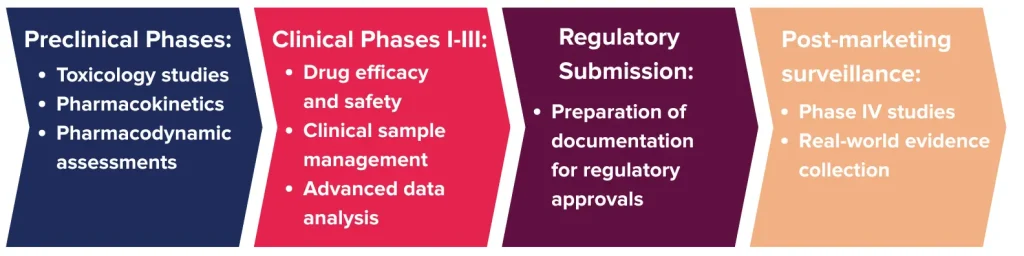
CRO services can cover every phase of drug development, offering the scientific expertise and operational infrastructure needed to keep programs on track across stages (Figure 1). Their involvement can begin in the preclinical phase, where they can provide early safety and pharmacology studies to lay the foundation for human trials.

In clinical development (Phases I–III), CROs will provide assays & technologies to monitor drug safety and efficacy, and improve patient stratification during trials. These services can be further supported with clinical sample management and advanced data analysis. In regulatory submission, CROs can prepare and submit the necessary documentation to gain regulatory approval. 

Even after approval, CROs often support post-marketing efforts, including long-term safety studies and real-world evidence generation.

CRO services offerings at each stage of development

Figure 1: CRO services offerings at each stage of development

The benefits of CRO partnerships

There are numerous strategic and operational benefits of using a CRO, especially when compared to building in-house capabilities. 

  • Cost efficiency: the costs of using a CRO vs. in-house research can be significantly lower. CRO services include access to specialized infrastructure, systems, and personnel without the fixed costs of maintaining them internally, reducing overheads and improving budget flexibility
  • Access to specialized expertise: CROs bring deep knowledge and experience in specific therapeutic areas, technologies, and global regulations. This expertise helps sponsors avoid costly errors and make informed decisions throughout the development process
  • Accelerated timelines: with well-established processes, experienced staff, and global site networks, CROs can accelerate trial start-up and completion
  • Regulatory support and compliance: CROs stay up-to-date on global regulatory requirements and bring proven strategies for submissions, audits, and inspection readiness, helping to avoid approval delays 

By leveraging CRO partnerships, sponsors can focus internal resources on strategic priorities while benefiting from expert-driven drug development services. 

How to choose a CRO

Choosing an appropriate CRO partner for your needs is essential for streamlined drug development, and there are several key things you should consider when evaluating CROs.  

  • Therapeutic expertise: look for CROs with proven success in your target indication. A thorough CRO capabilities assessment ensures that your partner’s experience aligns with your study’s scientific and clinical demands
  • Regulatory knowledge and compliance: strong CRO partners have a deep understanding of the nuances of FDA, EMA, and NMPA standards. When selecting a CRO, you should look for those that have clearly demonstrated inspection readiness and effective audit support
  • Proven operational excellence: assess whether the CRO can deliver on time, execute against robust SOPs, and utilize key systems like electronic trial master file (eTMF) to validate their performance. Consistent database lock timelines and transparent processes are crucial markers here for evaluation
  • Geographical reach: if your program involves multiple regions or you are seeking approval in multiple markets, global operational capabilities are essential. Look for CROs with a strong presence or partnerships in your key markets to ensure smooth global trial execution
  • Scientific & Technological capabilities: a CRO’s scientific expertise and ability to leverage advanced tools can can significantly impact trial efficiency and data quality. Evaluate whether the CRO is knowledgeable and has invested in innovative technologies that support modern trial designs

The future of CROs

The role of CROs in drug development is evolving as clinical trials become more complex and technology-driven.

CROs are increasingly integrating AI and big data to enhance data analysis, enabling deeper insights and to support clinical trial decisions. 

We are also seeing a shift towards long-term collaborations between sponsors and CROs. Instead of engaging vendors on a study-by-study basis, many sponsors are establishing multi-year collaborations with CROs that can provide consistent support across their entire pipeline.

Moving into CRO partnerships with confidence

As the drug development landscape continues to evolve and grow more complex, partnering with the right CRO is vital. The right partner brings the expertise, infrastructure, and flexibility needed to navigate each phase of development with speed and confidence. Whether you’re exploring outsourcing for the first time or reevaluating your current strategy, choosing a CRO that aligns with your goals can make a measurable difference in trial outcomes and timelines.

About CellCarta

CellCarta is a global contract research organization (CRO) supporting drug development from discovery to late-stage clinical testing. We offer biomarker testing, clinical sample management, and regulatory support to help sponsors move their drug development program faster with confidence.

Discover our comprehensive suite of platforms in immune monitoringhistopathologyproteomics, and genomics to power your biomarker strategies. Analyze and visualize complex cytometry data easily with CellEngine, our secure cloud-based platform, and receive support from our in-house team of data analysts. Leverage our global footprint with laboratories in North America, Europe, and Asia, and benefit from our global sample processing network. Trust in our regulatory expertise and compliance support to ensure quality and readiness at every stage.

Speak with one of our experts to learn how our CRO services can support your next program.


About the author

author photo

Stephanie Marmen is the Global Marketing Director at CellCarta, where she oversees all corporate communications and scientific marketing initiatives. She holds a PhD in Biochemistry and brings profuse expertise in immunology, flow cytometry, histopathology, and genomic models. With a background as a scientific communicator for several pharmaceutical companies, particularly in oncology and autoimmune diseases, Stephanie has a strong foundation in translating complex science into impactful messaging. She is especially passionate about scientific communication and exploring how AI can advance medical research.

What is a CRO? Choose The Best Contract Research Organization

June 4, 2025

Bringing a new therapy to market can be a monumental task. From early discovery through to regulatory approval, the process requires deep expertise, operational efficiency, and strict compliance with evolving standards. To meet these demands, many pharmaceutical and biotech companies rely on outsourcing to a contract research organization (CRO). 

Understanding the role of CROs in drug development, the benefits they can provide, and how to select a partner that works for your specific needs is key to streamlining therapeutic development. 

So what is a CRO, and how can the right partner help accelerate bringing a therapy to market?

What is a CRO? 

A CRO is a company that provides outsourced drug development services for pharmaceutical and biotech companies. CROs typically work with clinical trial sponsors to design, manage, and execute various aspects of the drug development process that sponsors may be unable to complete in-house. Bringing specialized expertise and capabilities, CRO services extend across the product lifecycle, including clinical trial management, regulatory support, data management, pharmacovigilance, and more. 

While some CROs deliver these services as end-to-end providers across all phases of drug development, others may offer more niche expertise, focusing on a specific function, phase, or therapeutic area. Depending on the scope and complexity of a program, sponsors may partner with a full-service CRO or engage niche CROs as and when needed for a more tailored development process. 

The key advantages of CRO partnerships for sponsors are flexibility and scalability. Sponsors can scale their CRO services up or down depending on the size, phase, or scope of a study, allowing them to expand or contract support based on real-time needs. This adaptability helps companies reduce overheads and stick to timelines, while maintaining high-quality execution.

Discover CellCarta (CRO) Offering

The role of CROs in drug development 

CRO services can cover every phase of drug development, offering the scientific expertise and operational infrastructure needed to keep programs on track across stages (Figure 1). Their involvement can begin in the preclinical phase, where they can provide early safety and pharmacology studies to lay the foundation for human trials.

In clinical development (Phases I–III), CROs will provide assays & technologies to monitor drug safety and efficacy, and improve patient stratification during trials. These services can be further supported with clinical sample management and advanced data analysis. In regulatory submission, CROs can prepare and submit the necessary documentation to gain regulatory approval. 

Even after approval, CROs often support post-marketing efforts, including long-term safety studies and real-world evidence generation.

CRO services offerings at each stage of development

Figure 1: CRO services offerings at each stage of development

The benefits of CRO partnerships

There are numerous strategic and operational benefits of using a CRO, especially when compared to building in-house capabilities. 

  • Cost efficiency: the costs of using a CRO vs. in-house research can be significantly lower. CRO services include access to specialized infrastructure, systems, and personnel without the fixed costs of maintaining them internally, reducing overheads and improving budget flexibility
  • Access to specialized expertise: CROs bring deep knowledge and experience in specific therapeutic areas, technologies, and global regulations. This expertise helps sponsors avoid costly errors and make informed decisions throughout the development process
  • Accelerated timelines: with well-established processes, experienced staff, and global site networks, CROs can accelerate trial start-up and completion
  • Regulatory support and compliance: CROs stay up-to-date on global regulatory requirements and bring proven strategies for submissions, audits, and inspection readiness, helping to avoid approval delays 

By leveraging CRO partnerships, sponsors can focus internal resources on strategic priorities while benefiting from expert-driven drug development services. 

How to choose a CRO

Choosing an appropriate CRO partner for your needs is essential for streamlined drug development, and there are several key things you should consider when evaluating CROs.  

  • Therapeutic expertise: look for CROs with proven success in your target indication. A thorough CRO capabilities assessment ensures that your partner’s experience aligns with your study’s scientific and clinical demands
  • Regulatory knowledge and compliance: strong CRO partners have a deep understanding of the nuances of FDA, EMA, and NMPA standards. When selecting a CRO, you should look for those that have clearly demonstrated inspection readiness and effective audit support
  • Proven operational excellence: assess whether the CRO can deliver on time, execute against robust SOPs, and utilize key systems like electronic trial master file (eTMF) to validate their performance. Consistent database lock timelines and transparent processes are crucial markers here for evaluation
  • Geographical reach: if your program involves multiple regions or you are seeking approval in multiple markets, global operational capabilities are essential. Look for CROs with a strong presence or partnerships in your key markets to ensure smooth global trial execution
  • Scientific & Technological capabilities: a CRO’s scientific expertise and ability to leverage advanced tools can can significantly impact trial efficiency and data quality. Evaluate whether the CRO is knowledgeable and has invested in innovative technologies that support modern trial designs

The future of CROs

The role of CROs in drug development is evolving as clinical trials become more complex and technology-driven.

CROs are increasingly integrating AI and big data to enhance data analysis, enabling deeper insights and to support clinical trial decisions. 

We are also seeing a shift towards long-term collaborations between sponsors and CROs. Instead of engaging vendors on a study-by-study basis, many sponsors are establishing multi-year collaborations with CROs that can provide consistent support across their entire pipeline.

Moving into CRO partnerships with confidence

As the drug development landscape continues to evolve and grow more complex, partnering with the right CRO is vital. The right partner brings the expertise, infrastructure, and flexibility needed to navigate each phase of development with speed and confidence. Whether you’re exploring outsourcing for the first time or reevaluating your current strategy, choosing a CRO that aligns with your goals can make a measurable difference in trial outcomes and timelines.

About CellCarta

CellCarta is a global contract research organization (CRO) supporting drug development from discovery to late-stage clinical testing. We offer biomarker testing, clinical sample management, and regulatory support to help sponsors move their drug development program faster with confidence.

Discover our comprehensive suite of platforms in immune monitoringhistopathologyproteomics, and genomics to power your biomarker strategies. Analyze and visualize complex cytometry data easily with CellEngine, our secure cloud-based platform, and receive support from our in-house team of data analysts. Leverage our global footprint with laboratories in North America, Europe, and Asia, and benefit from our global sample processing network. Trust in our regulatory expertise and compliance support to ensure quality and readiness at every stage.

Speak with one of our experts to learn how our CRO services can support your next program.


About the author

author photo

Stephanie Marmen is the Global Marketing Director at CellCarta, where she oversees all corporate communications and scientific marketing initiatives. She holds a PhD in Biochemistry and brings profuse expertise in immunology, flow cytometry, histopathology, and genomic models. With a background as a scientific communicator for several pharmaceutical companies, particularly in oncology and autoimmune diseases, Stephanie has a strong foundation in translating complex science into impactful messaging. She is especially passionate about scientific communication and exploring how AI can advance medical research.