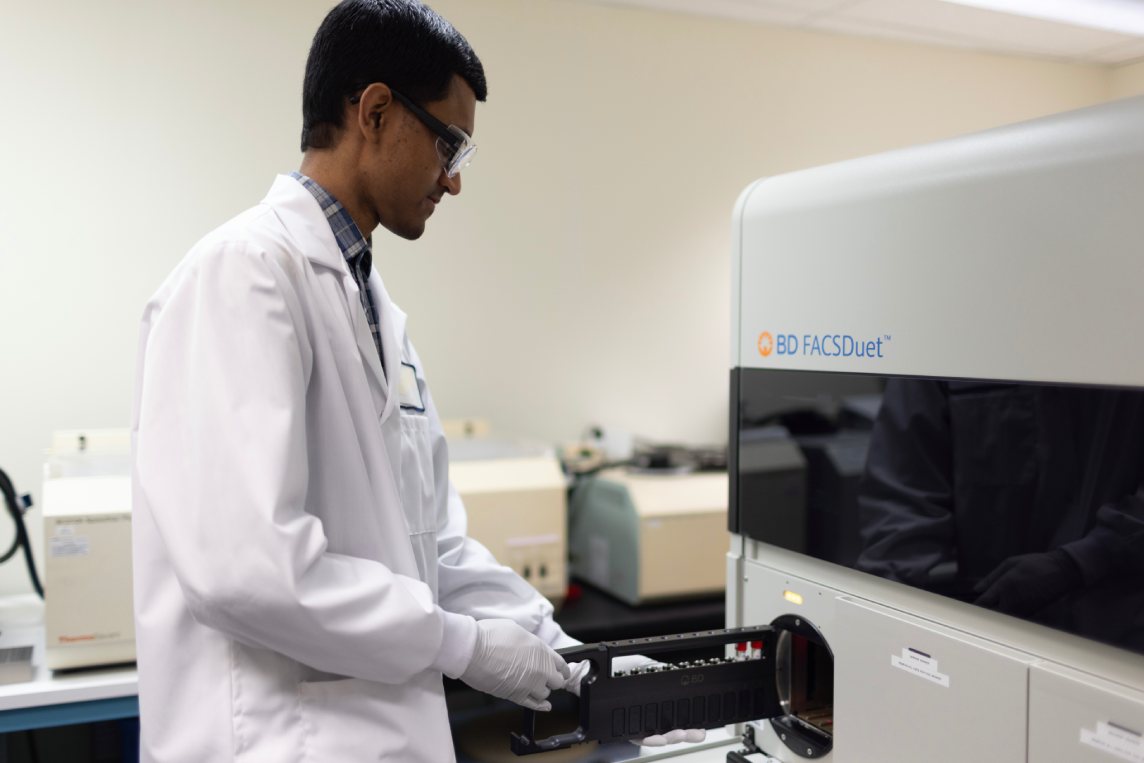
Characterize innate and adaptive immune populations with cutting-edge flow cytometry platforms for enriched understanding of immune cell identity and behavior at single-cell resolution.
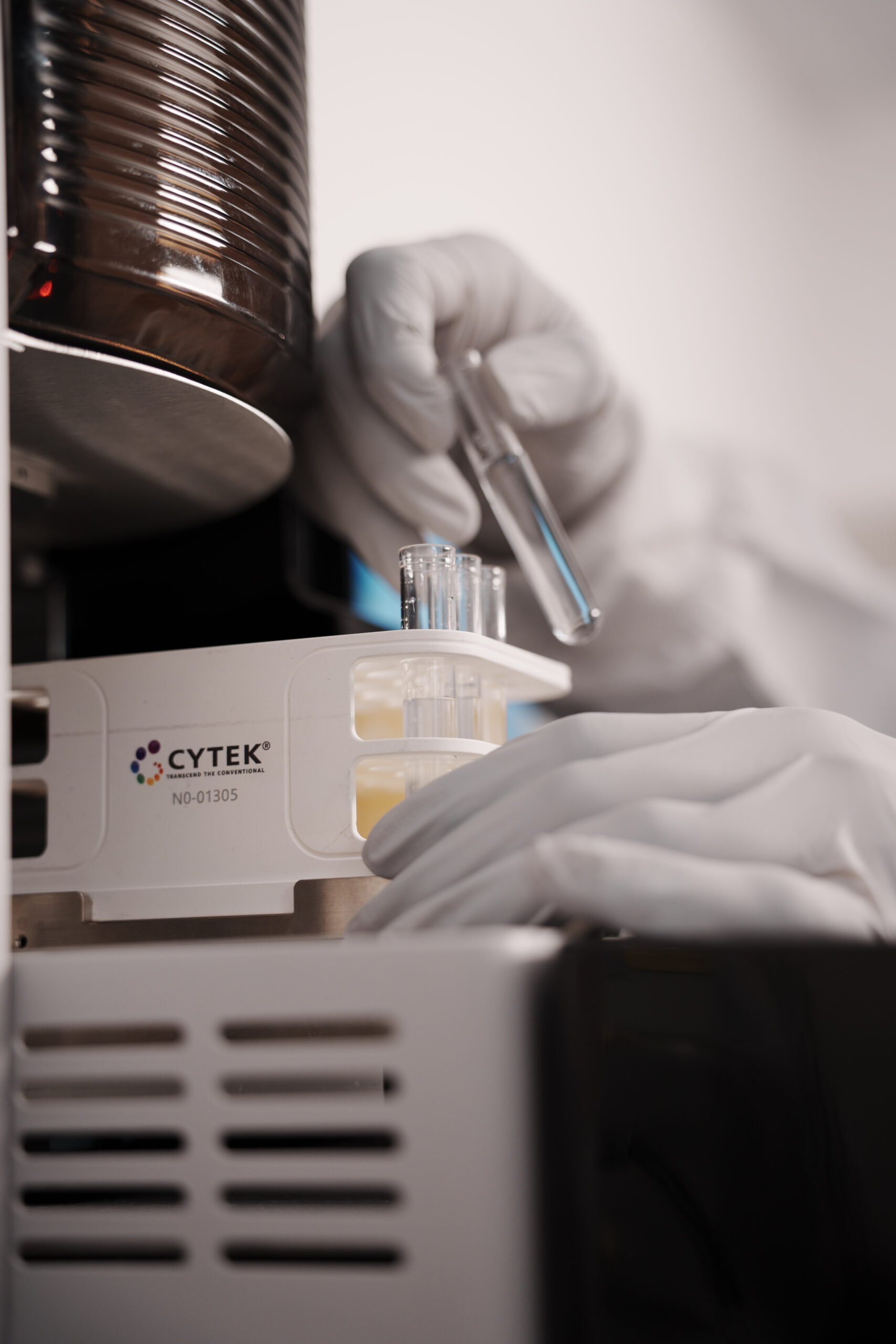
Using our expertise in flow cytometry, CellCarta can perform cell phenotyping to rapidly monitor cell subpopulations without compromising accuracy and reproducibility.
Our scientists have decades of experience in flow cytometry and can support your immune monitoring studies from beginning to end, delivering data that is comprehensive, insightful, and optimized for your clinical needs. These insights can be pivotal for therapeutic development, mechanistic understanding, and patient monitoring.
CellCarta's flow cytometry platforms allow you to accurately monitor cell subpopulations with speed and evaluate the impact of a therapeutic on their behavior.
We harness the power of multiparametric flow cytometry to investigate several markers at once, producing the data needed to help move your project forward.
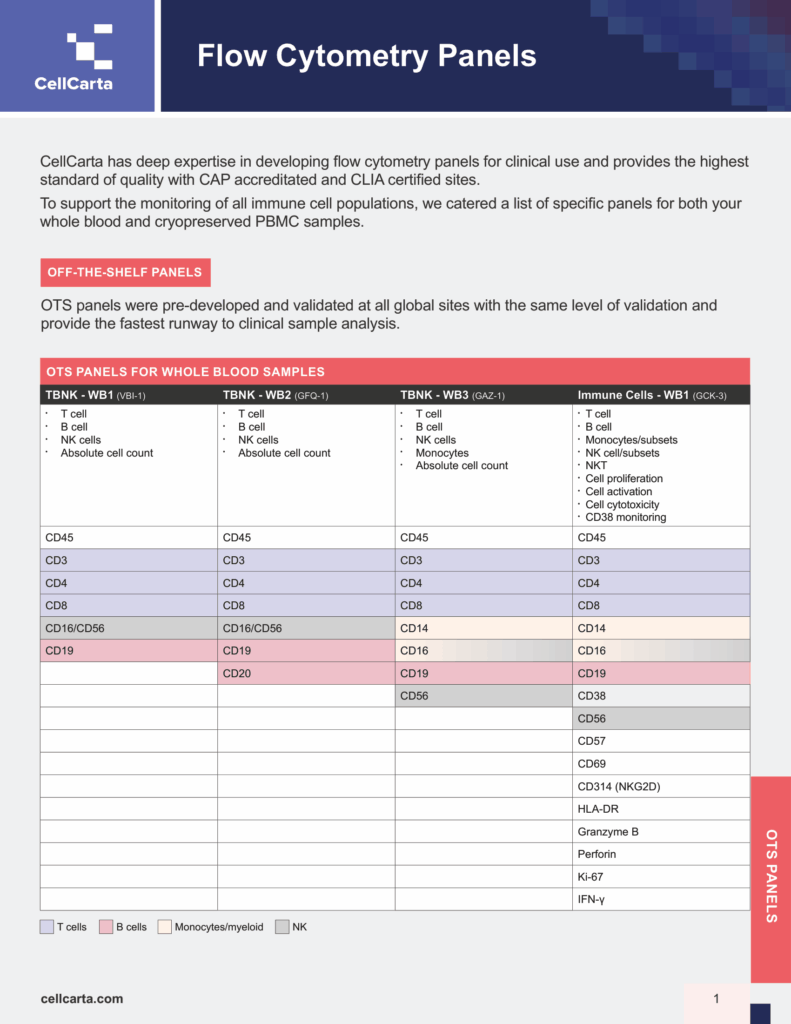
CellCarta can implement and validate off-the-shelf or custom assays for cell phenotyping that are adapted to your study’s needs, ensuring comprehensive data that’s best suited for your program’s markers and populations of interest. Panel applications can include:
Expert-level analysis can be conducted by our bioinformatics team using our cloud-based CellEngine® software.
With autogating tools, plug-in support, and fast algorithms, our software can deliver high-quality data to clients in record time.
CellEngine is available as part of our bioanalytical services, or as a software-as-a-service (SaaS), allowing researchers to perform independent data analysis and visualization.
Our multiparametric flow cytometry platforms can identify all major cell lineages (TBNK, Treg, MDSC, etc.) alongside rare cell subsets (basophils, stem cells, antigen-specific cells, etc.). This provides in-depth characterization of all relevant cell subpopulations with exceptional sensitivity.
Rigorous quality control is applied in accordance with GCP, GLP, and GCLP requirements, supporting clinical-stage programs that require defensible, reportable data. Furthermore, all flow cytometry services are carried out across our global CAP-accredited, CLIA-certified facilities.
Learn more about our accreditation here.
CellCarta's flow cytometry platforms allow you to accurately monitor cell subpopulations with speed and evaluate the impact of a therapeutic on their behavior.
We harness the power of multiparametric flow cytometry to investigate several markers at once, producing the data needed to help move your project forward.
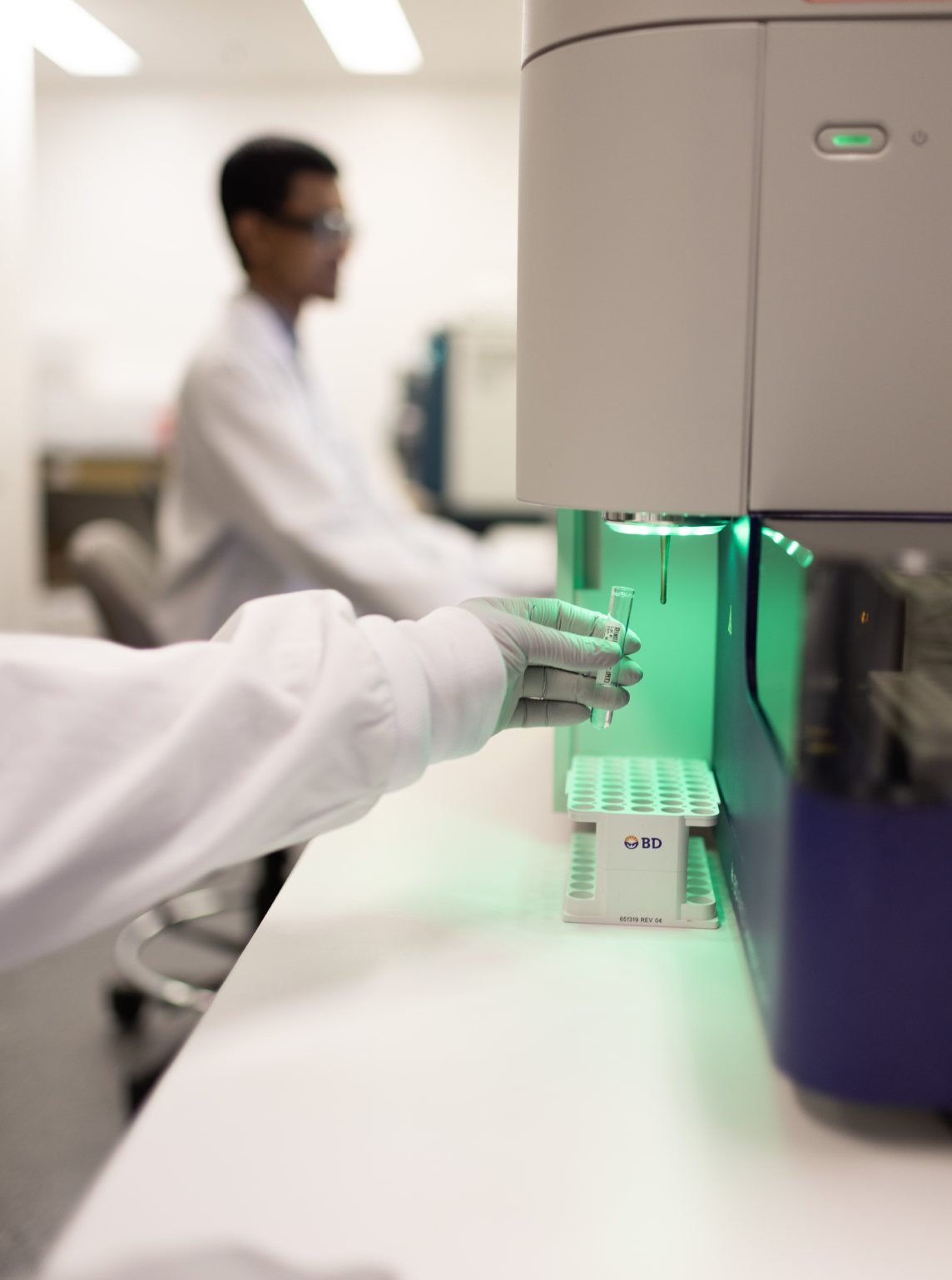
CellCarta can implement and validate off-the-shelf or custom assays for cell phenotyping that are adapted to your study’s needs, ensuring comprehensive data that’s best suited for your program’s markers and populations of interest. Panel applications can include:
Expert-level analysis can be conducted by our bioinformatics team using our cloud-based CellEngine® software.
With autogating tools, plug-in support, and fast algorithms, our software can deliver high-quality data to clients in record time.
CellEngine is available as part of our bioanalytical services, or as a software-as-a-service (SaaS), allowing researchers to perform independent data analysis and visualization.
Our multiparametric flow cytometry platforms can identify all major cell lineages (TBNK, Treg, MDSC, etc.) alongside rare cell subsets (basophils, stem cells, antigen-specific cells, etc.). This provides in-depth characterization of all relevant cell subpopulations with exceptional sensitivity.
Rigorous quality control is applied in accordance with GCP, GLP, and GCLP requirements, supporting clinical-stage programs that require defensible, reportable data. Furthermore, all flow cytometry services are carried out across our global CAP-accredited, CLIA-certified facilities.
Learn more about our accreditation here.
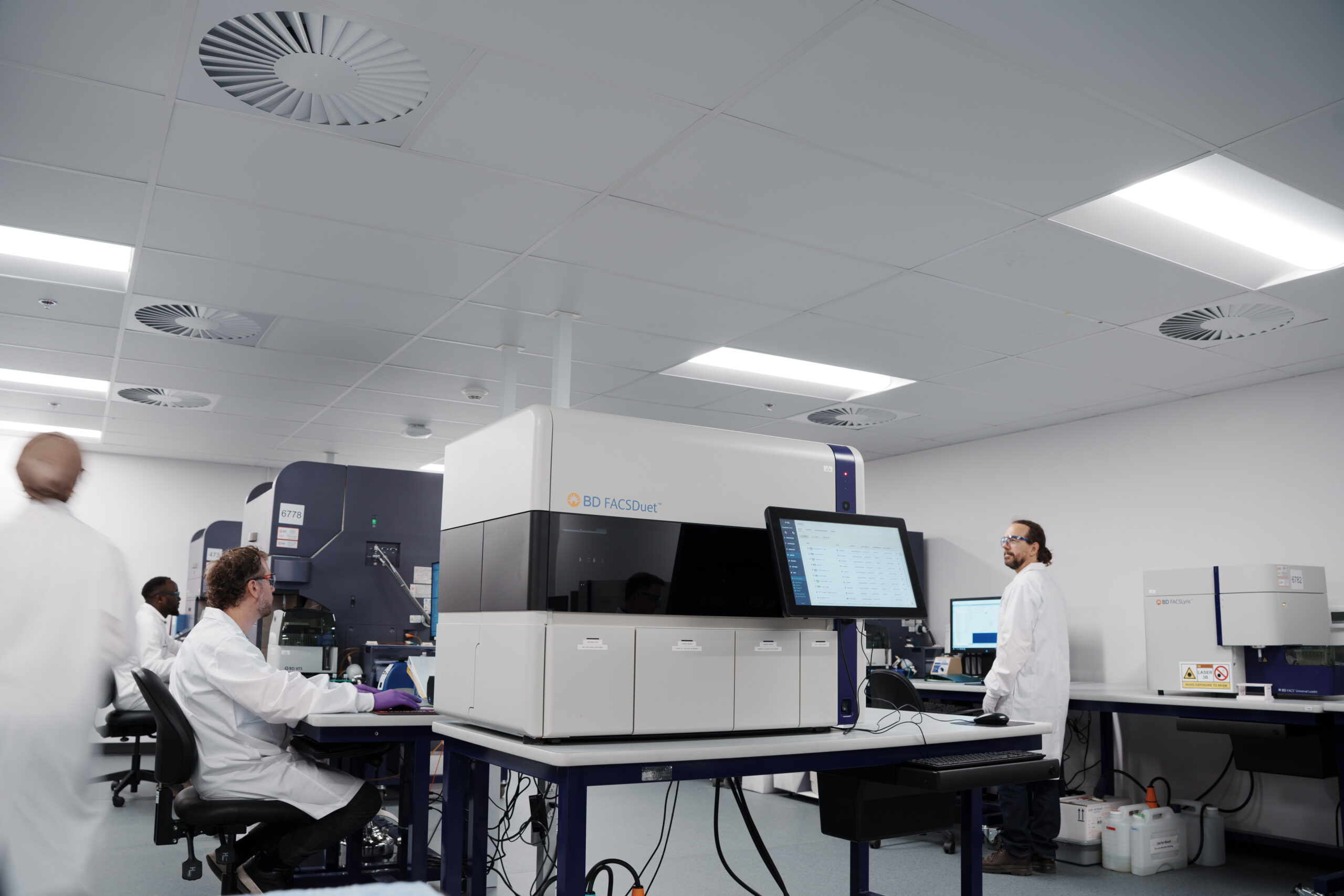
Our cell phenotyping services can be used to identify both major cell lineages and rare subsets; monitor population shifts across ICS, phosphoflow, BAT, and HLA-restricted multimer panels; and apply Boolean analysis to deliver insightful comparisons across your samples.
Myeloid-derived suppressor cell (MDSC) assays reveal how immune responses and treatment relate to patient outcomes. Our validated panels measure monocytic and granulocytic MDSC frequencies, helping predict immune checkpoint inhibitor response and improve patient stratification in clinical trials.

Flow cytometry specialists focused on delivering comprehensive phenotypic insights.
Custom Solutions
Regulatory-Ready
Global Execution
Multiparametric Panels
Close Collaboration
Alongside cell phenotyping, discover how CellCarta can harness the power of flow cytometry to uncover the complete cellular landscape.
Measure basophil degranulation to assess allergic and hypersensitivity immune responses.

Assess immune cell division and cycling to evaluate treatment response and immune activation.

Isolate and purify targeted cell populations with high-speed, high-purity cell sorting.
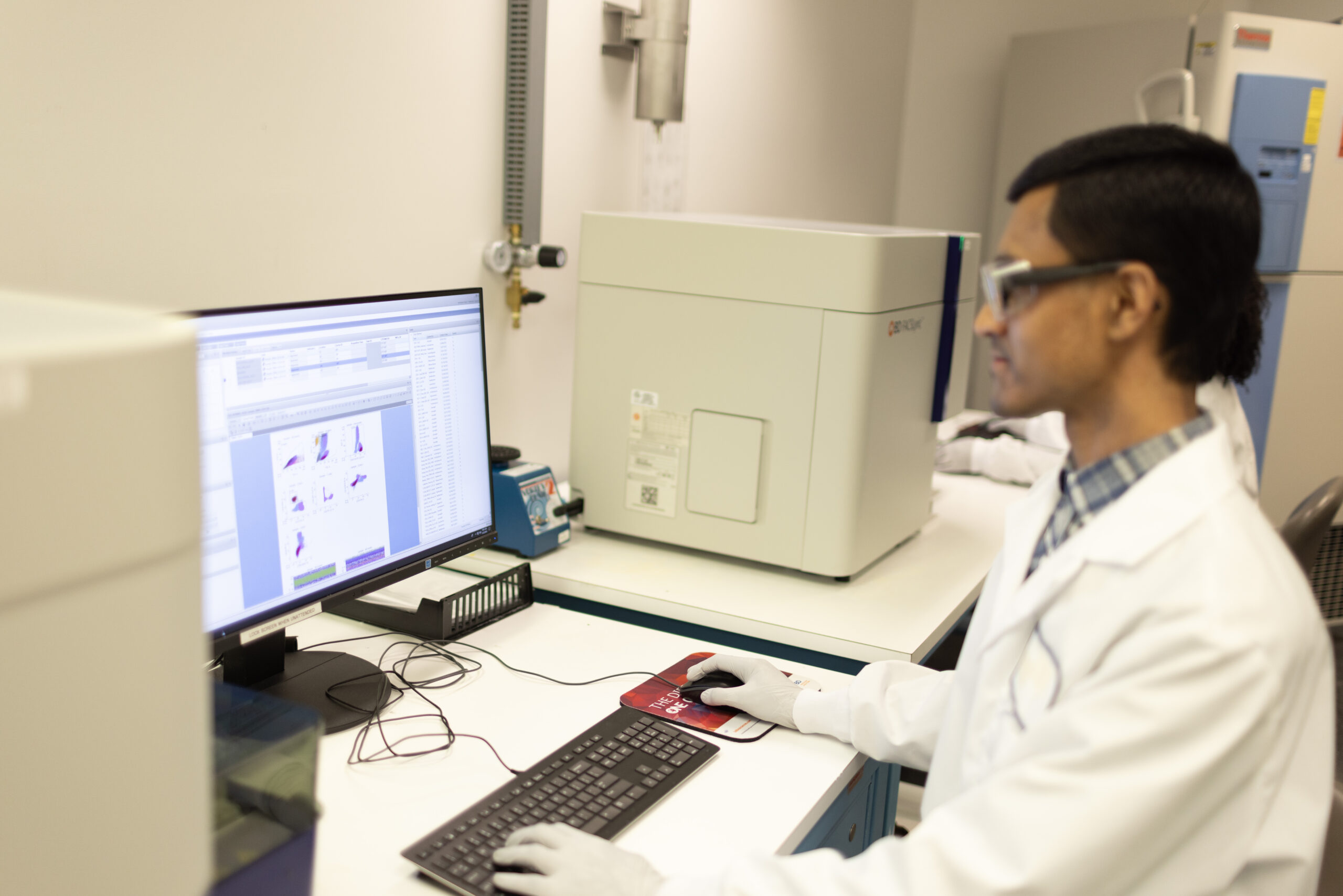

Cell phenotyping is the process of characterizing cell populations by idebntifying their surface and intracellular markers in solid tissue and liquid biopsy samples. Flow cytometry is the most common and versatile technology for cell phenotyping, but alternative platforms, including multiplex immunofluorescence, can be utilized depending on the sample type. In drug development and clinical research, cell phenotyping allows scientists to monitor how specific immune cell subpopulations, such as T-cells, B-cells, NK cells, Tregs, and MDSCs, change in response to a therapeutic agent.
At CellCarta, cell phenotyping is performed predominantly with flow cytometry and supported by expert assay design, complete data reports, and quality control in accordance with GCP, GLP, and GCLP standards.
We support a wide range of flow panels for cell phenotyping, including off-the-shelf (OTS) panels validated at all global sites and custom panels designed to your specific study goals. Supported panel applications include T-cell activation and exhaustion, B-cell phenotyping, TBNK identification (with IVD status options for regulatory submissions), intracellular cytokine staining (ICS), phosphoflow, basophil activation test (BAT), and HLA-restricted multimers.
For highplex assays, our scientists can apply Boolean analysis on main cell subsets for unsupervised clustering and dimensionality reduction algorithms. This added feature enables rapid data analysis for studies that require a quick turnaround time.
Quality control is applied at every step in accordance with the relevant regulatory requirements (GCP, GLP, and GCLP) and our sites are CAP-accredited and/or CLIA-certified. Panels are validated to the same standard across all global sites to support multicenter trials. Our scientists deliver complete data reports, and cross-site standardization on platforms to ensure consistent, reproducible flow cytometry readouts regardless of which site processes your samples.
Our cell phenotyping services accept a wide range of sample types, including whole blood and cryopreserved or fresh peripheral blood mononuclear cells (PBMCs). Our team will advise on the appropriate collection and sample management approach for your specific study design.
Our cell phenotyping services can identify all major cell lineages including TBNK (T cells, B cells, NK cells), regulatory T cells, and myeloid-derived suppressor cells (MDSCs), as well as rare cell subsets such as basophils, stem cells, and antigen-specific cells. Our multiparametric panel design enables you to assess multiple populations and markers within a single assay, optimizing your sample use while providing a comprehensive picture of immune composition.