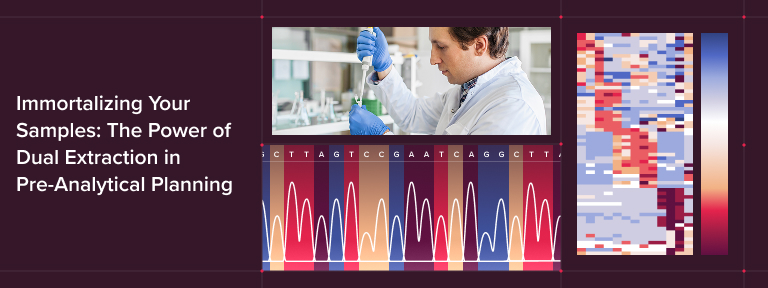
Our expert genomic data analysis services support sequencing and variant analysis, differential gene expression profiling, and spatial modalities.

Turn your sequencing data into findings that hold up across studies, sites, and regulatory scrutiny.
Genomic data analysis services span all major modalities, and our services are backed by a dedicated bioinformatics team that engages directly with your research questions, then uses advanced processing and analysis methods to deliver transparent, reproducible results with the QC depth your program demands.
Profile transcriptomes using gene expression analysis software for RNAseq and NanoString nCounter®. RNA-seq pipelines cover read alignment, transcript quantification, splice variant and fusion detection, tumor immune cell fractions, and proprietary ML-based eTMB and eMSI quantification.
NanoString workflows include background correction, normalization, batch effect control, DGE, and pathway enrichment analysis.
Generate validated, auditable outputs for CAR-T development, viral vector quantification, and genome editing programs within CellCarta's genomic data analysis software infrastructure.
Quantitative PCR (qPCR) workflows use peer-reviewed models for efficiency correction, error propagation, and inter-run calibration across large sample sets. Digital PCR (dPCR) applies generalized mixed linear models for linearity and accuracy testing, delivering auditable outputs for CAR-T, viral vector quantification, and genome editing programs.
Detect variants across the full genome or coding regions with pipelines built for clinical-grade reporting. WGS by next-generation sequencing covers coding and non-coding variants, SVs, CNVs, mitochondrial variants, and repeat expansions.
WES captures over 95% of disease-associated variants with SNV, indel, CNV, MSI, and TMB analysis in tumor-only or paired tumor/normal settings across oncology, rare disease, and pharmacogenomics.
We run validated workflows for TSO500 HT, TSO500 ctDNA v2, oncoReveal® CDx, Aspyre® Lung, and HLA genotyping.
Each runs on its optimized platform — Illumina Connected Analytics, Pillar's RUO Suite and IVD Workstation, or Aspyre Lab — with automated QC, variant calling, annotation, and biomarker computation. ctDNA v2 detects variants at allele frequencies as low as 0.5% for MRD assessment and longitudinal monitoring.
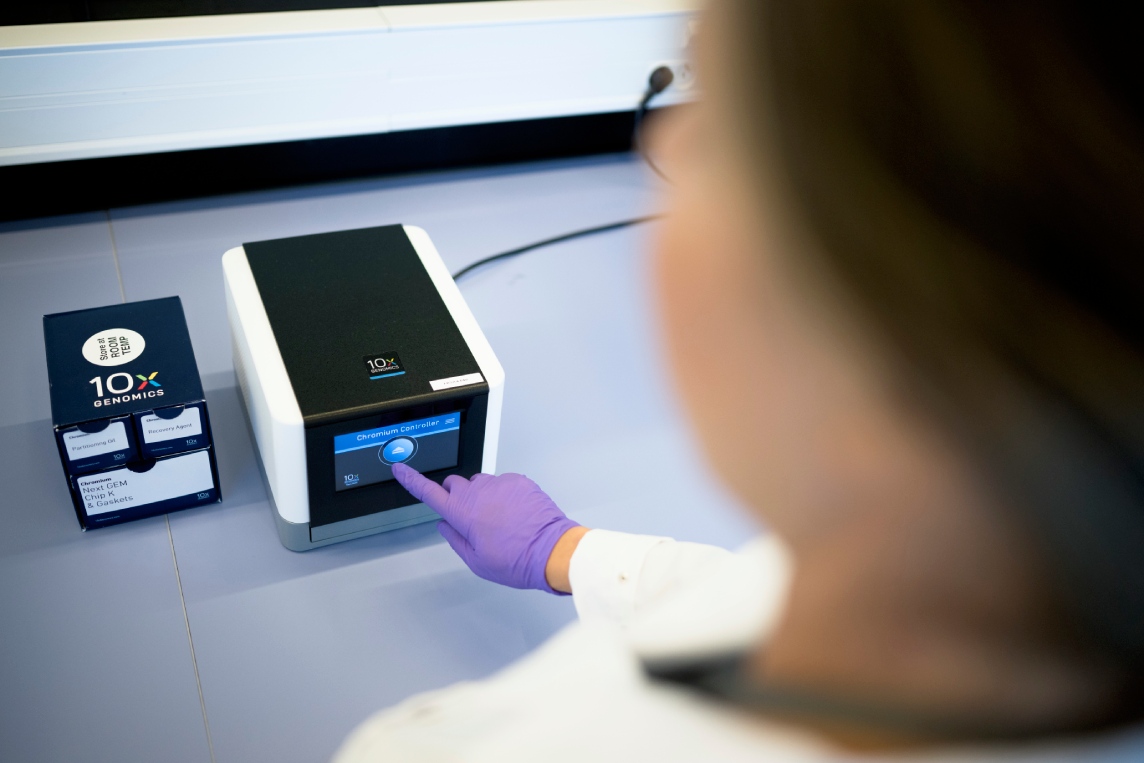
Resolve cellular heterogeneity and immune repertoire dynamics using the 10x Genomics Chromium platform and Cell Ranger software.
The pipeline supports 5' gene expression, V(D)J, and feature barcode libraries through alignment, clustering, cell-type annotation, trajectory inference, and pathway enrichment. CellEngine extends this with flow cytometry-style visualization, tSNE/UMAP gating, and multi-patient secondary analysis.
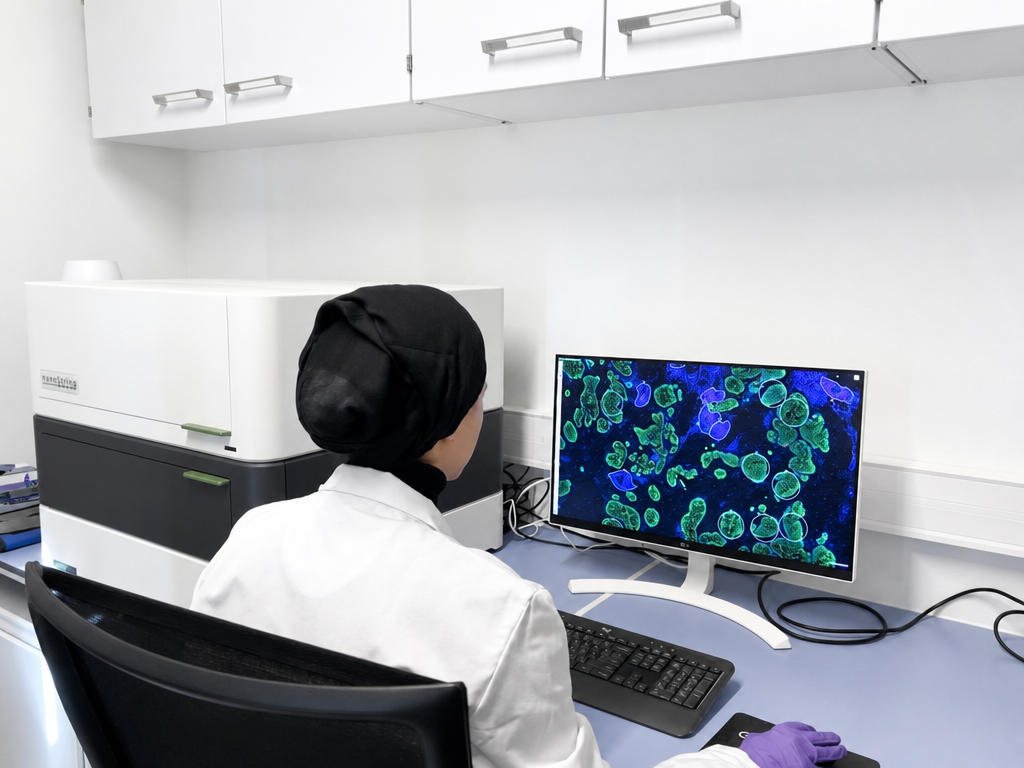
Map gene expression in tissue context using genomic data analysis software across our spatial platforms, including GeoMx and Visium HD . GeoMx pipelines include ROI selection, QC, and digital pathology integration.
Visium HD uses Space Ranger for spatial alignment, normalization, clustering, and domain detection. Advanced capabilities include batch correction, cell type deconvolution using reference atlases, and gene signature enrichment.
Combine your datasets across several fields using our in-house multi-omic analysis capabilities, enabling a more in-depth understanding of your study’s complex biological questions.
Our data analysis pipeline combines RNA sequencing data with spatial transcriptomic analysis and spatial proteomics, enabling multidimensional tumor profiling.
Profile transcriptomes using gene expression analysis software for RNAseq and NanoString nCounter®. RNA-seq pipelines cover read alignment, transcript quantification, splice variant and fusion detection, tumor immune cell fractions, and proprietary ML-based eTMB and eMSI quantification.
NanoString workflows include background correction, normalization, batch effect control, DGE, and pathway enrichment analysis.
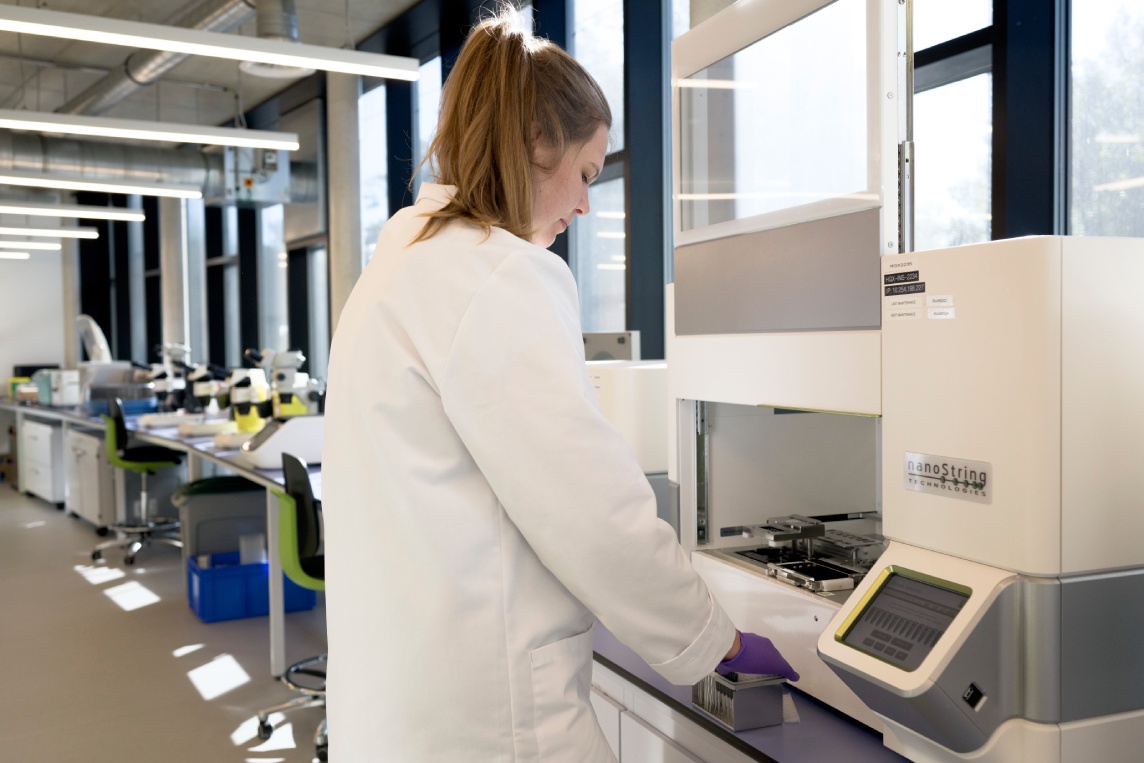
Generate validated, auditable outputs for CAR-T development, viral vector quantification, and genome editing programs within CellCarta's genomic data analysis software infrastructure.
Quantitative PCR (qPCR) workflows use peer-reviewed models for efficiency correction, error propagation, and inter-run calibration across large sample sets. Digital PCR (dPCR) applies generalized mixed linear models for linearity and accuracy testing, delivering auditable outputs for CAR-T, viral vector quantification, and genome editing programs.
Detect variants across the full genome or coding regions with pipelines built for clinical-grade reporting. WGS by next-generation sequencing covers coding and non-coding variants, SVs, CNVs, mitochondrial variants, and repeat expansions.
WES captures over 95% of disease-associated variants with SNV, indel, CNV, MSI, and TMB analysis in tumor-only or paired tumor/normal settings across oncology, rare disease, and pharmacogenomics.
We run validated workflows for TSO500 HT, TSO500 ctDNA v2, oncoReveal® CDx, Aspyre® Lung, and HLA genotyping.
Each runs on its optimized platform — Illumina Connected Analytics, Pillar's RUO Suite and IVD Workstation, or Aspyre Lab — with automated QC, variant calling, annotation, and biomarker computation. ctDNA v2 detects variants at allele frequencies as low as 0.5% for MRD assessment and longitudinal monitoring.
Resolve cellular heterogeneity and immune repertoire dynamics using the 10x Genomics Chromium platform and Cell Ranger software.
The pipeline supports 5' gene expression, V(D)J, and feature barcode libraries through alignment, clustering, cell-type annotation, trajectory inference, and pathway enrichment. CellEngine extends this with flow cytometry-style visualization, tSNE/UMAP gating, and multi-patient secondary analysis.
Map gene expression in tissue context using genomic data analysis software across our spatial platforms, including GeoMx and Visium HD . GeoMx pipelines include ROI selection, QC, and digital pathology integration.
Visium HD uses Space Ranger for spatial alignment, normalization, clustering, and domain detection. Advanced capabilities include batch correction, cell type deconvolution using reference atlases, and gene signature enrichment.
Combine your datasets across several fields using our in-house multi-omic analysis capabilities, enabling a more in-depth understanding of your study’s complex biological questions.
Our data analysis pipeline combines RNA sequencing data with spatial transcriptomic analysis and spatial proteomics, enabling multidimensional tumor profiling.

Secure, scalable solutions for raw and processed data transfers via AWS S3 exchange buckets, SFTP, or proprietary platforms. We deliver raw sequencing data, pipeline outputs, downstream-processed results, and customizable metadata aligned with your specifications. Our internal archiving policy stores and retrieves project data for up to 25 years and provides flexibility to access or reshare results long after initial delivery.
Rigorous, reproducible genomic analysis built for translational and clinical programs.
Expert Bioinformatics
Proprietary ML Pipelines
Full-Modality Coverage
Reproducible Pipelines
Regulatory-Grade QC
Complement your genomic data analysis with our validated assay platforms and detection technologies.
Precise, high-throughput analysis of genetic material with both speed and scalability.
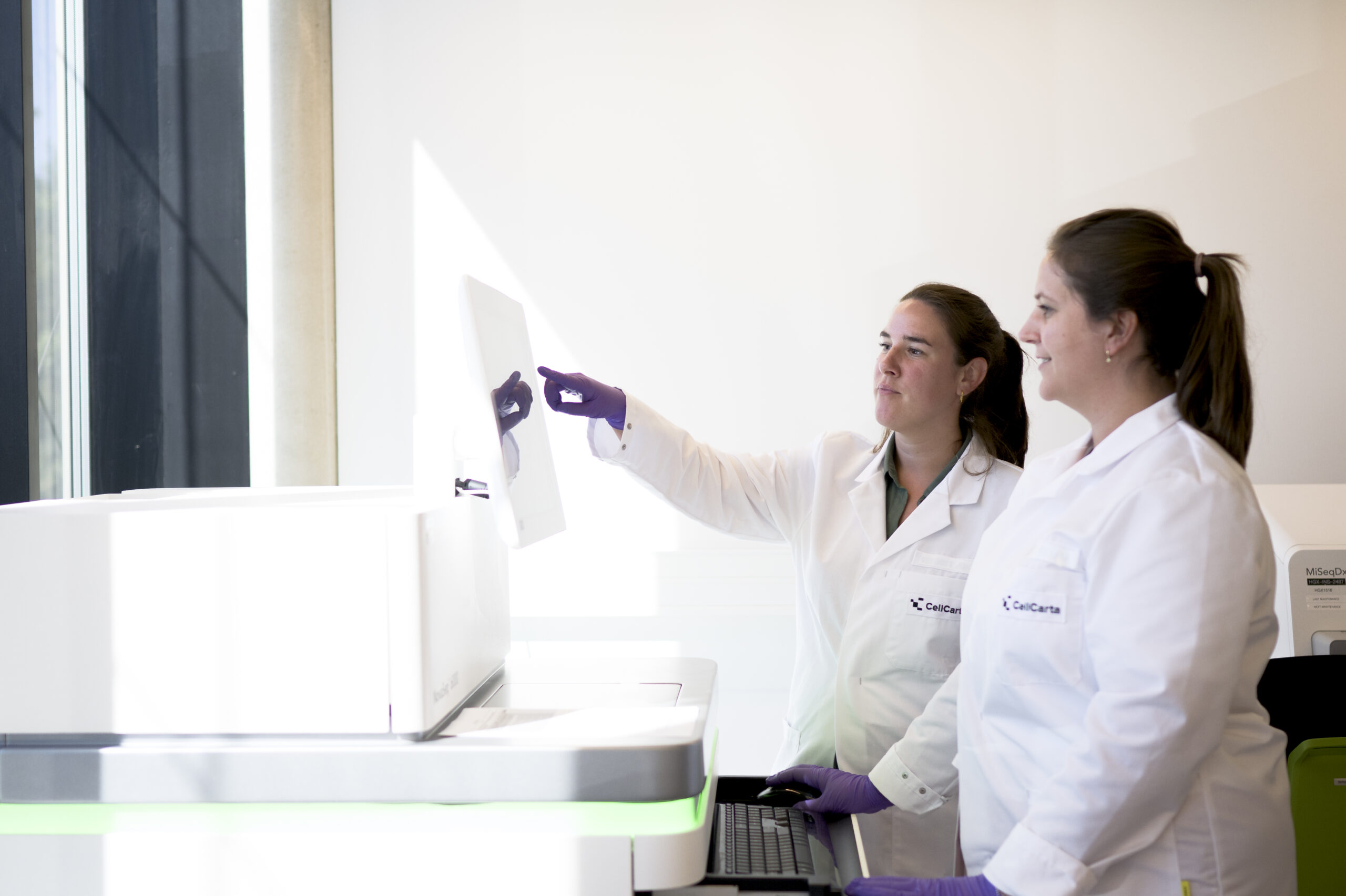
Nucleic acid quantification with superior accuracy, precision, and sensitivity.
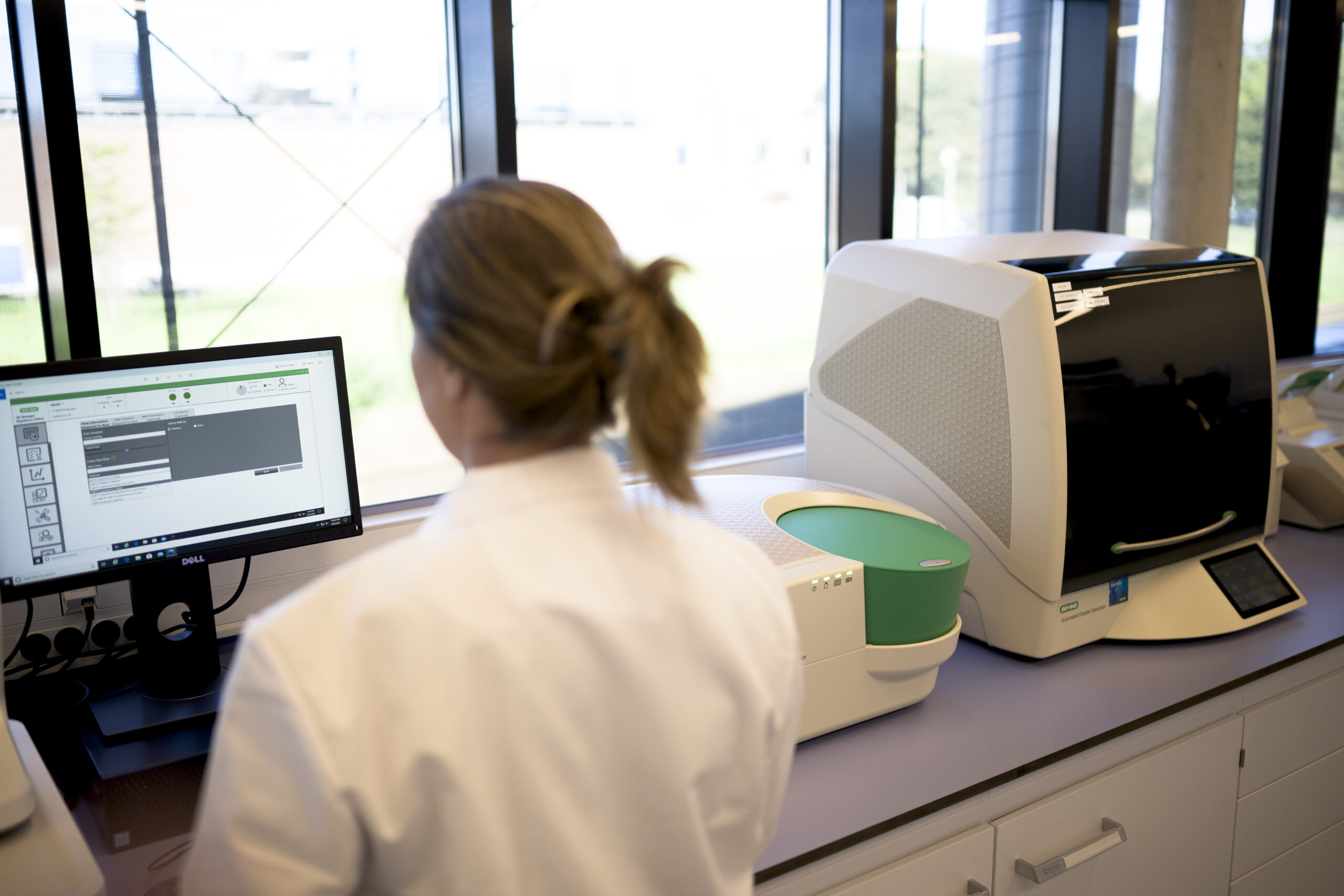
Support for qPCR applications using off-the-shelf assays or custom, validated primers.