Comprehensive services that pair precision science with the speed and rigor your antibody-drug conjugate (ADC) program demands.
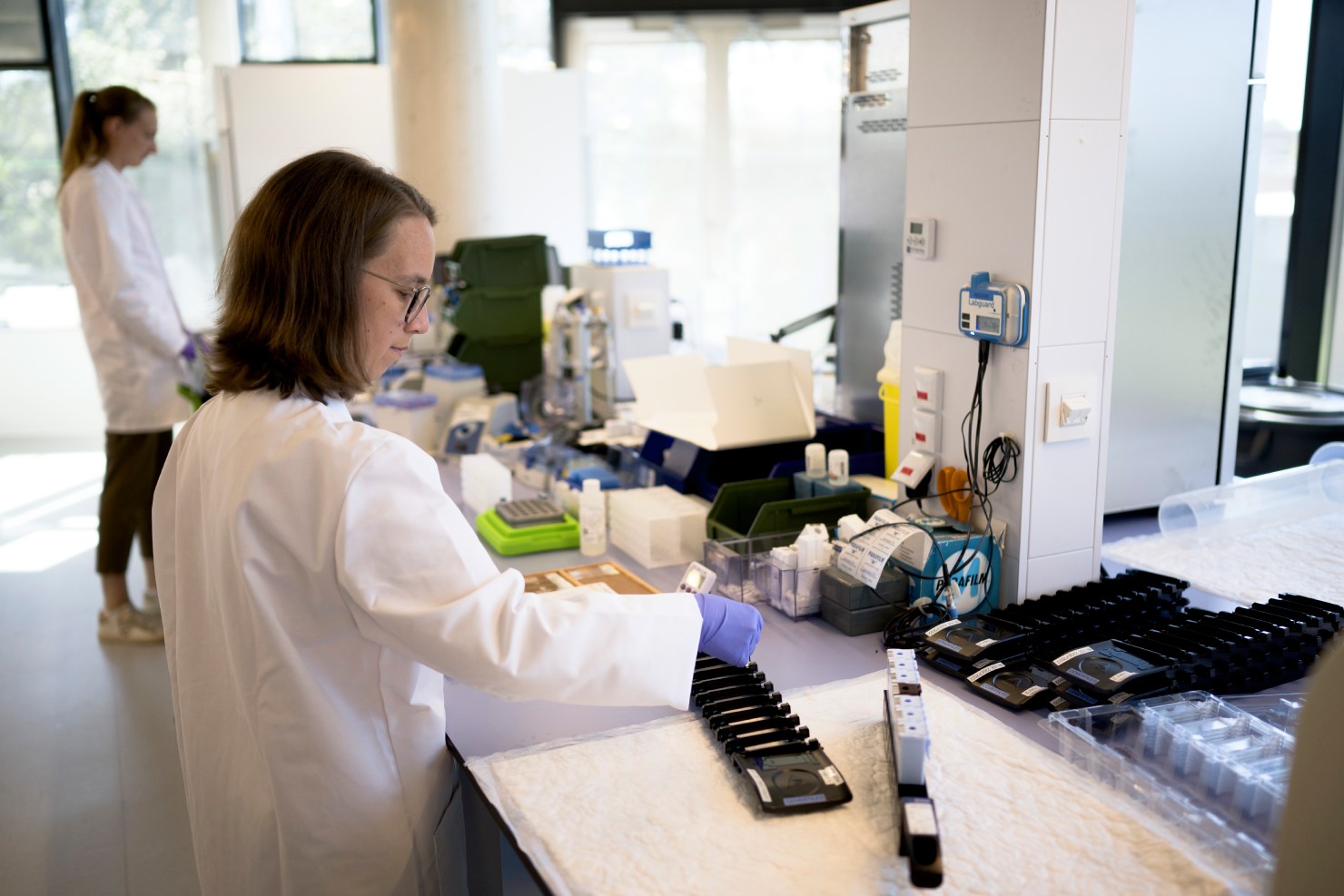
We can support ADC discovery with our comprehensive suite of services that support therapeutic development through all clinical milestones on the path to companion diagnostics (CDx) development.
CellCarta uses a multi-omic approach to explore ADC stability, track pharmacokinetics, optimize target engagement, determine on-target/off-tumor toxicity, and profile the tumor microenvironment (TME). This ensures that every decision your team makes is backed by an array of accurate information.

Christopher Ung, CellCarta's Chief Scientific Business Officer, is joined by Dr. Thomas Powles, Chair of Barts Cancer Centre (UK), for an in-depth conversation on the latest antibody-drug conjugates (ADCs) and other innovative cancer therapies. Covered topics include the challenges of treating metastatic bladder cancer and the potential of targeting it with a Nectin-4 ADC.
Depending on your study, we can incorporate multiple ADC assays to measure target engagement.
Receptor occupancy assays and transcriptomic analysis confirm target binding, with continuous image scoring and analysis for clinical endpoints. For early-stage programs, we also support reagent-free mass spectrometry.
Immunohistochemistry (IHC) assays can assess expression in solid tumor tissue, while flow cytometry is suited for liquid biopsies.
We can support mapping of the tumor microenvironment (TME), critical for understanding patient response to ADC platforms.
To assess immune cell populations and guide patient selection, we can use various platforms, such as multiplex IHC, CITE-seq, bulk RNAseq, and flow cytometry.
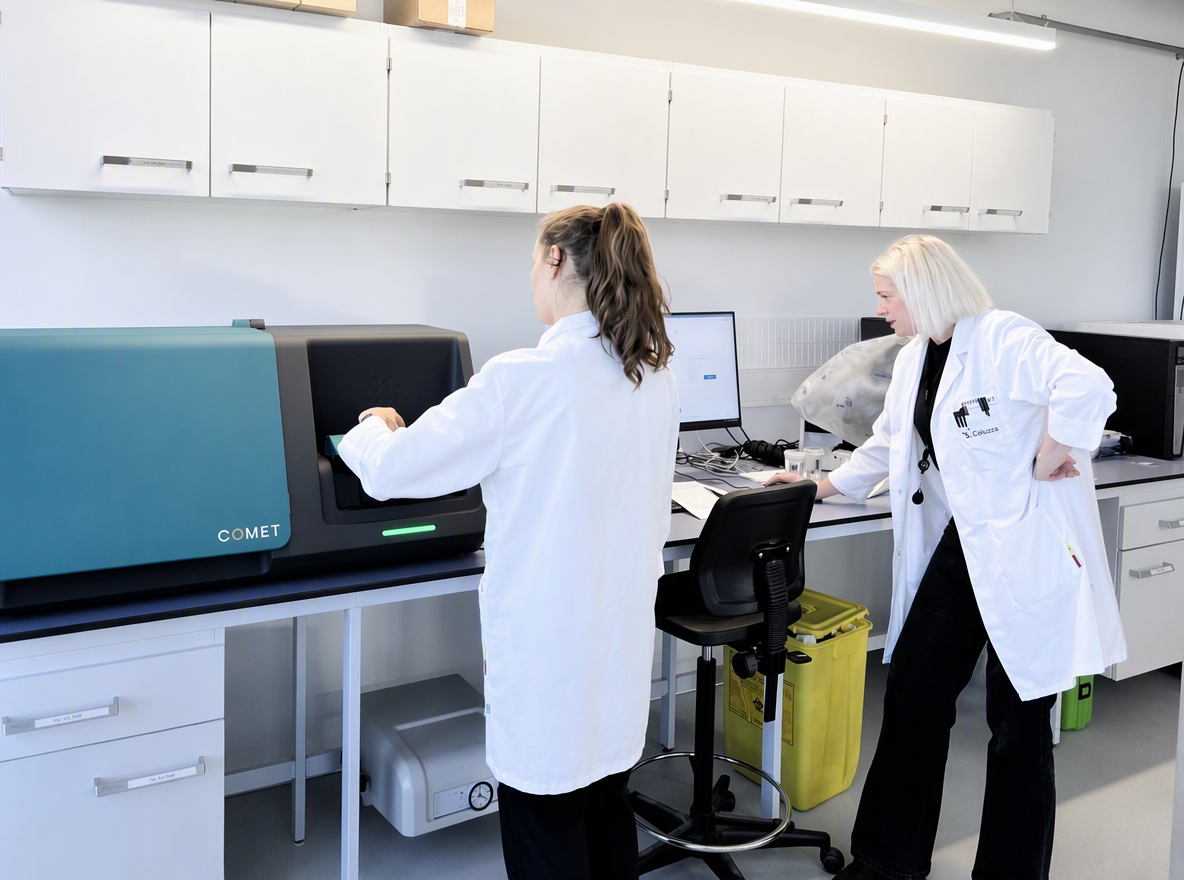
Our advanced spatial platforms — Visium, GeoMx, COMET — can layer in added proteomic and genomic analysis to explore cellular phenotype, distribution, and function.
Track ADC stability and concentration through our advanced mass spectrometry-based workflow, capable of supporting all stages of therapeutic development.
For toxicity, we can assess target expression in normal tissues via mIF and mIHC, track circulating target expressing cells by flow cytometry, and investigate toxicity pathways through bulk RNA sequencing and gene set enrichment analysis.
Accelerate assay development and validation with access to our regulated Biobank, containing over 5,000 consent confirmed and quality checked FFPE and blood samples. This enables immediate study initiation without delay.
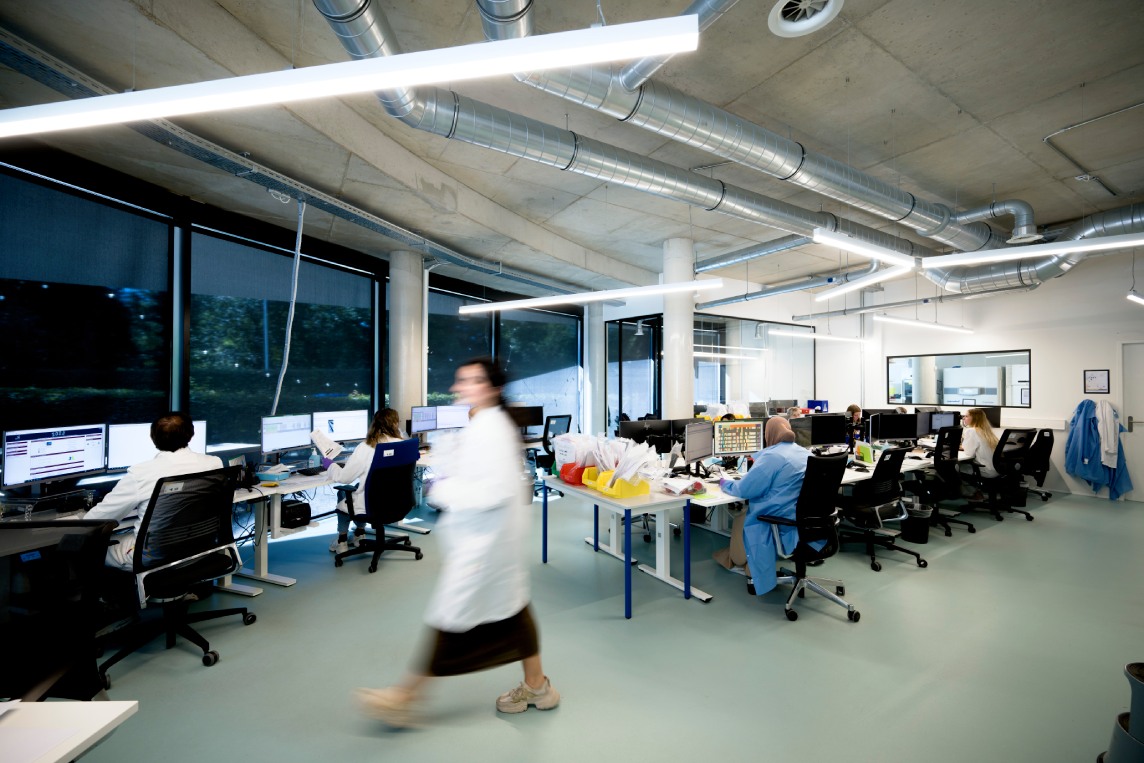
When your ADC platform program is ready to scale, our fully owned and accredited laboratory network across the US, Canada, Belgium, China, and Australia gives you standardized workflows and end-to-end CDx services globally.
Depending on your study, we can incorporate multiple ADC assays to measure target engagement.
Receptor occupancy assays and transcriptomic analysis confirm target binding, with continuous image scoring and analysis for clinical endpoints. For early-stage programs, we also support reagent-free mass spectrometry.
Immunohistochemistry (IHC) assays can assess expression in solid tumor tissue, while flow cytometry is suited for liquid biopsies.
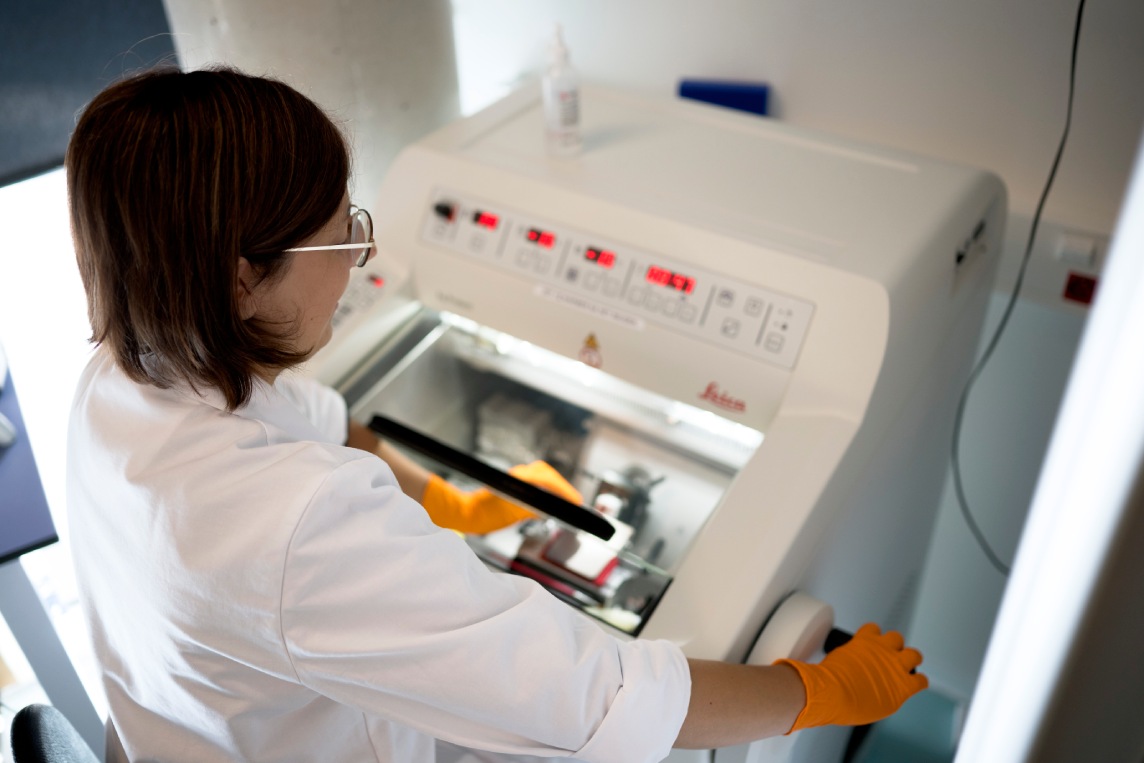
We can support mapping of the tumor microenvironment (TME), critical for understanding patient response to ADC platforms.
To assess immune cell populations and guide patient selection, we can use various platforms, such as multiplex IHC, CITE-seq, bulk RNAseq, and flow cytometry.
Our advanced spatial platforms — Visium, GeoMx, COMET — can layer in added proteomic and genomic analysis to explore cellular phenotype, distribution, and function.
Track ADC stability and concentration through our advanced mass spectrometry-based workflow, capable of supporting all stages of therapeutic development.
For toxicity, we can assess target expression in normal tissues via mIF and mIHC, track circulating target expressing cells by flow cytometry, and investigate toxicity pathways through bulk RNA sequencing and gene set enrichment analysis.
Accelerate assay development and validation with access to our regulated Biobank, containing over 5,000 consent confirmed and quality checked FFPE and blood samples. This enables immediate study initiation without delay.
When your ADC platform program is ready to scale, our fully owned and accredited laboratory network across the US, Canada, Belgium, China, and Australia gives you standardized workflows and end-to-end CDx services globally.

Profile target expression, confirm receptor occupancy, track reagent-free PK, map tumor microenvironments, and evaluate on/off-target toxicity through a single coordinated program with one point of contact.
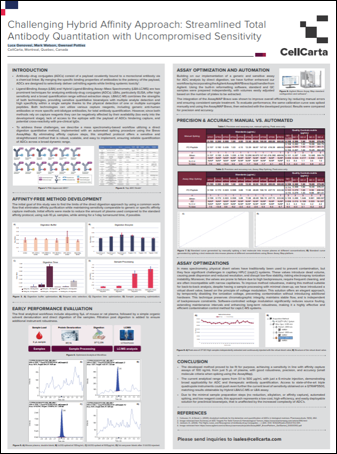
When affinity capture reagents are unavailable early in development, ADC bioanalysis can grind to a halt. CellCarta's direct digestion LC-MS/MS method bypassed that dependency entirely, delivering 100 ng/mL sensitivity, a 5,000-fold analytical range, and a 6-minute run time.
Global sample management, transport, and biorepository services with real-time tracking.

Multi-platform biomarker strategies from discovery through clinical development.
Advance clinical trial assays into approved, commercially viable CDx programs with unmatched flexibility.

We offer validated IHC assays for established ADC targets, including HER2, cMET, B7H3, TROP2, DLL3, EGFR, and Nectin2. We're also actively developing assays for emerging targets, including B7-H4, HER3, ROR1, CEACAM5, and STEAP1, with additional biomarkers coming soon.
Target expression is a prerequisite for ADC efficacy. The required level and pattern of expression can vary significantly depending on the ADC and the mechanism of action. CellCarta supports expression analysis across multiple platforms — including IHC and IF, flow cytometry, and mass spectrometry — to help you determine the threshold and distribution of target expression needed for your program.
Our ADC spans singleplex and mIHC, mIF with up to 40 markers per slide, in situ hybridization (ISH/RNAscope), and mass spectrometry. This multi-modal approach allows us to characterize target expression at the protein, RNA, and genomic level within the same tissue context, supporting the advancement of your program’s ADC platform.
Assessing ADC killing efficiency requires evaluating multiple downstream events: target engagement, internalization, linker cleavage, and cytotoxic payload release. CellCarta uses various assays, including receptor occupancy (RO) assays, and approaches (RNAseq, CITE-seq) to assess both binding efficiency and payload activity across tissue and liquid samples.
Identifying on-target, off-tumor toxicity early is critical for safe ADC platform development. Our mIF and mIHC platforms evaluate target expression in normal tissues, while flow cytometry tracks circulating target-expressing cell counts as a surrogate for off-target killing. Bulk RNA sequencing and gene set enrichment analysis (GSEA) further investigate activated toxicity pathways.