June 30, 2026
B-cell depletion therapies (BCDTs) can offer autoimmune patients sustained disease control that was previously difficult to achieve, with therapies such as rituximab able to meaningfully alter the course of diseases such as rheumatoid arthritis and multiple sclerosis.1,2 But the B-cell monitoring that underpins the development of these therapies can be complex. Detecting B-cells and their subsets at the very low levels encountered during depletion and reconstitution places significant demands on assay sensitivity, and sustaining reliable measurement across studies spanning months brings operational challenges.
We sat down with Sasha Silva-Barrios, Principal Development Scientist at CellCarta, who leads assay development and validation for clinical immunology programs, to explore how to approach B-cell monitoring in practice.
In this Q&A, she shares her insights on the challenges of measuring B-cell depletion and reconstitution, how to think about assay strategy, and what it takes to sustain reliable measurement across a long-term study.
What are the key challenges in measuring B-cell depletion and reconstitution in autoimmune studies?
There are a few interconnected challenges, mostly stemming from the nature of B-cells themselves.
B-cells make up roughly 10–15% of peripheral blood lymphocytes under normal conditions, already a small fraction, then you’re trying to detect specific subsets during depletion and reconstitution when their levels are even lower. At those counts, small variations in how data is acquired or gated can have a disproportionate impact on results, and there’s a risk of misinterpreting what the data actually shows.
A second challenge is that blood-based measurement only tells part of the story. B-cells also reside in immune organs such as the lymph nodes and spleen, and assays performed on whole blood cannot capture what’s happening in those compartments. A patient could appear fully depleted in circulation while still carrying a meaningful B-cell burden in tissue, an important interpretive limitation that must be acknowledged in the data.
What role does assay sensitivity play in generating reliable B-cell depletion data, and how can you ensure adequate sensitivity?
Sensitivity is the most critical property of any monitoring assay in this context. Decisions around dosing, retreatment timing, and patient safety all depend on confidence in what the assay is showing at extremely low counts.
To ensure adequate sensitivity, you have to establish defined lower limits of detection (LOD) and quantification (LLOQ), which are study-specific and determined by the therapy’s mechanism of action. Sample volume also needs to be determined on a study-by-study basis. Because B-cells are scarce, sufficient cell input is essential for statistically confident detection, and the volume required depends on the minimum number of events needed to achieve that.
Antibody quality is another factor that directly affects sensitivity. Detection antibodies must be highly specific to the relevant epitopes, and recognition can vary between clones from different suppliers, affecting both sensitivity and reliability. This is especially important in CAR-T programs, where the CAR construct targets the same epitopes as the detection antibodies. Some clones may compete directly with the therapeutic, producing false negatives, so detection antibodies need to be developed and validated in parallel with the CAR construct to ensure sufficient sensitivity.
Why is B-cell subset profiling important, and how does it inform interpretation of reconstitution?
Total B-cell counts tell you whether depletion is occurring, but to understand how the immune system is actually recovering, you need to look at what subsets are coming back and in what proportions.
The return of naïve B-cells is generally a good sign, suggesting reconstitution is proceeding in a healthy direction. The return of memory B-cells or the presence of plasma cells, on the other hand, can be an early sign of relapse, which may warrant further investigation.
As mentioned, the catch is that resolving these subsets reliably is technically demanding. You’re already working with a small circulating population, and each subset is a smaller fraction within that. Standard assays often don’t have the resolution to go beyond total CD19⁺ cells, which is why high-sensitivity panels tend to be necessary for subset-level data that you can actually act on.
Which assays are suited to B-cell monitoring, and how do you determine which is best for your application?
Flow cytometry is the gold standard for B-cell monitoring in BCDT programs. It allows direct measurement of circulating B-cell numbers and subset-level phenotyping from a single sample, providing insight into both the degree of depletion and the quality of immune reconstitution.
Programs most commonly use TBNK assays, but they can lack the sensitivity needed to detect the very low residual B-cell populations during deep depletion, so high-sensitivity panels that resolve clinically relevant B-cell subsets are usually necessary where deeper interrogation is needed.
Beyond flow cytometry, there are complementary approaches you can consider depending on your study needs. ELISA can be used to measure autoantibodies and serum immunoglobulin levels, which gives you an indication of what might be happening at the tissue level, even when circulating B-cells appear depleted. ELISpot is useful for detecting active antibody-secreting cells to confirm patient B-cell depletion. And for programs where tissue-resident B-cell populations are a particular concern, immuno-PET can help map B-cell presence in the spleen and lymph nodes.
Beyond refining your assay strategy, what are the key considerations for ensuring reliable B-cell monitoring across a long-term study?
You need to cover all three phases, pre-treatment, active depletion, and reconstitution, and within those, capture the key biological events at the right time points. In practice, that typically means sampling around every one to two weeks during the active phases, though the right frequency depends on the therapy and the disease.
Sample volume requirements are a key consideration that needs to be built into the study design from the outset. Because B-cells are scarce, you need sufficient cell input to achieve confident detection, and those volumes need to be collected repeatedly over what may be many months, which can be a burden on patients. Understanding those requirements early and designing the sampling plan around them can help ensure this doesn’t cause issues and delay later in the study.
Then there’s stability. In multi-site programs, samples collected at dispersed sites need to remain viable across the transit window to the analysis lab. Sites in remote locations, or where courier infrastructure is unreliable, may simply fall outside validated stability windows. Working with a laboratory that has established logistics infrastructure and experience managing limited-stability samples across global sites can take a lot of that operational risk off the table, but either way, site selection needs to be factored in early to avoid disruption later in the study.
What would you say is the most important thing to keep in mind when designing a B-cell monitoring strategy?
It may sound simple, but understanding your end goal. The therapy you’re targeting, the disease state you’re working in, and the biological questions you need to answer should drive every decision, including the sensitivity your assay needs to achieve, the subsets you prioritize, and how you structure your sampling plan.
Without that clarity upfront, you risk building a monitoring strategy that generates unreliable data you can’t fully act on. Get that foundation right, and everything else follows from it.
Looking to build a reliable B-cell monitoring strategy for your autoimmune program? Get in touch with CellCarta’s immunology experts to discuss your study needs
About the author:
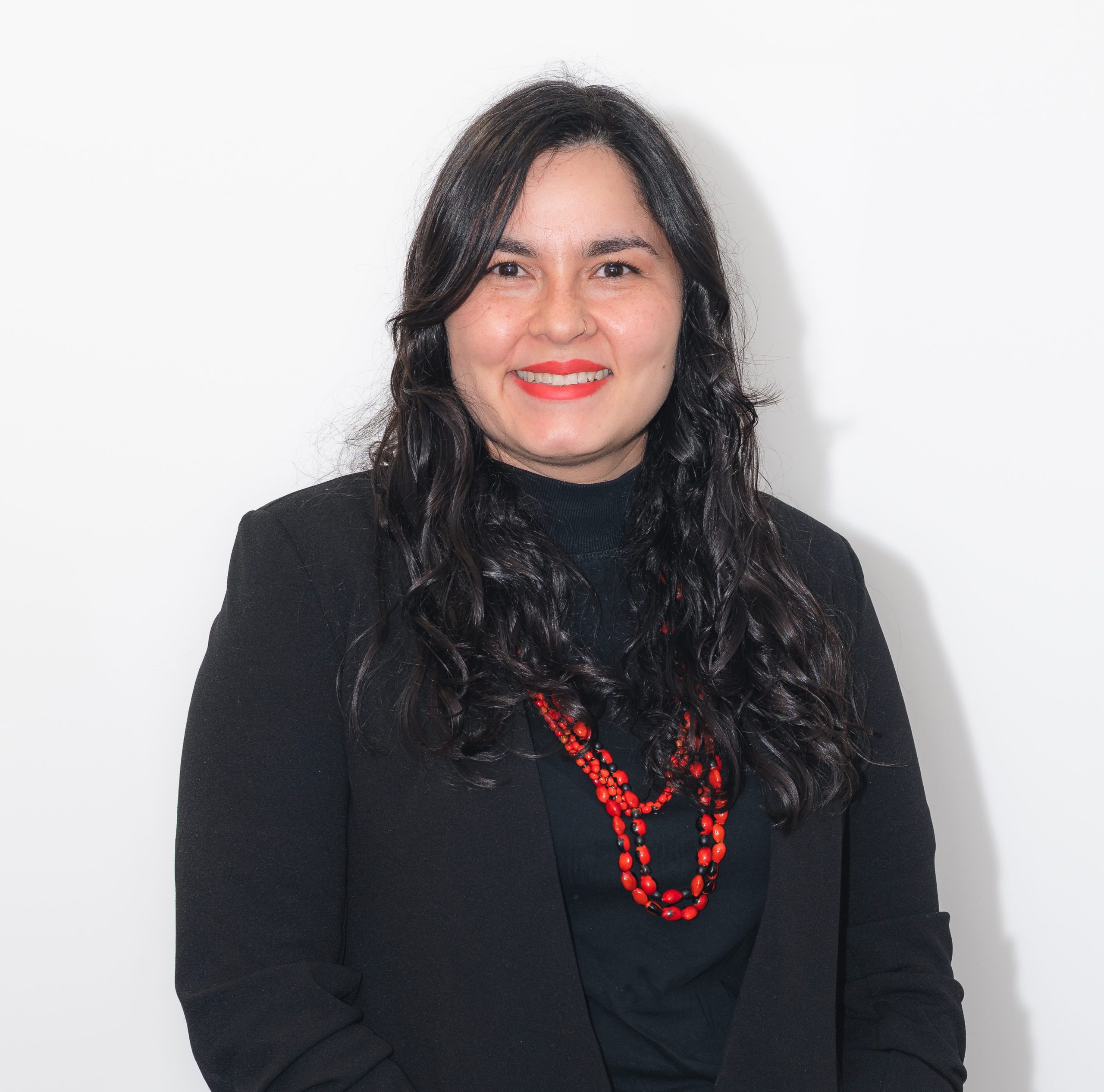
Sasha Silva-Barrios is a Principal Development Scientist at CellCarta. She leads assay development and validation for clinical immunology programs, where she uses her extensive experience to design assays that generate high-quality data, enabling sponsors to move their therapies through to the next stages of clinical development. She holds a PhD in Immunology, where she focused on understanding the role of B cells in infection and the innate immune response.
You might also be interested by
CellTalk Blog
CAR Kinetics in Autoimmune Studies: Expert Insights on Designing Effective Monitoring Strategies
June 30, 2026
More infoCellTalk Blog
Cytokine Profiling in Autoimmune Programs: Expert Insights on Assay Selection and Getting Data You Can Trust
June 30, 2026
More infoCellTalk Blog
Designing T-Cell Activation and Exhaustion Assays for Autoimmune Programs: Expert Insights
June 30, 2026
More info